



If a label just says "hand embroidery," it is leaving out the interesting part. These four traditions look and feel completely different, and knowing which is which makes shopping, and styling, a lot easier.
Chikankari (from Lucknow)
Chikankari is the delicate one. It comes from Lucknow, traditionally worked in white thread on fine white or pastel cotton, so the pattern reads as soft shadow rather than bold colour. The stitches are small, varied, and usually floral. It suits summer shirts and kurtas, because the fabric stays light and breathable while still feeling dressed up.
Kantha (from Bengal)

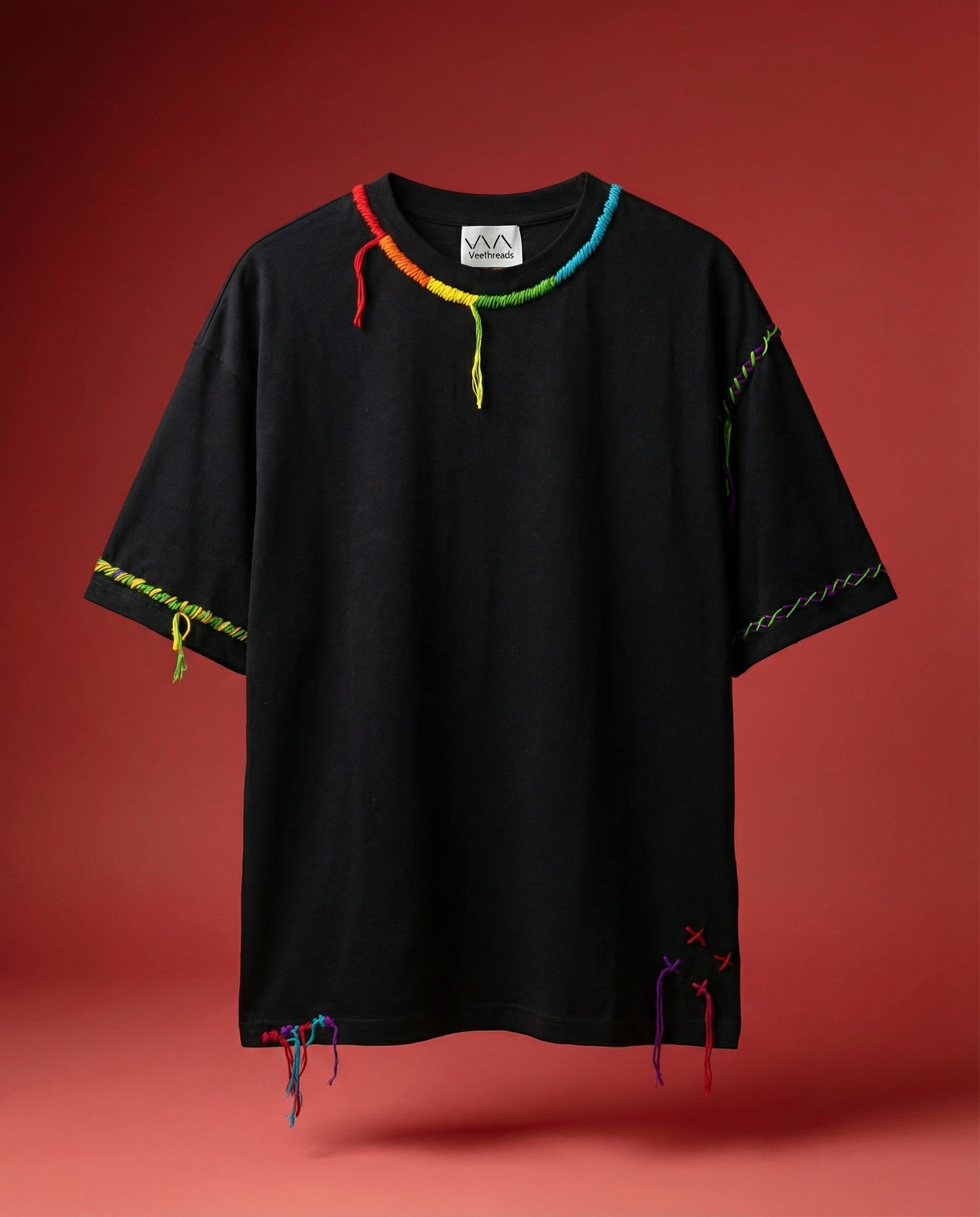
Kantha began as thrift. Women layered worn saris and held them together with a simple running stitch, and over time that became a craft of its own. The look is rows of small running stitches, sometimes filling a whole panel, sometimes outlining a motif. It is soft, lightly textured, and easygoing. Our Concepteur tee carries a kantha-style trim along the neckline.
Phulkari (from Punjab)
Phulkari means "flower work." It comes from Punjab, stitched in bright, silk-like floss with a darning stitch, traditionally on shawls and dupattas for weddings and festivals. The densest versions, which cover the whole cloth, are called bagh, meaning "garden." It is the boldest and most colourful of the four, the opposite of chikankari's quiet restraint.
Mirror work, or Shisha (from Gujarat and Rajasthan)

Shisha, also called abhla, sets small mirrors into the fabric, each one held down by a ring of embroidery stitches. It comes from Gujarat, Rajasthan, and the wider region, and it catches the light as you move. It reads as festive and folk, and a little goes a long way, which is why it works so well as an accent on a shirt or jacket.
How to tell them apart quickly

- All white, soft, shadowy: chikankari
- Rows of small running stitches: kantha
- Bright florals, darned, often on a shawl: phulkari
- Tiny mirrors catching the light: shisha, or mirror work
Which to wear when
Chikankari for light, dressed-up summer pieces. Kantha for soft, everyday, lived-in texture. Phulkari for festive colour, usually as a wrap. Mirror work for celebrations and a bit of folk shine. None of them is fragile if you wash gently: cold water, inside-out, and no harsh drying keeps every one of them looking right.
Frequently asked
What is the difference between chikankari and kantha?
Chikankari is fine white shadow-work from Lucknow on light cotton. Kantha is running-stitch work from Bengal, which started by layering old saris. Chikankari is delicate and dressy; kantha is soft and casual.
Is mirror work the same as shisha?
Yes. Shisha (also abhla) is the traditional name for mirror work, where small mirrors are stitched into the fabric with a ring of thread.
Which Indian embroidery is the most durable?
All of them last well when they are hand-finished and washed gently. Mirror work needs the most care, since the mirrors are held by thread, so wash it inside-out in a mesh bag.
Do you make all of these?
We hand-embroider kantha-style and mirror-work pieces, along with fine thread-work shirts, each stitched by artisans in Bulandshahr.
Explore the craft up close: see our mirror work shirts or read the mirror work guide.









Share and get 15% off!
Simply share this product on one of the following social networks and you will unlock 15% off!