



Short answer
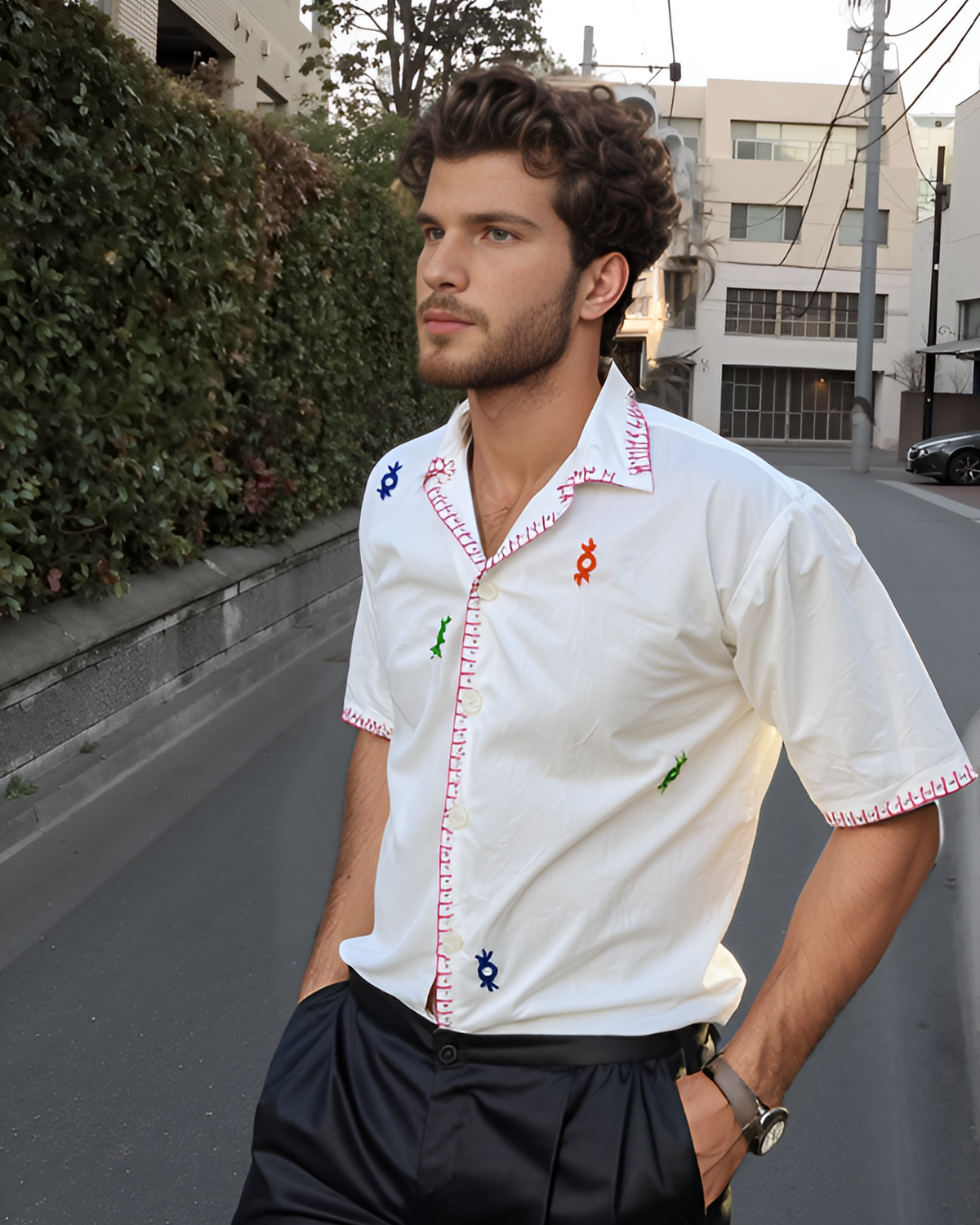
Mirror work — known as shisha (or abhla) embroidery — is a traditional Indian technique where small mirrors are held onto fabric by a framework of hand stitches. It's long associated with Gujarat, Rajasthan and the wider region, and the reflective pieces were traditionally believed to ward off the evil eye. At Vee Threads we stitch it by hand onto cotton shirts in our Bulandshahr studio. It catches the light as you move, which is exactly why it's worn to stand out.
If you've seen a shirt where tiny mirrors are sewn into the fabric and caught your eye across a room, that's mirror work. It's one of the oldest and most recognisable embroidery techniques on the subcontinent — and one of the few that interacts with light. Here's what it actually is, how it's made by hand, and how to wear a piece of it without overthinking it.

What "shisha" means
"Shisha" comes from the Persian word for glass, and the technique is thought to have travelled into India centuries ago, becoming deeply rooted in the craft traditions of Gujarat, Rajasthan and Sindh. The mirrors — historically called abhla — were once made from mica or blown glass; today they're small, lightweight mirror discs. Beyond decoration, the reflective surfaces were traditionally believed to deflect the evil eye, which is part of why mirror work shows up so often on festive and celebratory clothing.
How it's made — by hand
The thing that makes mirror work skilled is that a mirror isn't glued on — it's held by thread. Tap through how a single mirror goes on.
Anchoring the mirror
Building the frame
Surrounding the motif
By hand, every mirror
Why it stands out

Mirror work is one of the only embroidery styles that changes as you move — the mirrors catch and throw light, so a shirt that looks rich indoors comes alive under sun or evening lights. That's the whole appeal, and the reason it belongs on the pieces you wear when you want to be noticed: festivals, weddings, celebrations.
The mirror-work shirts we make

Each is hand-stitched on cotton, mirror by mirror:
Shisha Chakra Shirt — mirrors set in a chakra-style motif.
Shada Mirror-Work Shirt — a cleaner, lighter take.
Phool Mirror-Work Shirt — mirrors woven through florals.
How to wear it
Mirror work is a statement by design, so let it lead and keep everything else plain — solid trousers, simple shoes, no competing pattern. It's made for festivals, weddings and evenings out rather than the office. Open over a plain tee for an easy version, or buttoned and tucked for something sharper. More on wearing embroidered shirts generally: our men's embroidered shirts guide.
Caring for mirror work
Mirror work needs a gentler hand than plain embroidery. Wash inside out and cold (a laundry bag helps protect the mirrors), never wring it, and dry flat in shade. Never iron over the mirrors — heat can damage them and the stitches holding them; iron only the back, on low heat. Full routine: storing and ironing hand-embroidered clothes.
A few honest questions
What is shisha / mirror work embroidery?
A traditional Indian embroidery technique where small mirrors are secured to fabric with a framework of hand stitches, long associated with Gujarat and Rajasthan. The mirrors catch the light, and were traditionally believed to ward off the evil eye.
Are the mirrors glued or stitched on?
Stitched. Each mirror is held by a hand-worked framework of thread around its edge — no glue. That's what makes it durable and what makes it skilled work.
Can mirror work be machine washed?
Treat it gently — inside out, cold, in a laundry bag, no wringing, dried flat in shade. And never iron directly over the mirrors. Handled with a little care, it lasts for years.
Shop mirror-work shirts
Hand-stitched, mirror by mirror, in our Bulandshahr studio.
Mirror-Work Shirts · Embroidered Shirts for Men
More guides: Evil eye & spiritual embroidery · Why hand-embroidered clothing costs more
Shop mirror work












Share and get 15% off!
Simply share this product on one of the following social networks and you will unlock 15% off!