


Most stitch guides list forty stitches and show you a diagram of each. That is not how a working studio operates. Our artisans in Bulandshahr use about twelve stitches for almost everything, and each one earns its place because it does a specific job better than the alternatives. Here they are, with what each is genuinely good for.
Outline stitches
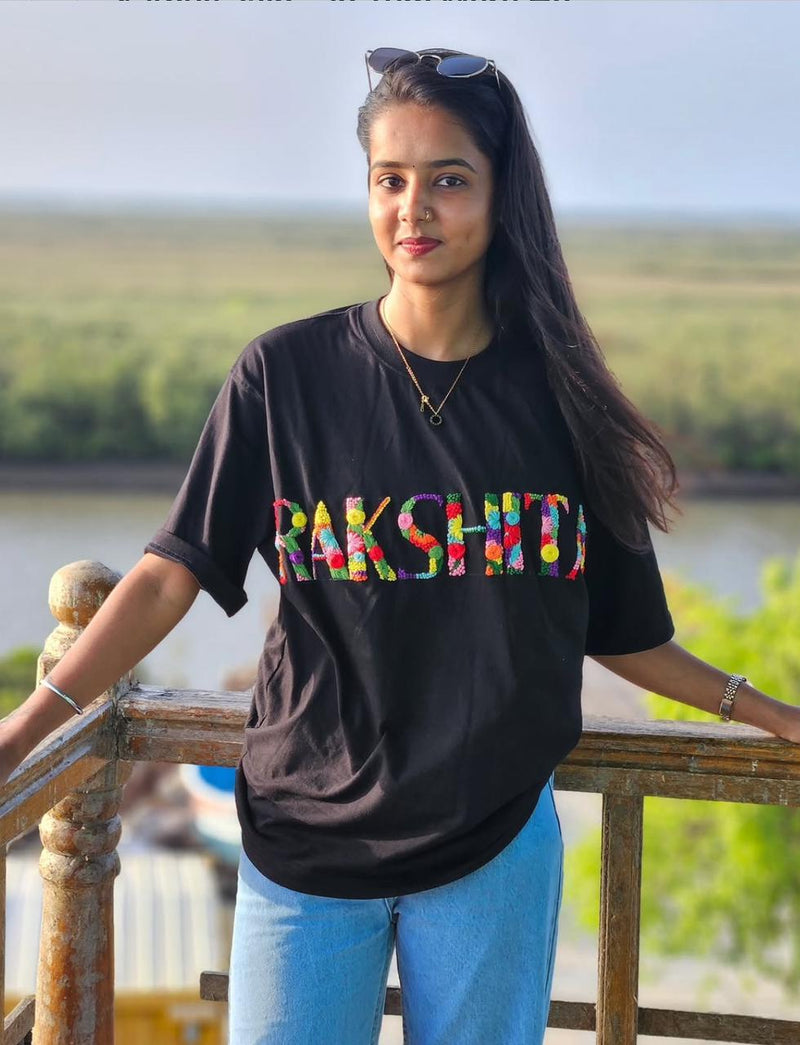
Backstitch. A solid unbroken line, worked backwards into the previous stitch. It is the plainest outline there is and the one we use for lettering when the name needs to read cleanly at arm's length. It sits flat, so it survives ironing better than raised stitches.
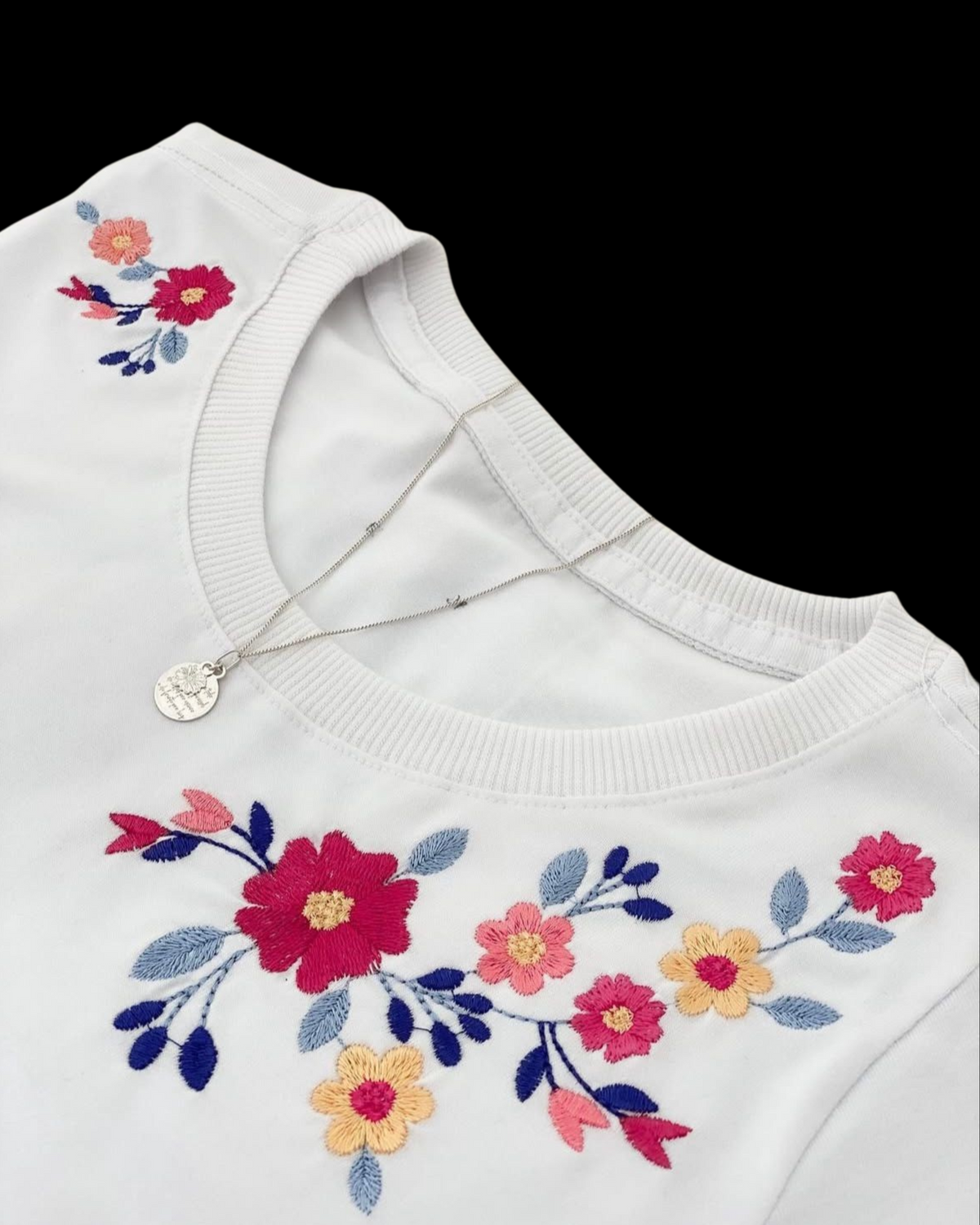
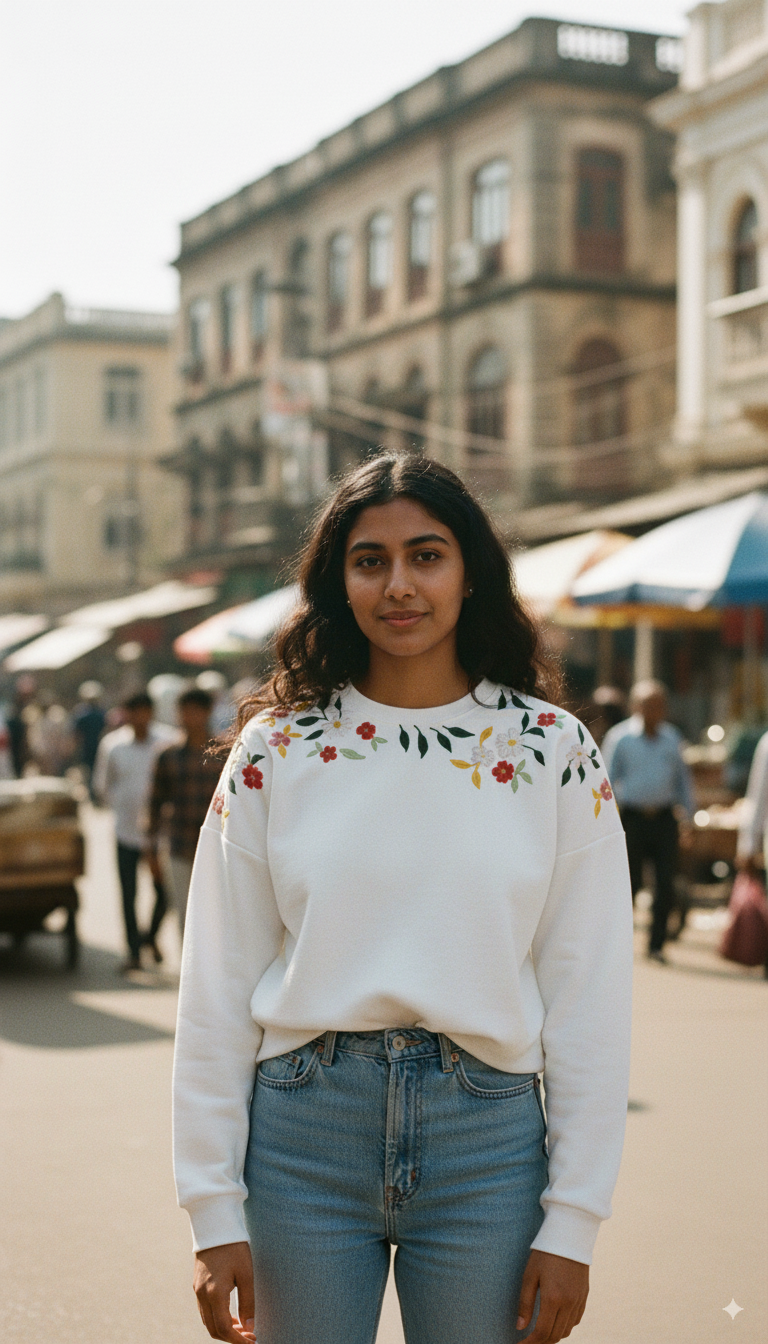
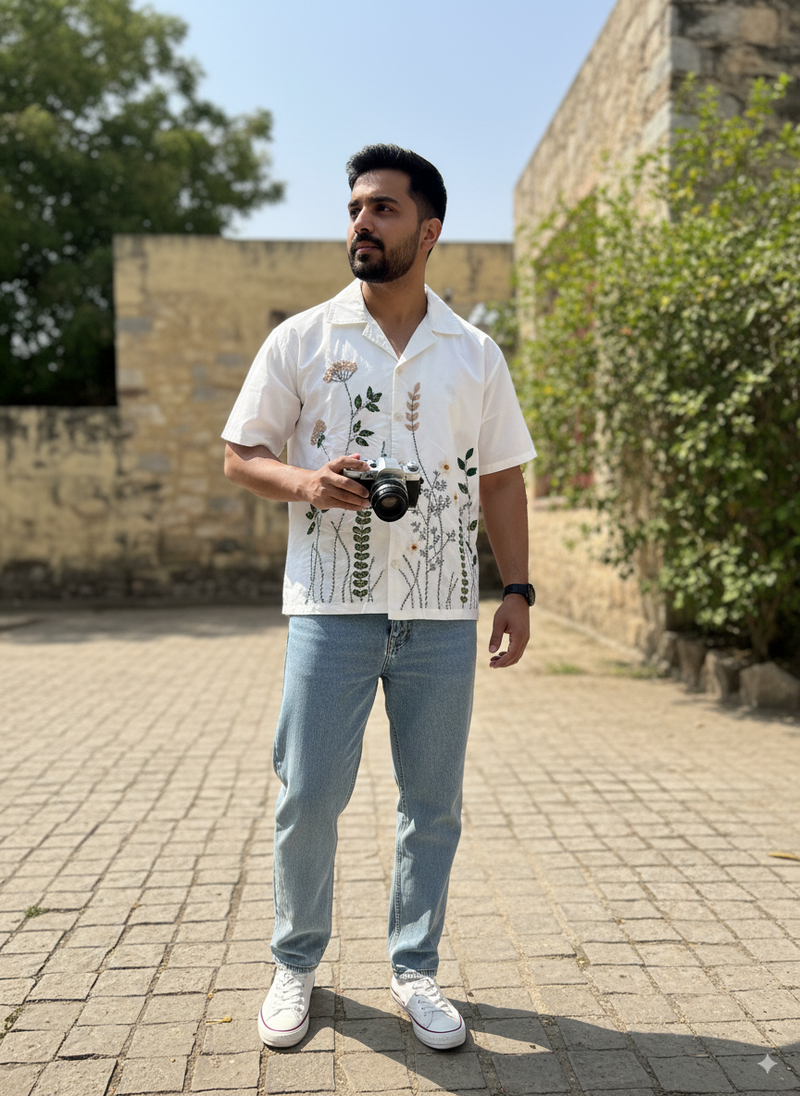
Stem stitch. Slightly rope-like, with each stitch overlapping the last at an angle. It follows a curve better than backstitch, which is why flower stems and vine work are almost always stem stitch. If you look closely at the leaves on our floral tees, the stems are worked this way.
Chain stitch. A row of interlocking loops. It reads as a thicker, more decorative line than backstitch and it is the traditional choice across a lot of Indian embroidery. Good for bold script and for outlining shapes you want to stand slightly proud of the fabric.
Split stitch. Like stem stitch, but the needle comes up through the middle of the previous stitch. It gives a fine, slightly textured line and it is the usual choice for filling small curved shapes where satin stitch would be too heavy.

Filling stitches
Satin stitch. Parallel stitches worked close together to fill a shape solidly. This is what gives petals and leaves their smooth, slightly glossy surface. It uses a lot of thread and takes time, which is part of why a densely filled design costs what it does.
Long and short stitch. Rows of uneven satin stitch that let one colour blend into the next. It is how you get shading, and it is the slowest thing we do. A bird's wing or an animal's fur is built this way, one graded row at a time.
Fishbone stitch. Worked from a centre line outward, so it naturally forms a leaf shape with a spine down the middle. Faster than satin stitch for foliage and it looks more like a real leaf.
Seed stitch. Small scattered straight stitches used to fill loosely, so the fabric still shows through. Good for texture and shading without the weight of a solid fill.

Knots and texture
French knot. The thread wraps the needle before it goes back down, leaving a small raised bead. Flower centres, scattered dots, the middle of a daisy. A cluster of them gives a nubbly texture nothing else matches.
Bullion knot. A longer wrapped stitch that coils into a small rope. Rolled rose centres are usually bullion work. It is fiddly and slow, which is why you see it used sparingly.
Lazy daisy (detached chain). A single chain loop tacked down at the tip, making one petal. Five or six around a centre gives you a daisy in seconds. It is the most efficient flower in hand embroidery.
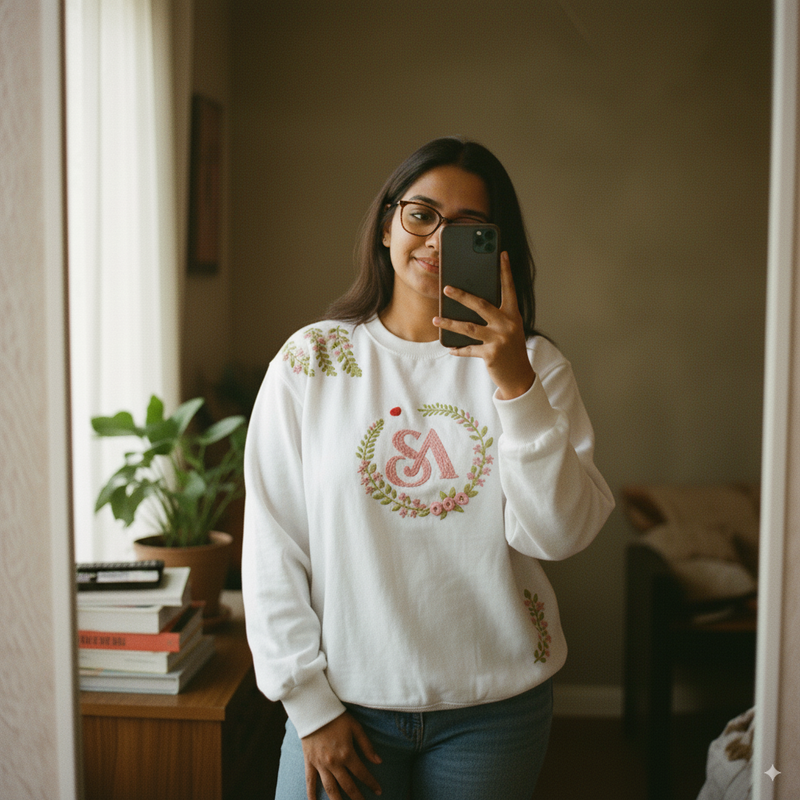
Woven wheel. Spokes of thread woven over and under to build a raised spiral rose. The coral roses in our floral wreaths are woven wheels. They sit noticeably higher off the cloth than anything else on the piece.

Which stitch for which job
- Name or lettering that must stay legible: backstitch or chain stitch
- Flower stems and vines: stem stitch
- Solid petals and leaves: satin stitch, or fishbone for leaves
- Shading and blended colour: long and short stitch
- Flower centres and scattered dots: French knots
- Raised roses: woven wheel or bullion
- Quick small flowers: lazy daisy
Why the stitch choice affects the price
A lazy daisy takes seconds. A woven wheel rose takes a few minutes. A shaded bird's wing in long and short stitch can take hours. When you compare two embroidered pieces at different prices, the stitch density and the type of stitch account for most of the difference, far more than the fabric does. A design that looks similar at a glance can carry ten times the handwork.
Questions people ask
Which stitch is strongest?
Backstitch and split stitch, because each stitch anchors into the one before it. A long satin stitch has more thread exposed on the surface, so it is the one most likely to snag.
Which stitch should a beginner start with?
Backstitch, then lazy daisy, then French knot. Those three alone will let you stitch a name and a simple flower.
Do machine embroidery designs use these stitches?
Machines use satin and fill stitches almost exclusively. French knots, bullion knots and woven wheels are hand-only, which is why raised texture is the quickest way to tell hand work from machine work.
Which stitches do you use most at Vee Threads?
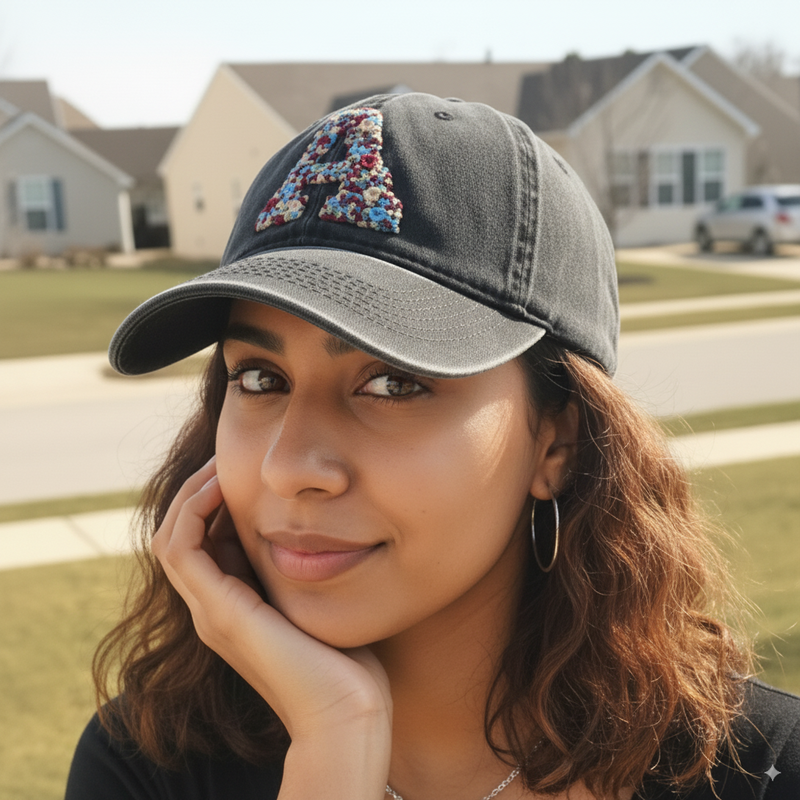
Backstitch and chain stitch for names, satin and fishbone for petals and leaves, French knots for centres, and woven wheels for the raised roses. Nearly every piece we make is some combination of those five.
If you want to see these in the cloth rather than in a list, look closely at our floral embroidered t-shirts, or read how hand embroidery differs from machine embroidery.







Share and get 15% off!
Simply share this product on one of the following social networks and you will unlock 15% off!