



In a lot of Indian clothing markets, shirts get sold as hand embroidered when they're actually machine embroidered. The price tag often hides which is which. This post explains the real difference, because the two age, wash, and repair differently, and if you're spending real money it helps to know what you're buying.
How they're made
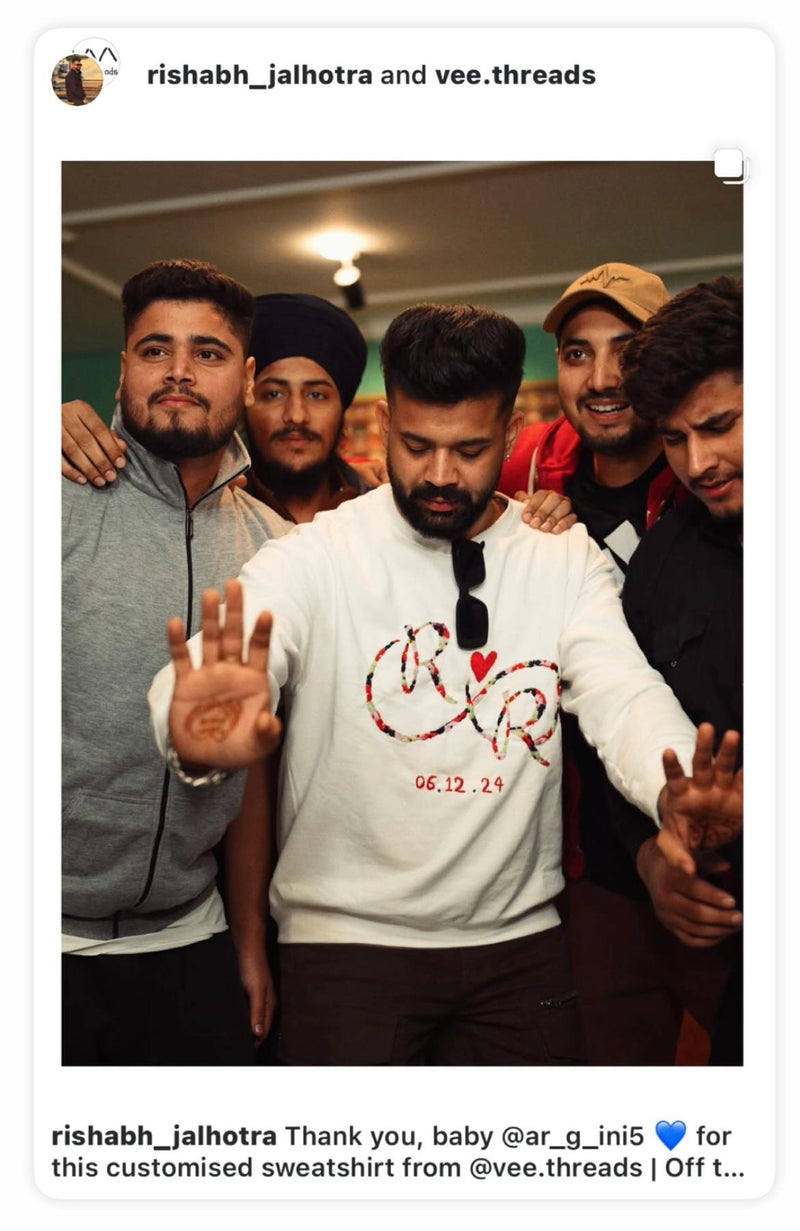
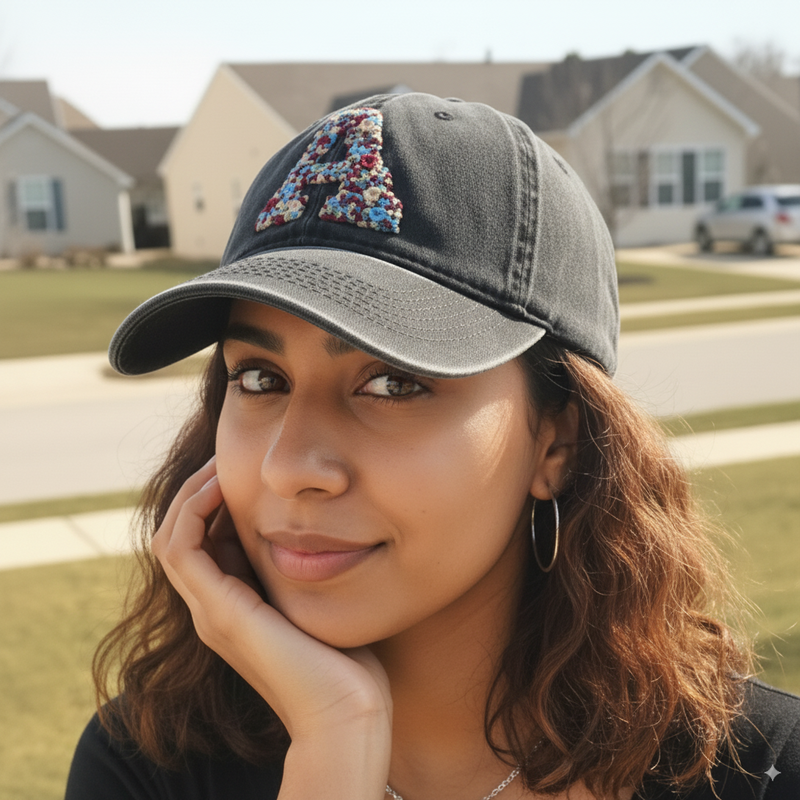
Hand embroidery is stitched by an artisan working with a frame that holds the fabric taut, one stitch at a time with a single needle. No two pieces come out identical, because no two stitches by hand are identical. That slight variation in tension and spacing is the human signature.
Machine embroidery is stitched by a computer-controlled machine reading a digital file, using several needles at once. Every piece comes out the same. The machine doesn't tire and doesn't develop a signature.
How to tell them apart
Hold the piece and look closely. Hand embroidery is raised, textured, and slightly irregular, with stitches that vary a little in density and angle. Machine embroidery is flat or uniformly raised, with perfect alignment.
The clearest test is to flip it over. A hand-embroidered back looks like a small bird's nest, with knots and crossings. A machine-embroidered back has a stabiliser fabric attached and looks like a cleaner version of the front.
How they age
This is where the practical difference matters most. Hand-stitched cotton thread has natural give, because the artisan adjusts tension as she goes, so when the fabric moves the stitches move with it. If a thread does break, an artisan can re-stitch that section.
Machine embroidery often uses polyester thread with uniform but more rigid tension, so over many washes you can start to see the embroidered area pull or pucker the fabric. Repair is harder, since recreating the exact pattern needs the original file and a machine.
How they wash
Hand embroidery does best with gentle hand washing in cool water, dried flat. It's a little more delicate during a wash, but the surrounding fabric tends to stay intact longer. Machine embroidery can take more aggressive washing because the thread is engineered for it, though the fabric around a rigid machine design can pucker over time.
What to ask when shopping
If a seller claims hand embroidery, a few questions help. Ask to see the back: hand work has a messy back, machine work is clean with backing fabric. Ask how many pieces they make in a day: a small team of artisans makes only a handful of hand pieces a day, while a machine makes many times that. And real hand embroidery shops usually photograph each piece, because each one is slightly different, rather than using a single stock photo for all.
When machine embroidery is the right choice
Machine embroidery isn't bad. It's the right choice for uniform output like corporate or school uniforms and brand merch, for fast bulk turnaround, when price is the main concern, or when a simple design needs to be repeated identically. It's the wrong choice when you want something with character and the marks of a human hand.
Why we only do hand embroidery
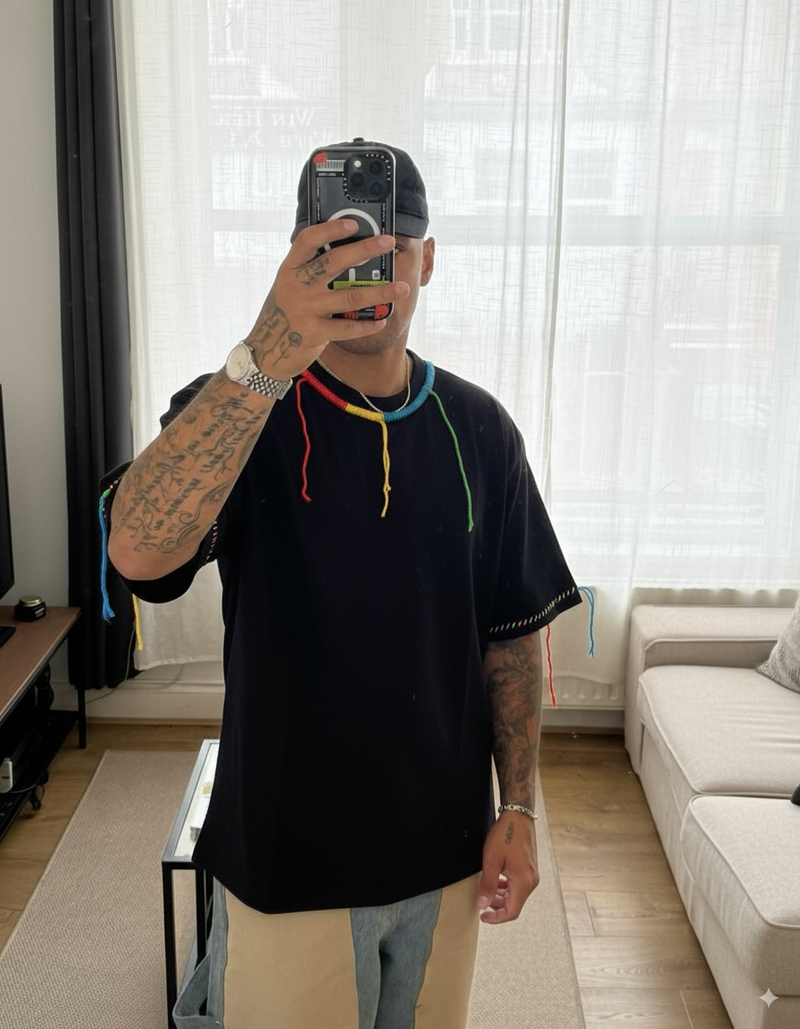
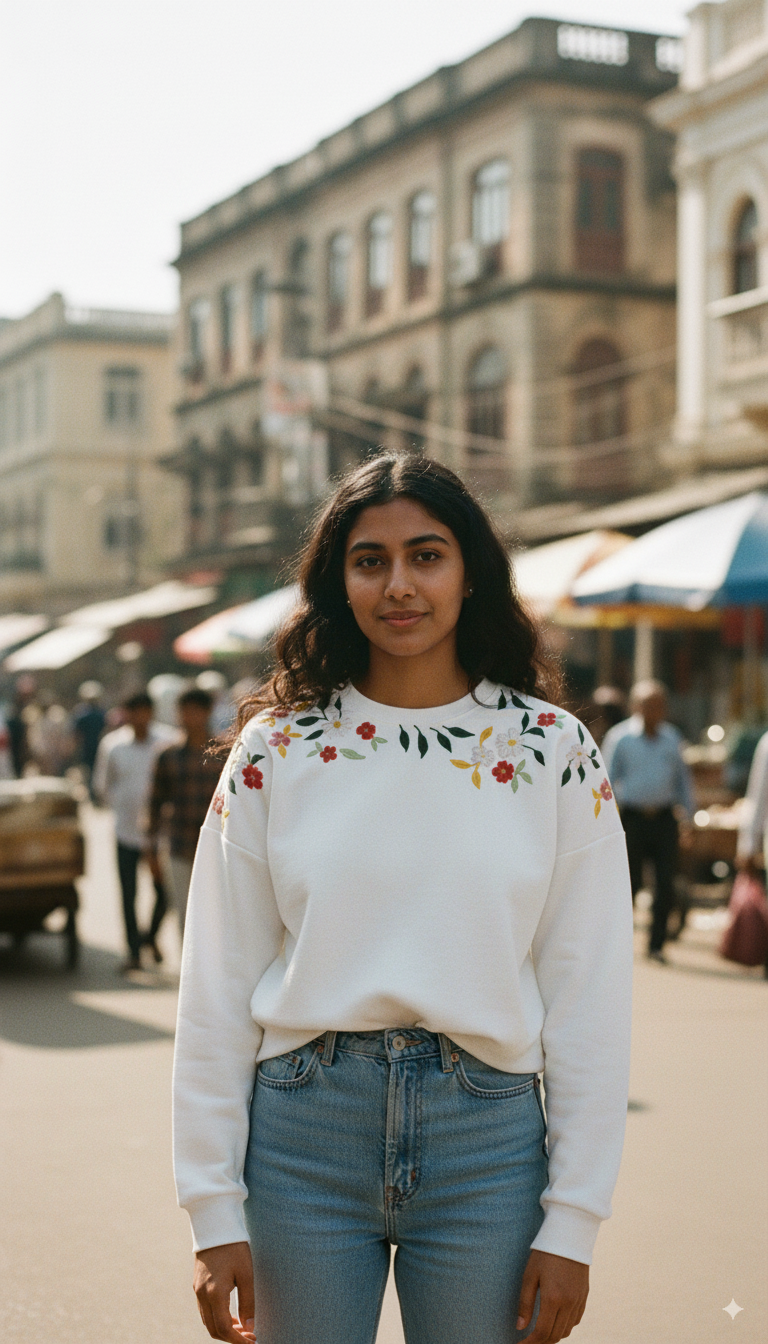
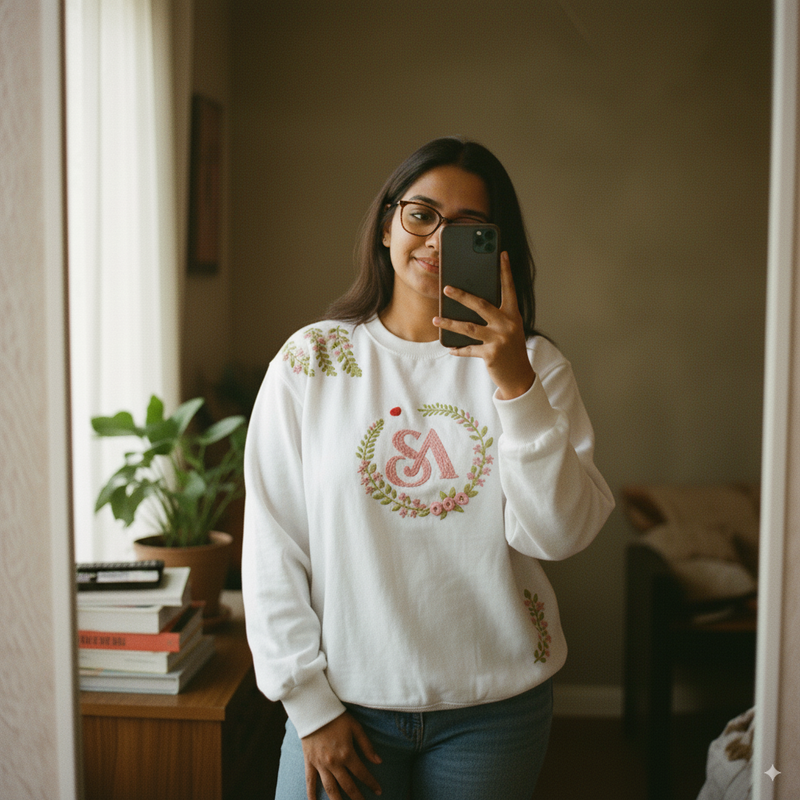
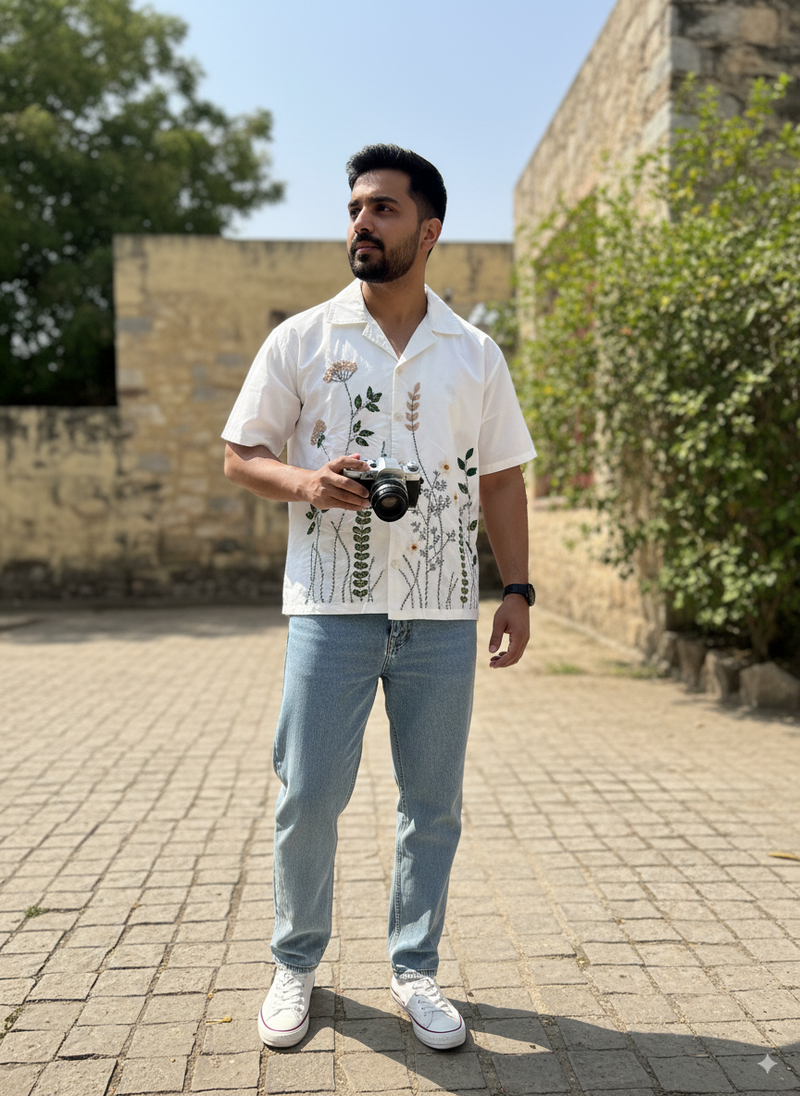
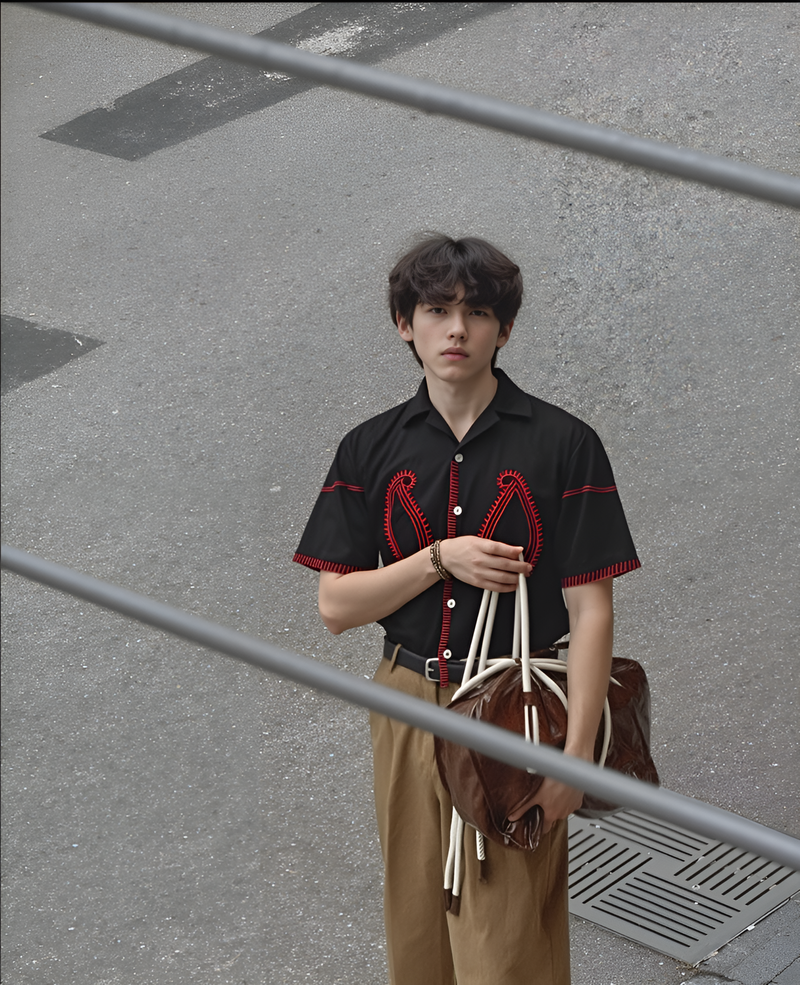
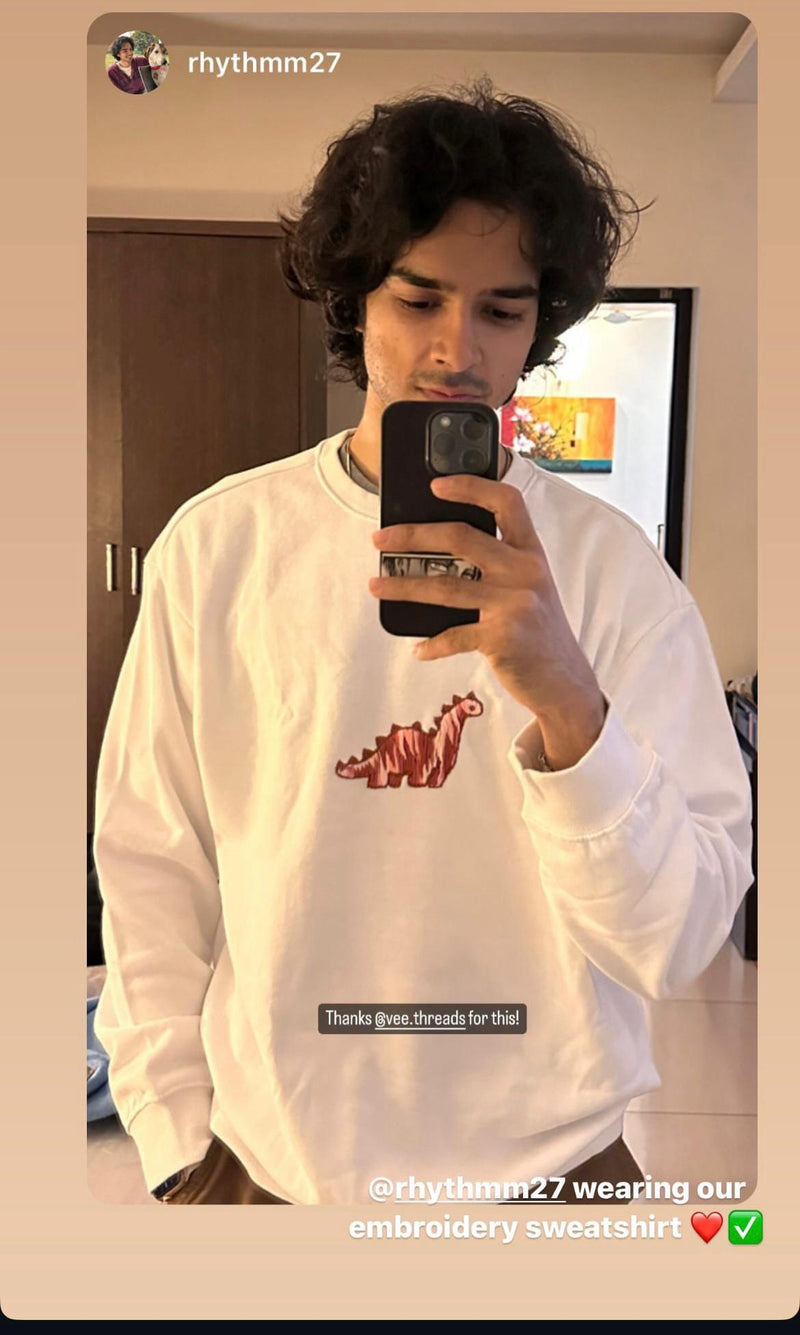
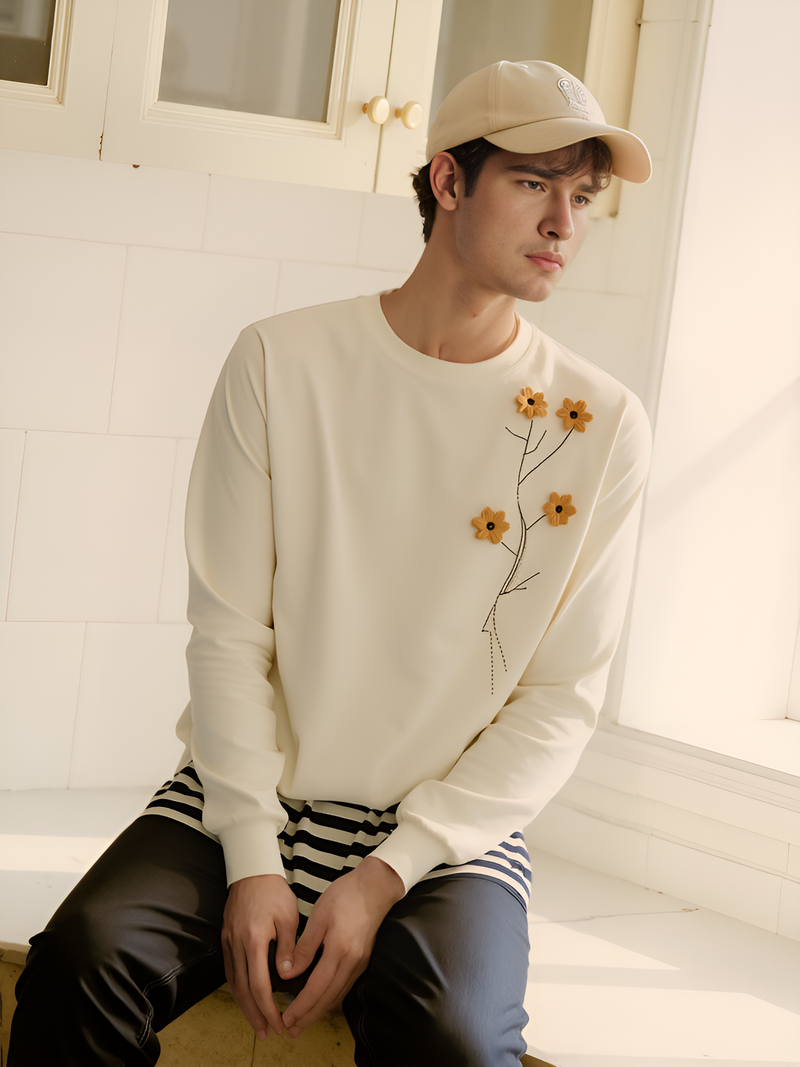
At Vee Threads, every piece is hand-stitched by women artisans in our Bulandshahr studio. We work with traditional kantha, mirror work, and floral techniques that machines can't really replicate, and the raised, textured, slightly irregular quality of hand embroidery is the product itself. Custom pieces take about 2 to 3 days, and more detailed designs take 5 to 10 days. You can browse our floral t-shirts or our embroidered shirts for men to see the work.








Share and get 15% off!
Simply share this product on one of the following social networks and you will unlock 15% off!