



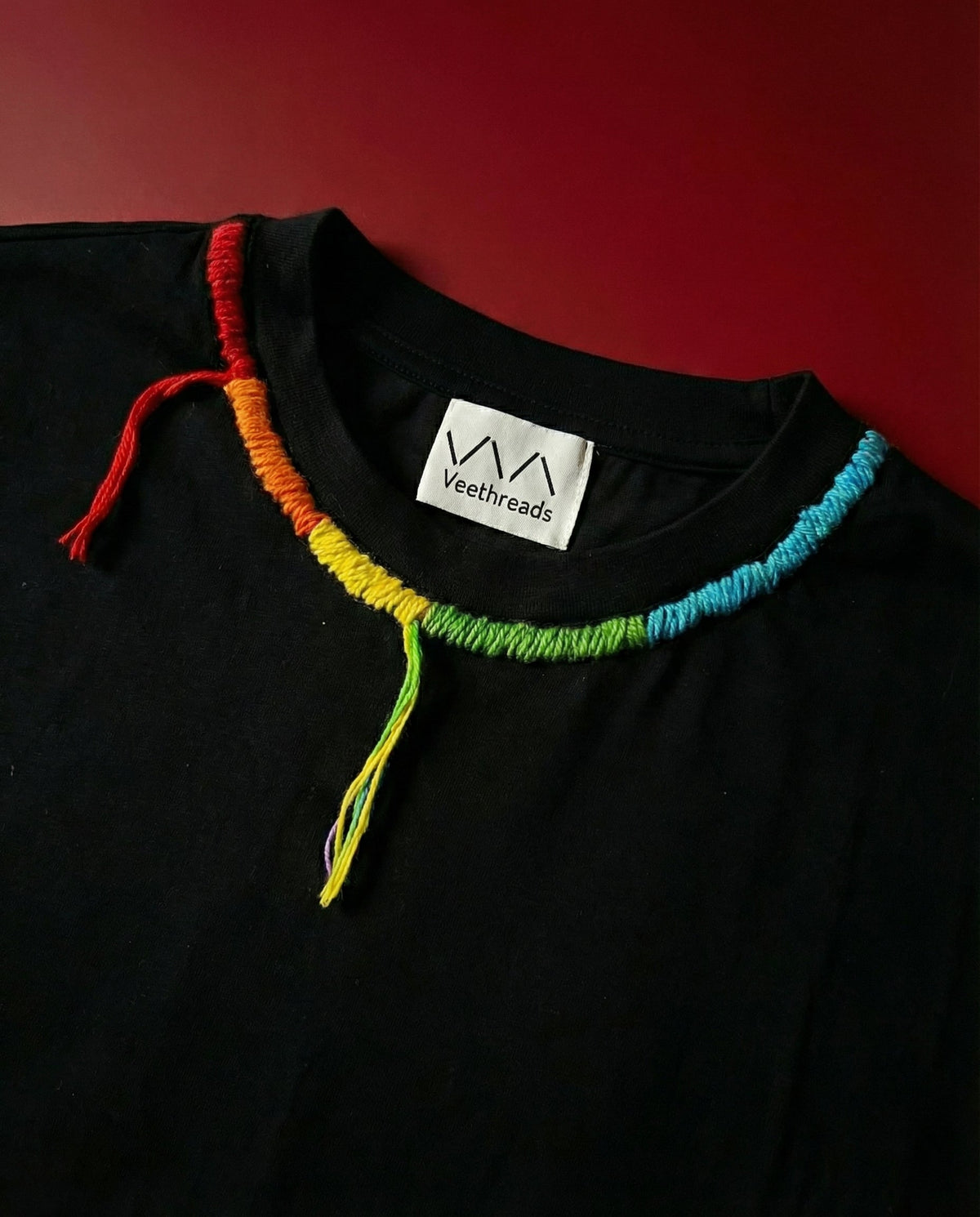
Most people order clothing online by picking the size they usually wear and hoping. With a normal fit shirt that mostly works. With an oversized cut it often does not, because oversized means different things at different brands.
This takes about five minutes and will save you a return.
The single most useful trick
Do not start by measuring your body. Start by measuring a t-shirt you already own and like the fit of.
This works better for one simple reason. A size chart usually gives you garment measurements, not body measurements, so comparing a garment to a garment removes the guesswork about how much room the brand has built in. Your favourite shirt already contains your preferences about how loose you like things.
Lay it flat on a bed or table, smooth out the wrinkles, and measure with a tape.

The three measurements that matter
Chest width. Measure straight across the shirt from one armhole seam to the other, about two centimetres below where the sleeve joins. This is a flat measurement across one side, not all the way around. Most Indian size charts list it this way.
Length. Measure from the highest point of the shoulder, right next to the neckband, straight down to the bottom hem.
Shoulder width. Measure across the back from the tip of one shoulder seam to the other. This is the one that decides whether an oversized shirt looks intentional or just too big.
Write the three numbers down. You now have something to compare against any size chart.
Where the tape goes
Lay a shirt you like flat, smooth it out, and take these three.
Chest width. Straight across from one armhole seam to the other, about two centimetres below where the sleeve joins. One side only, not all the way round.
Length. From the highest point of the shoulder, right next to the neckband, straight down to the hem.
Shoulder width. Across the back from the tip of one shoulder seam to the other. This decides whether an oversized shirt looks intentional or just too big.

If you would rather measure your body
Sometimes you do not have a shirt that fits well. In that case, measure yourself and add room.
Wrap the tape around the fullest part of your chest, keeping it level and not pulling it tight. Then divide that number in half, because size charts give a flat measurement. Then add somewhere between 8 and 15 centimetres for an oversized fit, depending on how loose you want it.
That addition is the part people get wrong. Ordering an oversized tee at your exact chest measurement gives you a normal fitting shirt, not an oversized one.
Where the shoulder seam should land
This is the difference between an oversized shirt and a shirt that is simply too large.
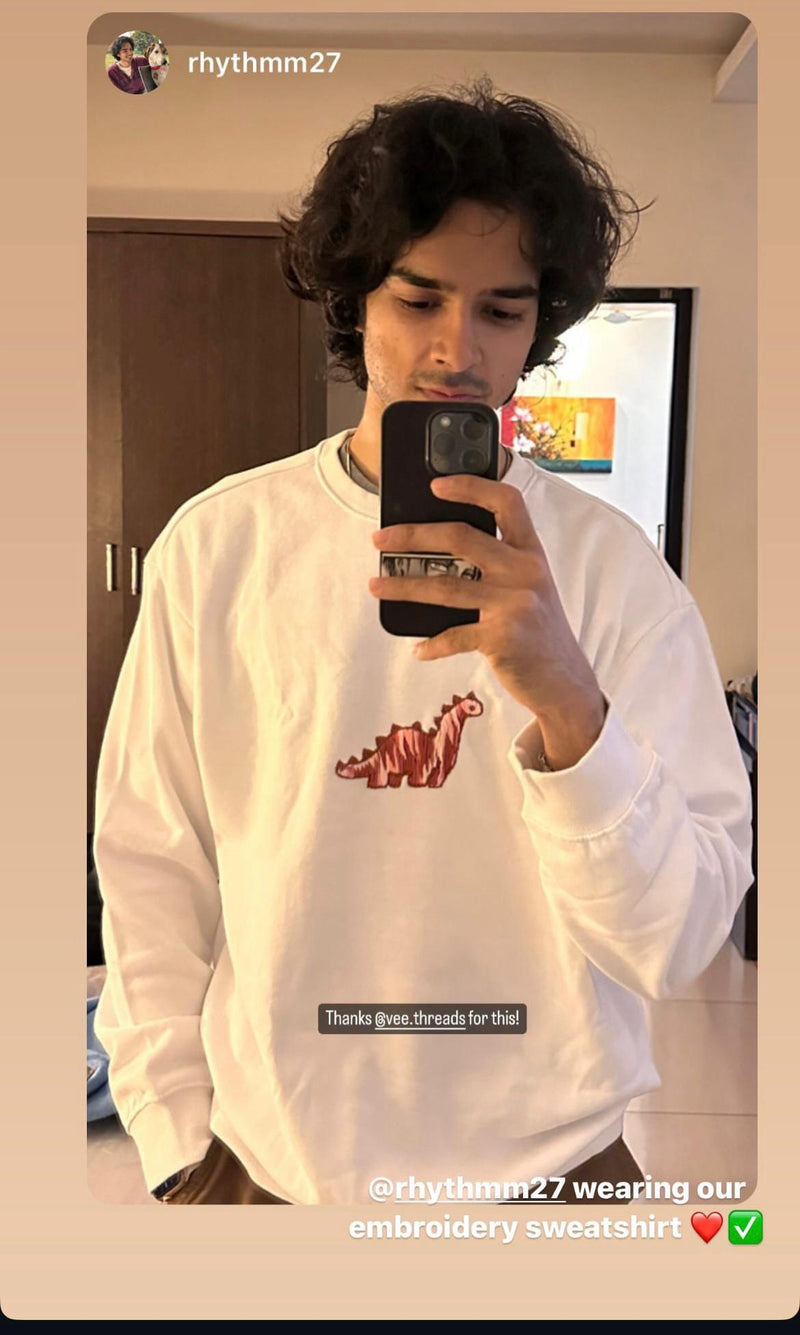
On an oversized or drop shoulder cut, the seam where the sleeve joins the body should sit partway down your upper arm, roughly a third of the way to your elbow. It should not sit on the point of your shoulder, and it should not fall as far as your elbow.
If the seam sits on your shoulder, the shirt is fitting normally and the drape will not appear. If it is near your elbow, the whole shirt will look borrowed rather than styled. Our fit guide goes into what the finished look should be.
Where the shoulder seam should land
The difference between oversized and simply too big.
On the shoulder point. The shirt is fitting normally and the drape will not appear. For an oversized look, size up.
A third of the way to the elbow. Right for a drop-shoulder oversized cut. It looks intentional.
Near the elbow. Too big. The whole shirt looks borrowed rather than styled. Size down.

Choosing between two sizes
Nearly everyone lands between sizes at some point. A few rules that hold up.
If you want the oversized look, size up. The cut only reads correctly with the extra room.
If you want to wear it as a normal tee, size down. An oversized cut one size below your usual will fit like a relaxed regular shirt, which many people actually prefer.
If length is the problem, go by length. Width can look deliberate when it is generous. A shirt that is too short never looks deliberate.
If it is a gift and you are guessing, size up. Someone can wear a slightly loose oversized tee happily. A tight one goes in a drawer.
Where the embroidery sits, and why it moves
This is specific to embroidered clothing and it catches people out.
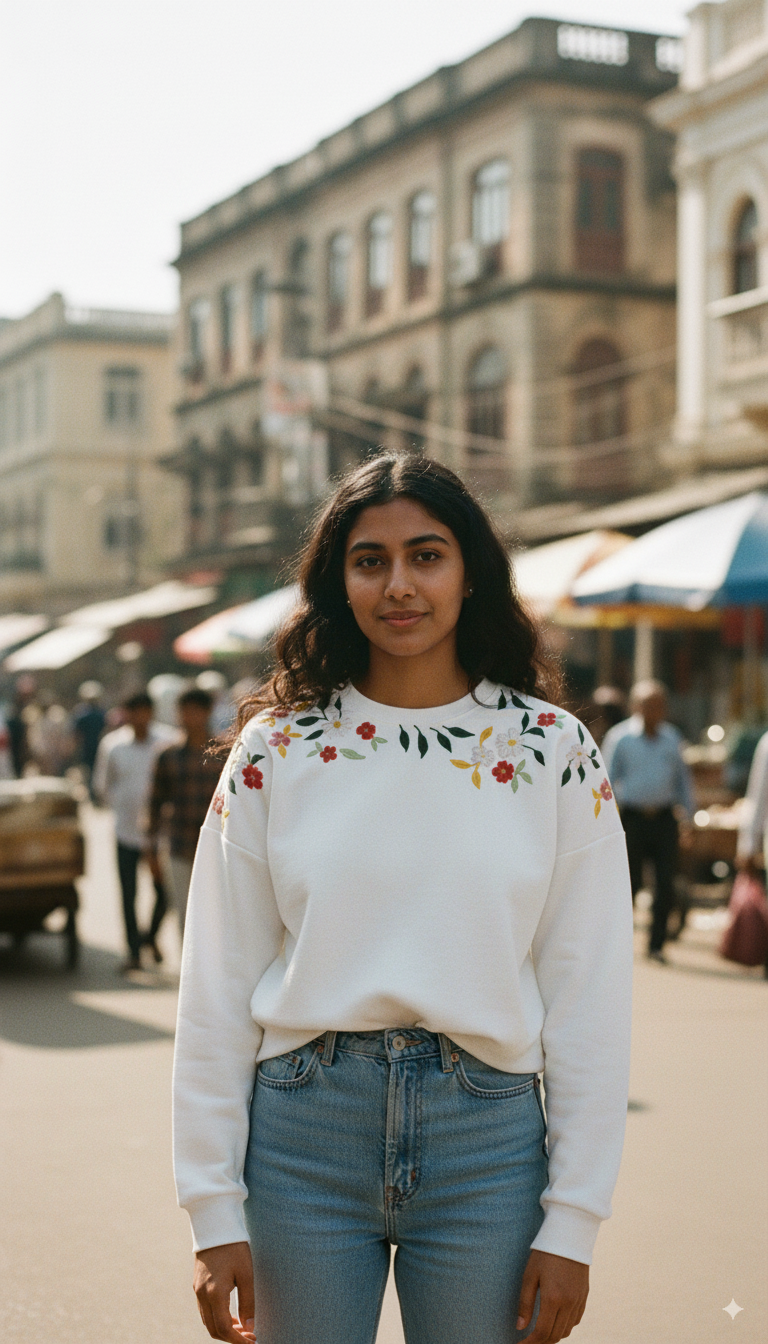
A design placed on the chest of an oversized shirt sits lower on the body than the same design on a fitted shirt, because the whole garment hangs lower. If you size up for extra room, the motif drops with it.
It is usually not a problem, but it is worth picturing before you order, particularly with a larger chest design. On a heavier fabric the shirt holds its shape rather than clinging, so the design stays flat and readable. Ours are 220 GSM for that reason, which we explain in what GSM means in t-shirts.

Measuring for a custom piece
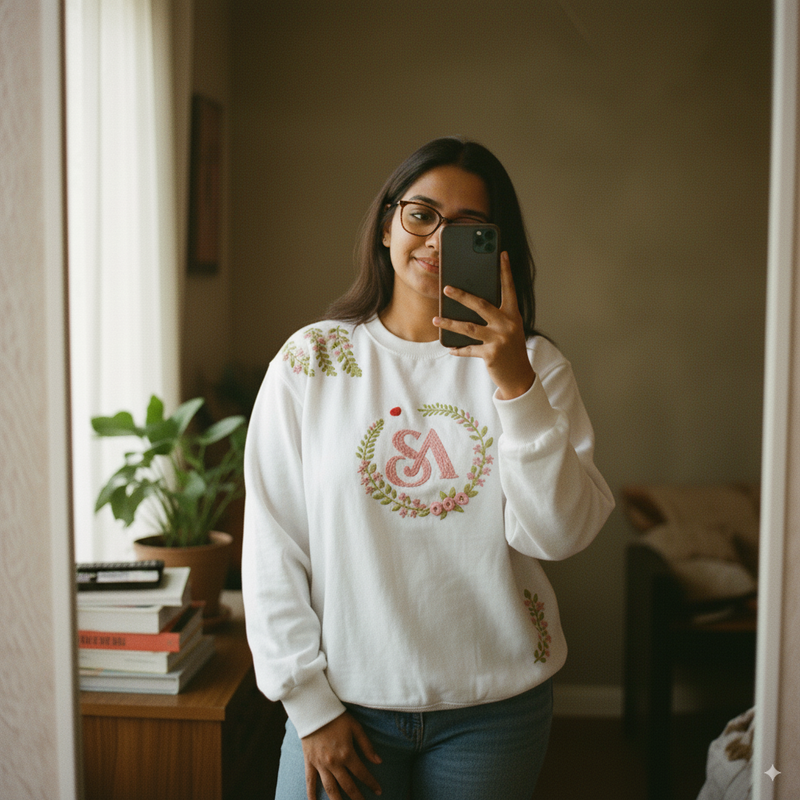
If you are ordering something with a name or initials stitched on it, get the size right first time. Personalised pieces cannot be returned for a change of mind, because a shirt with somebody's name on it cannot go to anyone else.
Custom orders also take up to 7 days to leave us, since the stitching happens after you order. Add delivery on top of that. If it is for a specific date, count backwards.
Details are on our shipping and returns page.
A quick checklist before you order
Measure a shirt you like. Compare all three numbers to the size chart, not just the chest. Decide whether you want the oversized look or a relaxed normal fit, and size accordingly. If it is personalised, check twice.
Our full size chart has the measurements for every piece, and the FAQ page answers most of what comes up. If a measurement you need is not listed, write to us and we will measure the actual garment for you.










Share and get 15% off!
Simply share this product on one of the following social networks and you will unlock 15% off!