



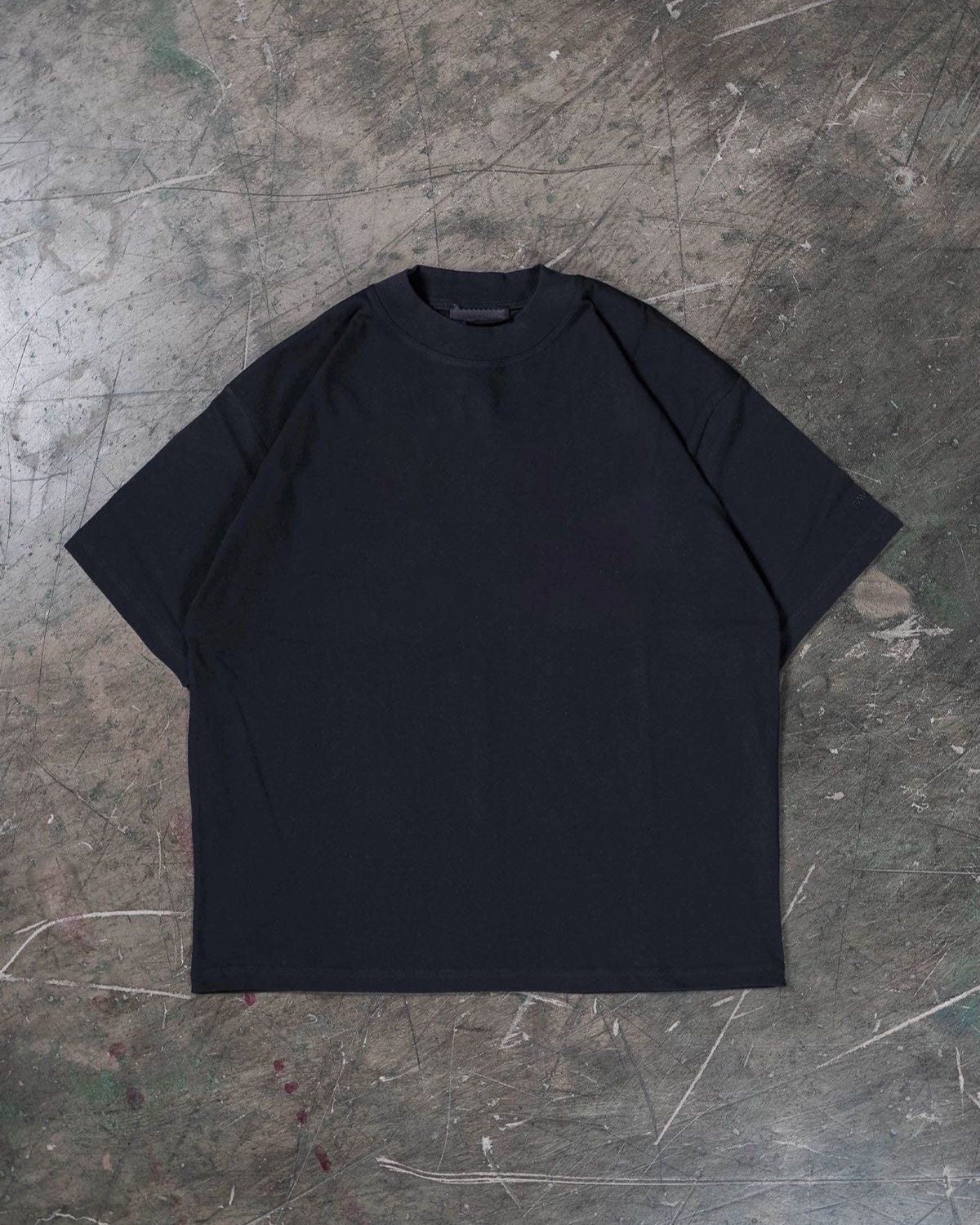
GSM is one of those numbers that appears on product pages without any explanation, as if everyone already knows. Most people do not, and it is genuinely useful to understand, because it tells you more about how a t-shirt will feel than almost anything else on the listing.
What the number actually means
GSM stands for grams per square metre. It is the weight of one square metre of the fabric.
That is all. A higher number means heavier, denser cloth. A lower number means lighter, thinner cloth. It says nothing directly about softness or quality, only about weight, though weight affects a lot of other things.
What each weight feels like
Numbers on their own are hard to picture, so here is roughly what you are holding at each level.
Around 120 to 150 GSM. Very light. This is summer vest and cheap promotional tee territory. It drapes close to the body, often shows what is underneath, and tends to lose shape at the neck fairly quickly.
Around 160 to 180 GSM. The standard weight for most high street t-shirts. Comfortable, breathable, not especially structured. Fine for everyday wear and the most common thing you will find.
Around 200 to 240 GSM. Noticeably more substantial. The fabric holds its own shape rather than clinging, it is opaque even in white, and the neckline survives washing far better. This is the range most oversized and drop shoulder tees sit in, because the cut only looks right if the fabric has some body to it. Ours are 220 GSM.
280 GSM and above. Heavyweight. Sweatshirt and hoodie territory. Warm, structured and slow to dry. Our sweatshirts are 350 GSM cotton fleece.
Hold it up to the light: what each GSM feels like
Pick a weight. The swatch shows how much of your hand shows through white cotton, and the bars show the trade-off.
Very light. Summer vests and cheap promotional tees. It drapes close, often shows what is underneath, and the neck loses shape fast.
The high street standard. Comfortable and breathable, not especially structured. A sensible pick for Indian summers, and nothing to feel you are settling for.
Noticeably substantial. Holds its own shape, opaque even in white, and the neckline survives washing. Oversized cuts only look right here. Ours are 220 GSM.
Heavyweight. Sweatshirt and hoodie territory: warm, structured and slow to dry. Our sweatshirts are 350 GSM cotton fleece.
Bars are relative, to show the trade-off. They are not lab measurements.

Higher is not automatically better
This is worth saying clearly, because product pages tend to treat GSM as a score.
A 240 GSM tee in a Chennai summer is a worse garment than a 160 GSM one, however premium the number sounds. Heavy cotton holds heat and takes longer to dry. If you want something for hot weather, lighter is genuinely the right answer.
What higher GSM buys you is structure, opacity and durability. What it costs you is breathability and a longer drying time. Neither is better in the abstract. It depends what you want the shirt to do.
Why it matters more when a tee is embroidered
Here is the part that is specific to what we make, and the reason we care about the number at all.
Embroidery pulls on fabric. Every stitch puts a small amount of tension on the cloth around it, and a filled design puts hundreds of those next to each other. Thin fabric cannot take that. It puckers, warps and gathers around the design, so the garment never sits flat again. You have probably seen this on cheap embroidered clothing without knowing what caused it.
Heavier cotton absorbs the tension and stays flat. That is the main reason we work at 220 GSM rather than the more usual 180.

There is a second reason too. Hand embroidery leaves thread paths on the reverse of the fabric. On thin, pale cotton those show through as faint shadows behind the design. Denser fabric is opaque enough to hide them.
Same motif, two fabric weights
Hand embroidery has no backing sheet, so the fabric has to take the pull of every stitch on its own.
160 GSM. Thin jersey cannot take the tension of hundreds of stitches pulling side by side. It gathers into ripples around the design that never flatten, and on pale cotton the thread carried across the back shadows through to the front.
220 GSM. Heavier cotton absorbs the tension and stays flat, and it is dense enough to hide the reverse of the stitching. This is why every tee we embroider starts at 220.
Machine embroidery gets around both problems by using a stiff backing sheet that stays inside the garment permanently. Hand embroidery has no backing, so the fabric itself has to do that job. There is more on this difference in hand embroidery versus machine embroidery.
How to check GSM when nobody tells you
Plenty of listings leave it out. A few things help.
Hold it up to a light. If you can clearly see your hand through a white tee, it is light. Genuinely opaque white cotton is usually 200 GSM or more.
Look at the neckband. Thin fabric usually comes with a thin, floppy collar. A firm ribbed neckband is a decent sign the body fabric has some weight to it.
Check how it is described. Words like breathable and lightweight generally mean under 180. Heavyweight, structured and premium cotton usually mean over 200. This is imprecise but it is something.
Ask. A brand that knows its own fabric will answer immediately. Hesitation is informative.
Choosing the right weight for you
A rough guide.
For Indian summers and daily wear in hot cities, 160 to 180 GSM is sensible and you should not feel you are settling.
For an oversized fit that actually holds its shape, look for 200 GSM and up. Below that, an oversized cut just hangs limply.
For anything embroidered, 200 GSM or more, for the reasons above.
For layering in winter, or for a piece you want to feel substantial as a gift, go to sweatshirt weight.

The other numbers on the label
GSM is not the only thing that matters, and treating it as the only quality signal is a mistake.
Cotton type affects softness more than weight does. Combed cotton has the short fibres removed, so it feels smoother and pills less. The knit matters too, since jersey, pique and fleece behave differently at the same GSM. And how a garment is finished, particularly the shoulder seams and neckband, decides how it looks after twenty washes.
Our post on what makes a good embroidered t-shirt covers the rest of it.
Where to see it
If you want to feel the difference between weights, the easiest comparison is a standard tee against an oversized one. Our embroidered tee shirts are 220 GSM and our sweatshirts are 350 GSM, and the gap between the two is obvious the moment you hold both.

Fit is the other half of this question. If you are unsure how an oversized cut should sit, our fit guide explains where the shoulder seam is supposed to land.

















Share and get 15% off!
Simply share this product on one of the following social networks and you will unlock 15% off!