



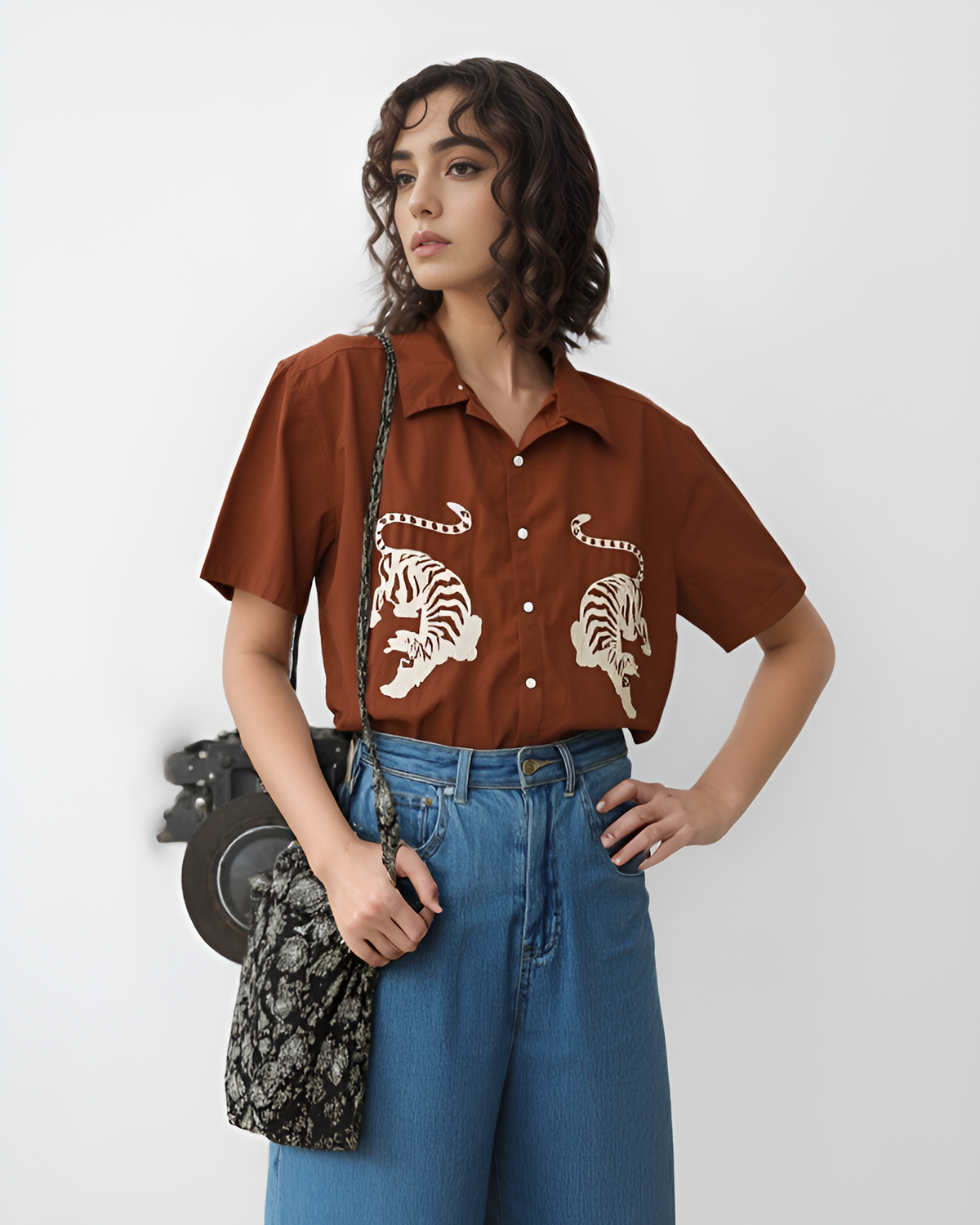
An embroidered shirt is one of the few men's garments where the detail does all the work. No print, no slogan, no logo — just thread worked into cloth. Done well, it reads as considered. Done badly, it looks like a machine ran over a good shirt.
This guide covers what separates the two, what a mens embroidered shirt should cost in India in 2026, and where the embroidery should actually sit.
Hand or machine: the difference that sets the price
Almost every embroidered shirt sold in India is machine-embroidered. A design is digitised, loaded onto a multi-head machine, and stitched out identically across hundreds of garments. It's real thread and it's durable. It is also a reproduction.
Hand embroidery is a person at a frame with a needle. Our shirts are worked by artisans in Bulandshahr, Uttar Pradesh — a dense front panel can take a full working day.
Three ways to tell them apart before you buy:
- The reverse. Machine work leaves a uniform bobbin pattern and a layer of stabiliser backing. Hand work leaves knots and thread tails, and no stabiliser.
- Repetition. Six identical flowers at identical intervals means digitised. Hand-stitched motifs drift — a petal wider here, a stem curving differently there.
- Edges. Machine satin stitch has a hard, glassy boundary. Hand satin stitch is softer at the edge, because individual strands catch light differently.

Why woven shirting is better than jersey for embroidery
This is the reason embroidered shirts generally look sharper than embroidered t-shirts.
Shirting is woven. It doesn't stretch, it holds its shape under the needle, and it carries fine detail without distorting. Jersey — what t-shirts are made of — is knitted. It stretches in every direction, which means dense embroidery has to be worked with give built in, and very fine lines tend to sink into the fabric.
If you want detail, buy the shirt. If you want everyday wear, buy the tee. Both are legitimate; they're just different jobs.
Fabrics that work
- Cotton poplin and cambric — the default. Smooth, stable, takes detail well.
- Linen and linen blends — beautiful with embroidery, and the texture flatters loose stitching. Creases, obviously.
- Denim and chambray — the best surface of all for hand work. Heavy, stable, and thread sits proud of the weave.
- Silk and satin — luxurious, unforgiving. Every needle hole is permanent.
- Polyester blends — avoid for hand work. The needle drags and the thread never quite sits right.
Where the embroidery should sit
| Placement | Effect | Notes |
|---|---|---|
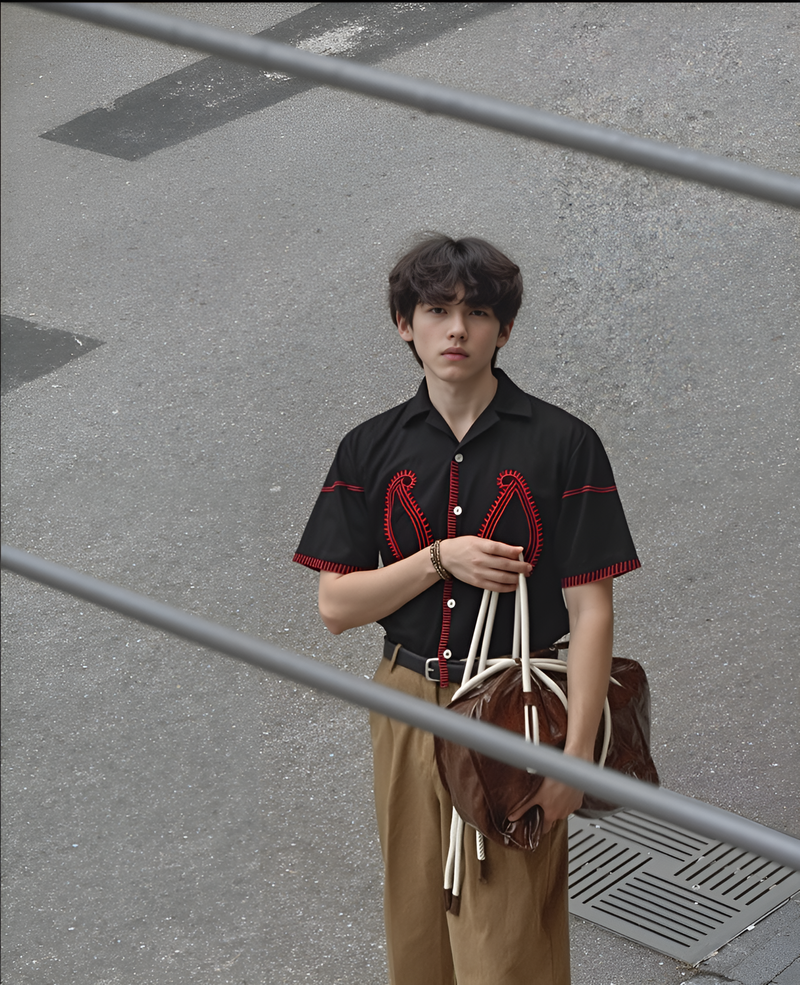
| Placket and button band | Subtle, formal | Reads well under a jacket |
| Collar and collar stand | Visible when worn open | Small motifs only |
| Chest / left chest | Classic | Most stable area of the garment |
| Full front panel | Statement | Needs a heavier fabric |
| Cuffs | Understated | Shows when sleeves are rolled |
| Back yoke | Large scenes | Nothing abrades it |
| Hem and side vents | Unexpected | Works untucked |
Avoid dense work over the underarm and side seams. Those areas flex constantly, and thread eventually pulls.
Where the embroidery sits on a shirt
Tap a spot. Dense work over the underarm and side seams is the one to avoid.
Placket and button band. Subtle and formal. Reads well under a jacket.
Collar and collar stand. Visible when worn open. Small motifs only.
Chest or left chest. The classic, and the most stable area of the garment.
Full front panel. A statement. Needs a heavier fabric.
Cuffs. Understated, and shows when sleeves are rolled.
Back yoke. Room for large scenes, and nothing abrades it.
Hem and side vents also work if you wear the shirt untucked.

What a mens embroidered shirt costs in India
| Type | Typical price |
|---|---|
| Printed “embroidery-look” shirt | ₹700 – ₹1,200 |
| Machine-embroidered, small motif | ₹1,200 – ₹2,000 |
| Machine-embroidered, all-over | ₹2,000 – ₹3,500 |
| Hand-embroidered, small motif or initials | ₹2,000 – ₹3,000 |
| Hand-embroidered, detailed panel | ₹3,500 – ₹7,000 |
| Traditional regional work (chikankari, kashida, zardozi) | ₹4,000 – ₹20,000+ |
The jump at the hand-embroidered tier is labour. If a shirt advertised as hand-embroidered with a full front panel is priced at ₹1,200, either it isn't hand-embroidered or someone isn't being paid properly. Both are worth knowing.
What a men's embroidered shirt costs in India
Tap a tier. Grey is print or machine; terracotta is hand work.
Printed embroidery-look. ₹700 to ₹1,200. No thread at all.
Machine, small motif. ₹1,200 to ₹2,000.
Machine, all-over. ₹2,000 to ₹3,500.
Hand, small motif or initials. ₹2,000 to ₹3,000. The jump from here is labour.
Hand, detailed panel. ₹3,500 to ₹7,000. A full front panel priced at ₹1,200 is either not hand work, or someone is not being paid properly.
Traditional regional work. Chikankari, kashida, zardozi: ₹4,000 to ₹20,000 and beyond.
Motifs, and what they signal
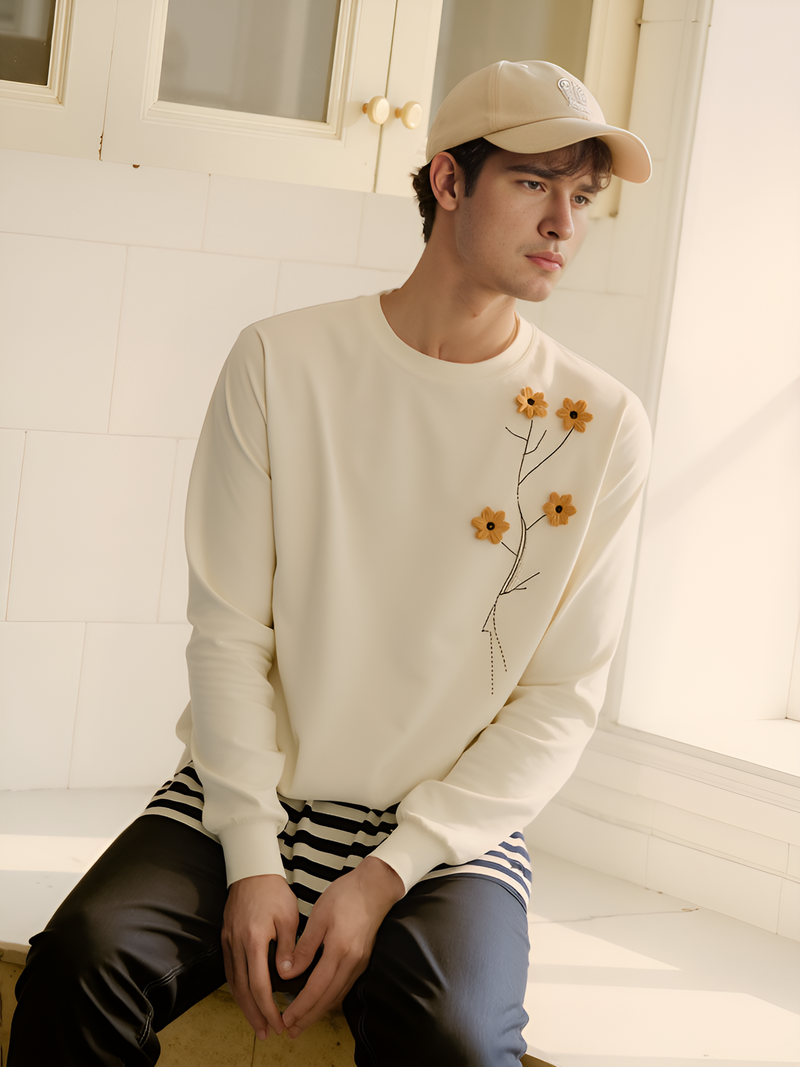
Florals are the largest category and the most versatile — a single sprig on the chest reads very differently from a garden across the whole front.
Birds and animals are the hardest to execute. Feathers and fur are built up in overlapping long-and-short stitch to get the shading, which is why a well-thread-painted bird costs what it does.
Geometric and paisley work sits closest to traditional Indian embroidery and reads as ethnic-adjacent rather than western.
Mirror work (shisha) holds small mirrors to the cloth with worked thread — no glue. It catches light as you move, which is exactly why printed imitations look dead.
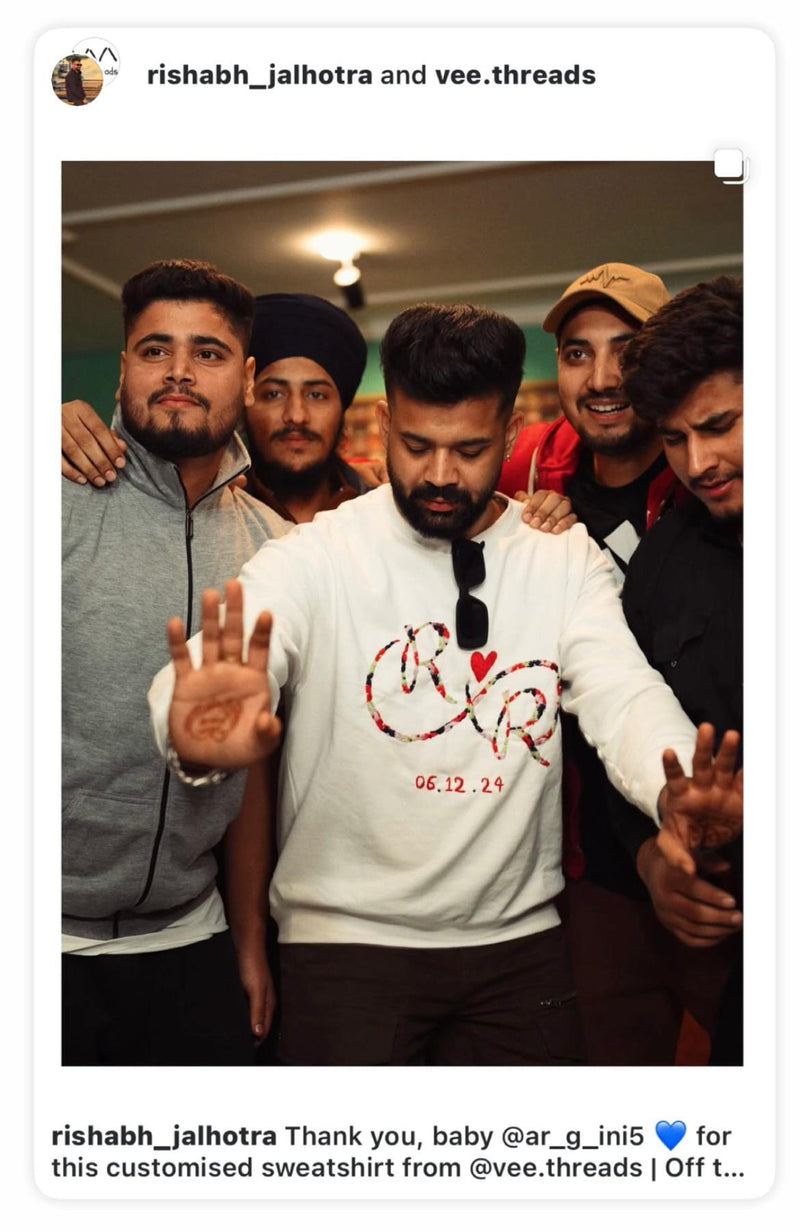
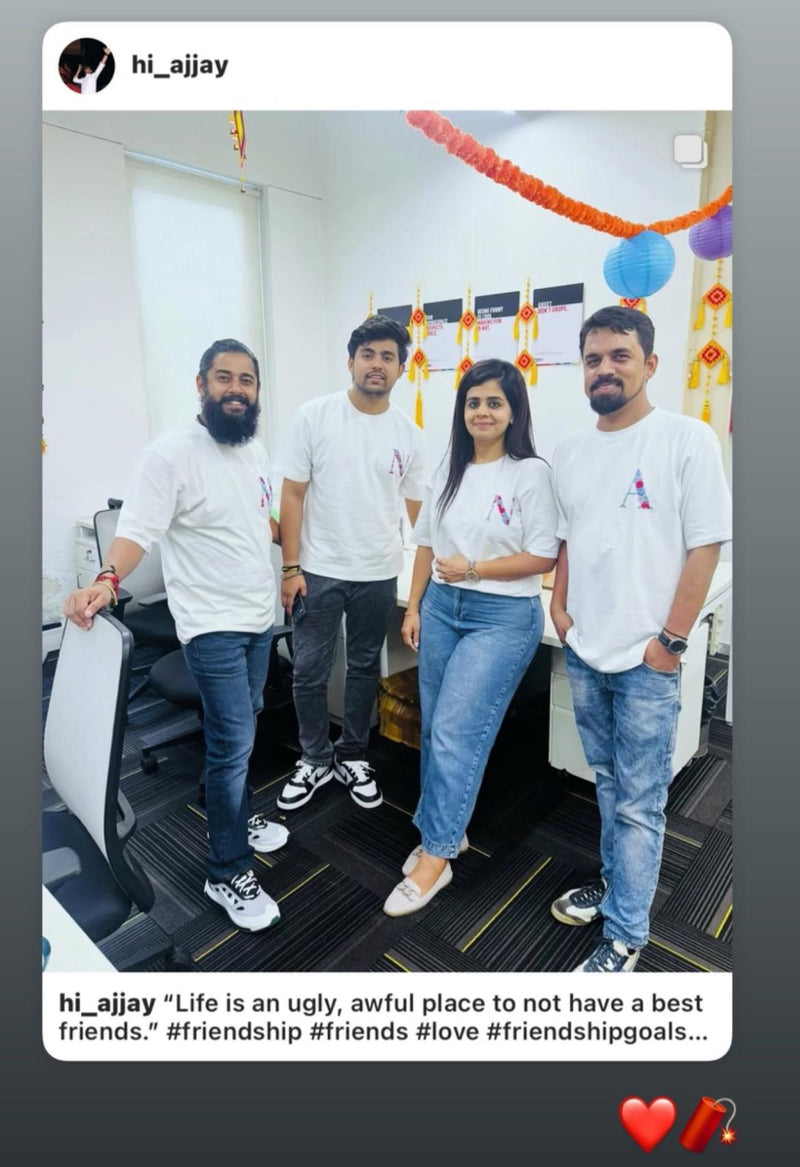
Monograms and initials are the most requested custom option and the cheapest to add.

How to wear one
The rule is straightforward: if the shirt is doing something, everything else should stop.
- Heavy embroidery → plain trousers, plain shoes, no other pattern.
- Small motif or collar detail → treat it as a plain shirt. It works under a blazer.
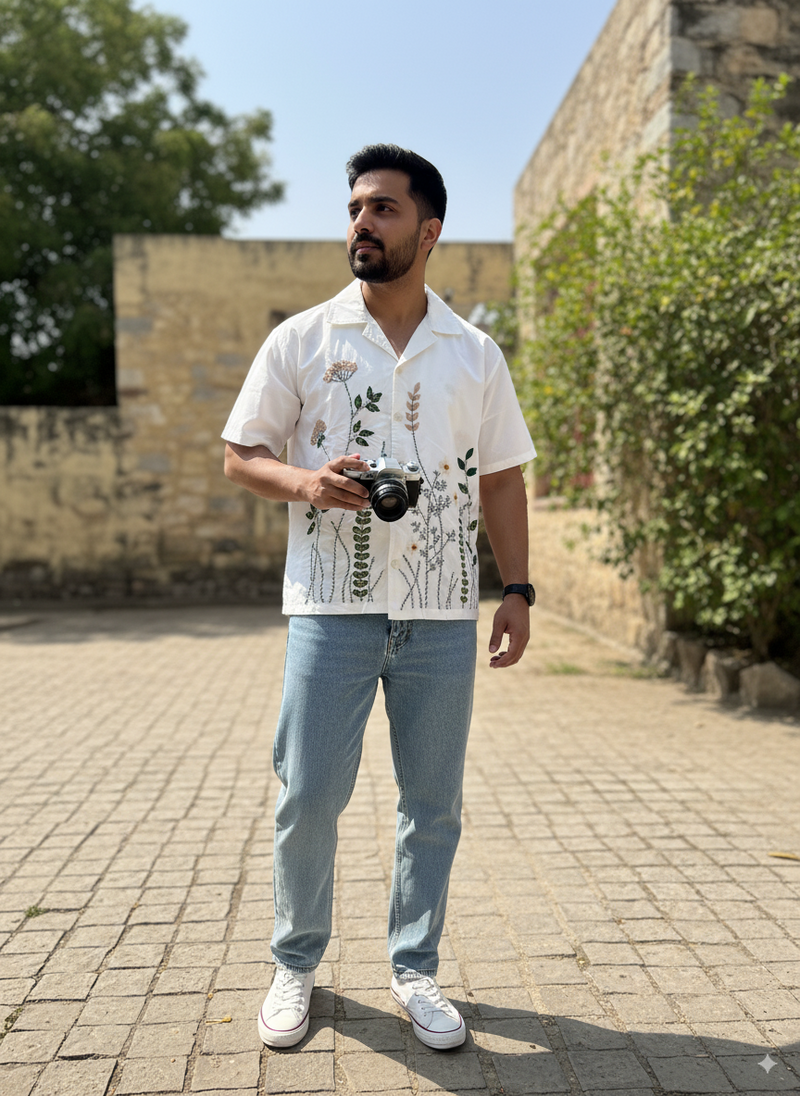
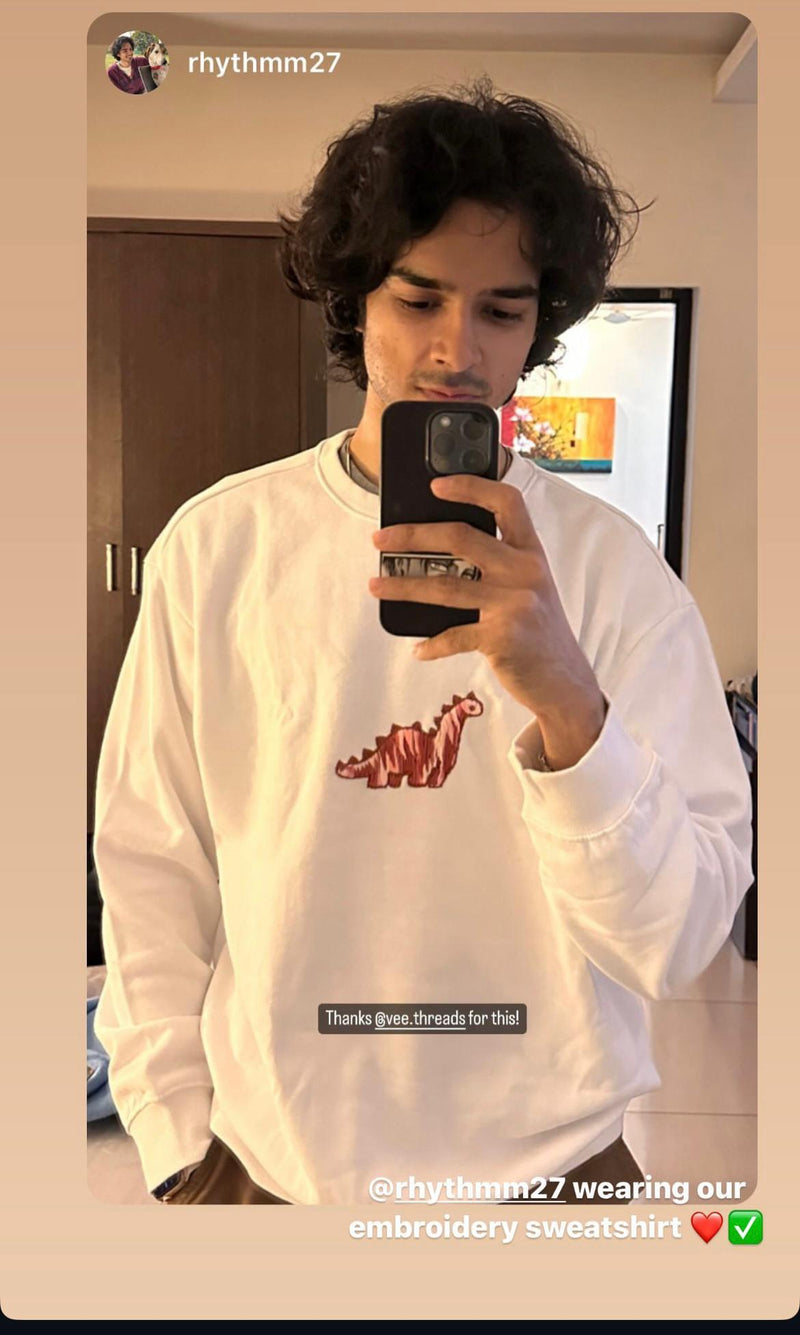
- Full-front florals → wear it untucked with straight-leg denim and leather sandals or clean white trainers.
- For weddings → a hand-embroidered shirt with tailored trousers is a genuine alternative to a kurta, and considerably more wearable afterwards.

Care
- Wash inside out, cold, gentle cycle — or hand-wash
- Never wring the embroidered area; press water out flat
- No dryer. Heat shrinks cotton thread and cotton cloth at different rates, and that is what causes puckering
- Dry flat in shade — direct sun fades dyed thread faster than it fades fabric
- Iron on the reverse, or under a cloth. Never directly on the stitching
- If a thread pulls, don't cut it — work it back through from the reverse, or send it to whoever made it
A short buying checklist
- Is it hand or machine embroidered? Ask for a photo of the reverse.
- What's the base fabric and weight?
- Is the embroidery placed away from high-flex seams?
- Are there multiple photos of the actual garment, or one reused hero image?
- What's the repair policy if a stitch pulls?
A good embroidered shirt should outlast three printed ones. Thread doesn't crack, flake or peel the way a print does — it either holds or, very occasionally, pulls, and a pulled stitch can be repaired.
Vee Threads hand-embroiders shirts in Bulandshahr, Uttar Pradesh. Real thread, no prints, no iron-on patches.
Shop: Mens Embroidered Shirts · Mirror Work Shirts · Hand Embroidered T-Shirts · Name & Initial Embroidery







Share and get 15% off!
Simply share this product on one of the following social networks and you will unlock 15% off!