



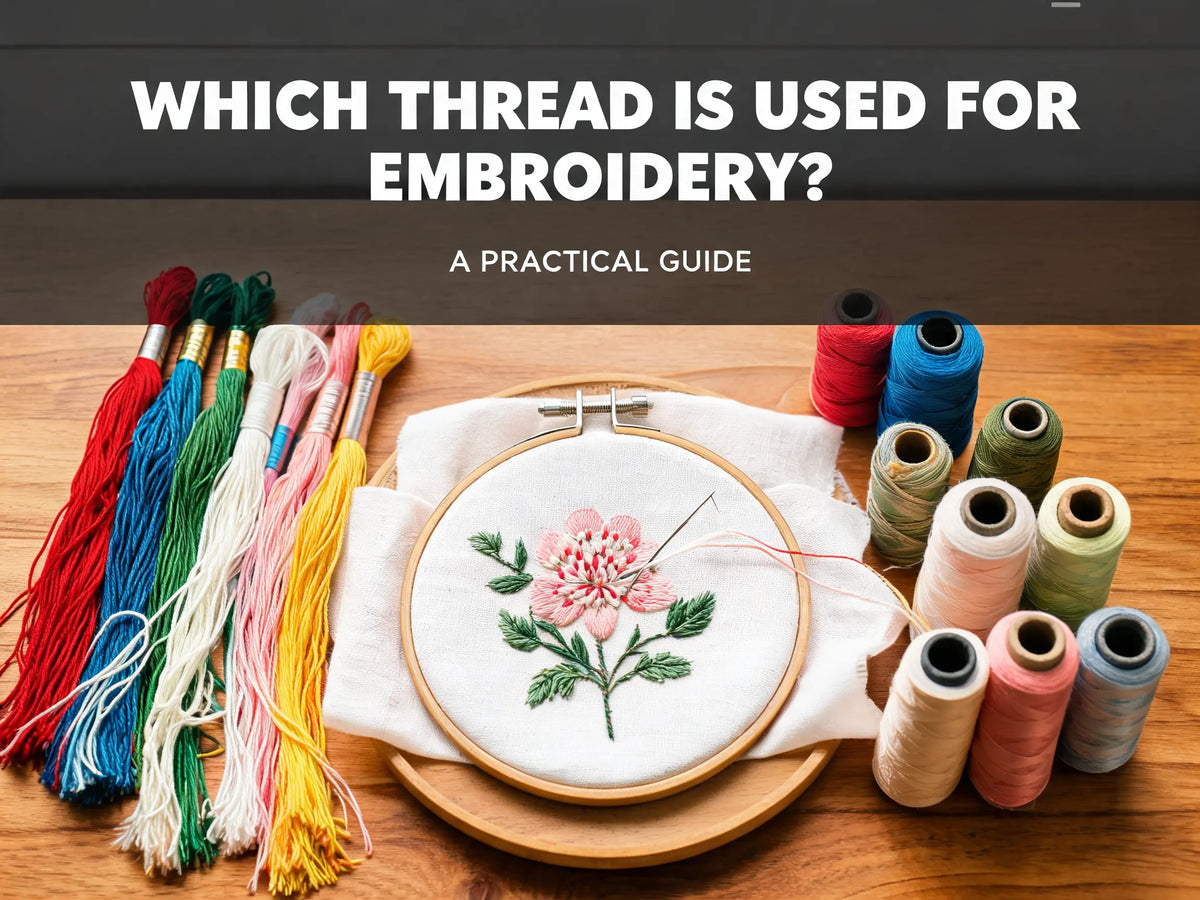
Most embroidery problems that look like skill problems are actually thread problems. Wrong weight for the fabric, wrong number of strands for the stitch, or a fibre that was never going to survive a wash.
Here's what each type is for.
Quick comparison
| Thread | Best for | Sheen | Washes well | Difficulty |
|---|---|---|---|---|
| Six-strand cotton floss | Almost everything | Soft | Excellent | Easy |
| Perle (pearl) cotton | Texture, knots, outlines | Medium | Excellent | Easy |
| Silk | Fine detail, shading | High | Careful only | Hard |
| Rayon | Machine work, high shine | Very high | Good | Medium |
| Polyester | Durability, colourfastness | Medium | Excellent | Easy |
| Metallic | Accents only | Very high | Poor | Very hard |
| Wool / crewel | Heavy fabric, texture | Matte | Careful only | Medium |
Six-strand cotton floss — the default
If someone says “embroidery thread” without qualifying it, this is what they mean. A skein of six loosely twisted strands that you separate and recombine depending on how heavy you want the line.
That separability is the whole point. One strand gives you a hairline; six gives you a bold, filled line. Most work sits at two or three.
| Strands | Use |
|---|---|
| 1 | Fine outlines, delicate detail, shading on small motifs |
| 2 | The default for most stitching on cotton garments |
| 3 | Slightly heavier outlines, satin fill on medium motifs |
| 4–6 | Bold lines, French knots, heavy texture, coarse fabric |
Always separate and recombine, even if you want all six. Pulling strands apart and laying them back together removes the twist, and untwisted strands lie flat and cover far better. Skipping this is the most common beginner mistake.


Standard brands are DMC and Anchor; in India, Anchor is widely available and there are good local alternatives. Whatever you buy, don't mix brands within one motif — the sheen differs enough to notice.
Perle cotton — when you want texture
Perle is a single twisted, non-divisible thread with a visible rope-like structure. You can't split it, so you choose weight by number instead.
Sizes are counter-intuitive: the higher the number, the finer the thread.
- No. 3 — thickest, heavy texture, coarse fabric
- No. 5 — common for outlines, knots and kantha-style running stitch
- No. 8 — finer, good for detail with texture
- No. 12 — finest, delicate work
Perle is excellent for French knots and chain stitch because the twist holds its shape. It's poor for satin fill — the twist stops it lying flat.

Silk — beautiful and unforgiving
Silk has a sheen cotton can't match and takes dye brilliantly, which is why traditional fine work — phulkari, fine kashida — uses it.
It's also slippery, snags on dry hands, and doesn't tolerate rough washing. Use it where the piece will be worn occasionally and washed carefully. Don't use it on a t-shirt someone will machine wash weekly.
Rayon and polyester
Rayon is the high-shine thread most machine embroidery uses. Very glossy, slightly slippery to hand-stitch, and prone to twisting on itself if you work with long lengths.
Polyester is the practical one: strong, colourfast, bleach-tolerant, and it doesn't shrink. It's the right choice for anything that'll be washed hard — workwear, kids' clothes, uniforms. It lies slightly less softly than cotton, which is why we use cotton for garments people wear against skin.
Metallic — use sparingly
Metallic thread looks extraordinary and behaves terribly. It frays, it kinks, it abrades your fabric as it passes through, and it doesn't enjoy a washing machine.
If you use it:
- Work with short lengths — 30cm maximum
- Use a needle with a larger eye than you think you need
- Let the needle hang to untwist every few stitches
- Accept it as an accent, not a fill
Zardozi is the exception — it uses metal wire and coil worked with a hooked needle, which is a different technique entirely.
Wool and crewel
Matte, soft, and much thicker than floss. Traditional for Kashmiri crewel work on heavy fabric. Wrong for fine cotton — too heavy for the weave — and vulnerable to moths in storage.
Matching thread to fabric
The rule: the thread should never be stronger or heavier than the fabric it's worked into. If it is, the thread wins, and the fabric distorts or tears at the stitch line.
| Fabric | Use |
|---|---|
| Fine muslin, voile, organza | 1–2 strands cotton, or silk |
| Cotton shirting, poplin | 2–3 strands cotton |
| Jersey / t-shirt (180–240 GSM) | 2–3 strands cotton, stabiliser under |
| Fleece / sweatshirt (300 GSM+) | 3–4 strands, or perle No. 5 |
| Denim, canvas | 3–6 strands, perle No. 3–5, or wool |
| Linen | 2–3 strands cotton, or perle No. 8 |

Colourfastness — test before you stitch
Cheap dyed thread bleeds, and red bleeds worst. On white fabric that's unrecoverable.
Test: cut 10cm, soak in warm water for ten minutes, press between white paper. Any colour on the paper means it will bleed onto your garment. Skip this step once and you'll never skip it again.
How much to buy
Roughly, one 8m skein of six-strand floss covers a palm-sized motif at 2–3 strands. Dense fill can use three or four times that.
Buy more than you need of any one colour in one go. Dye lots vary between batches, and a colour shift halfway through a motif is visible and unfixable.

Read next: Best Fabrics for Hand Embroidery · Chain Stitch: How to Work It
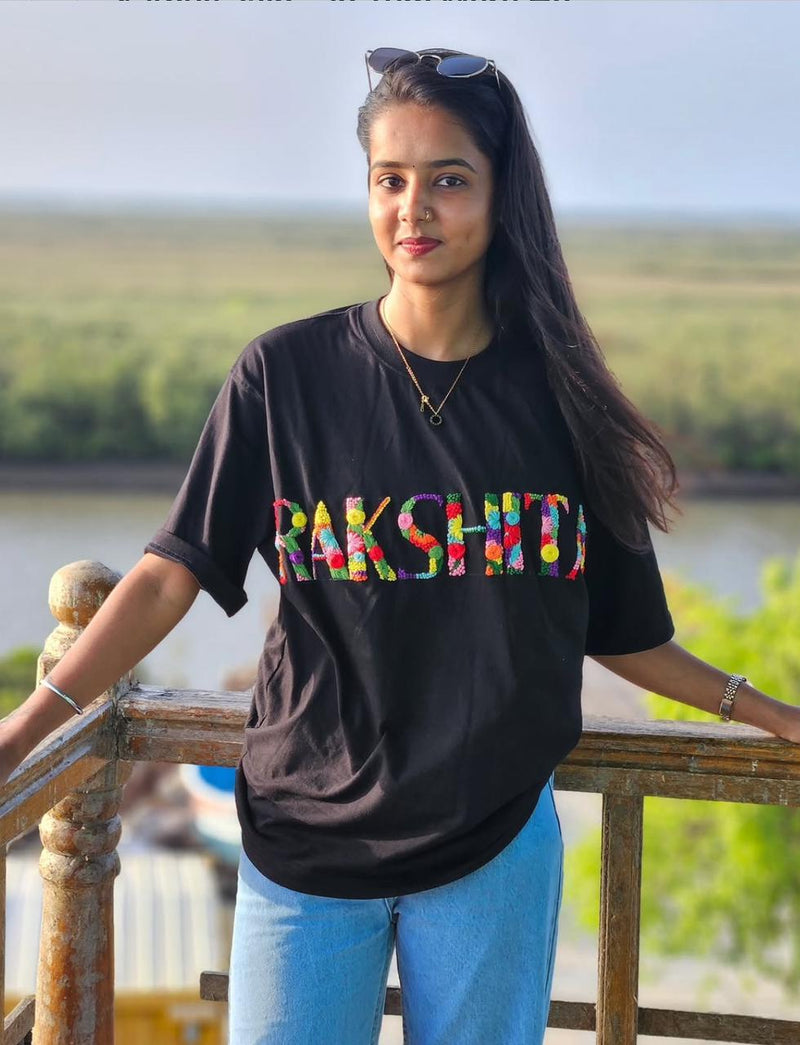
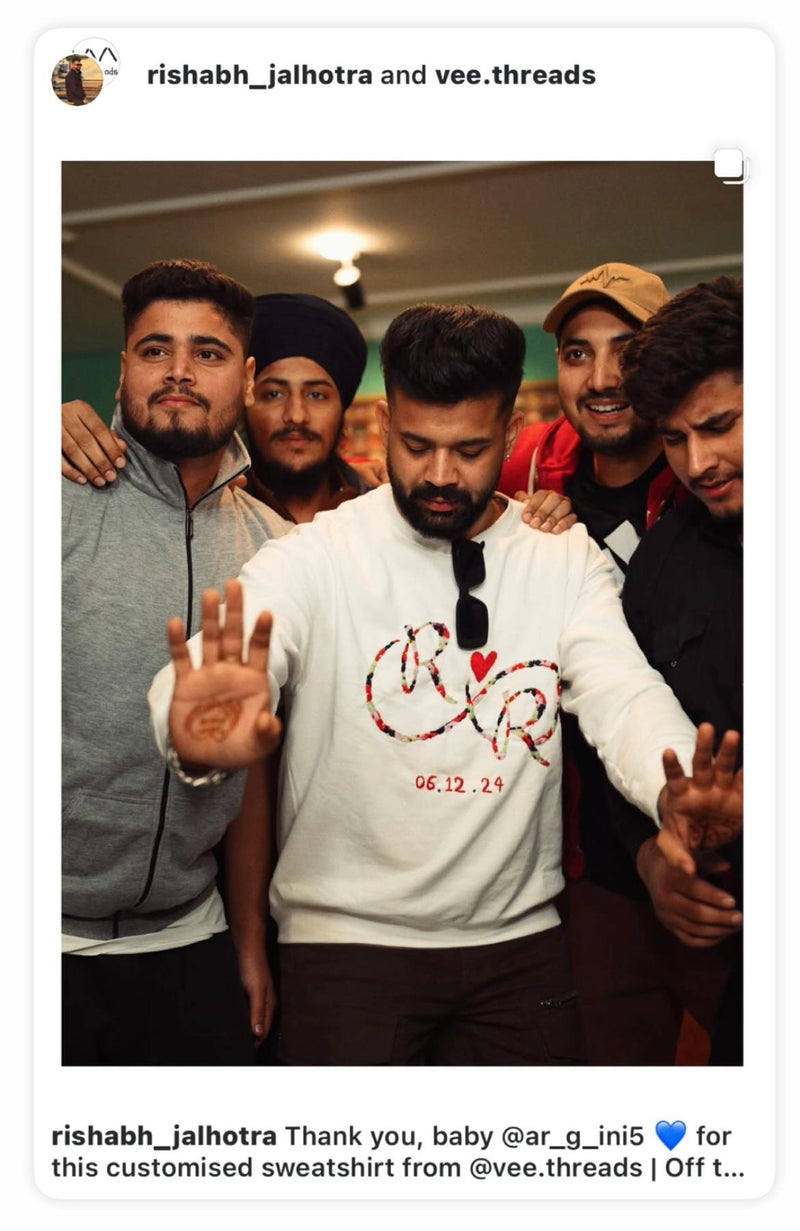
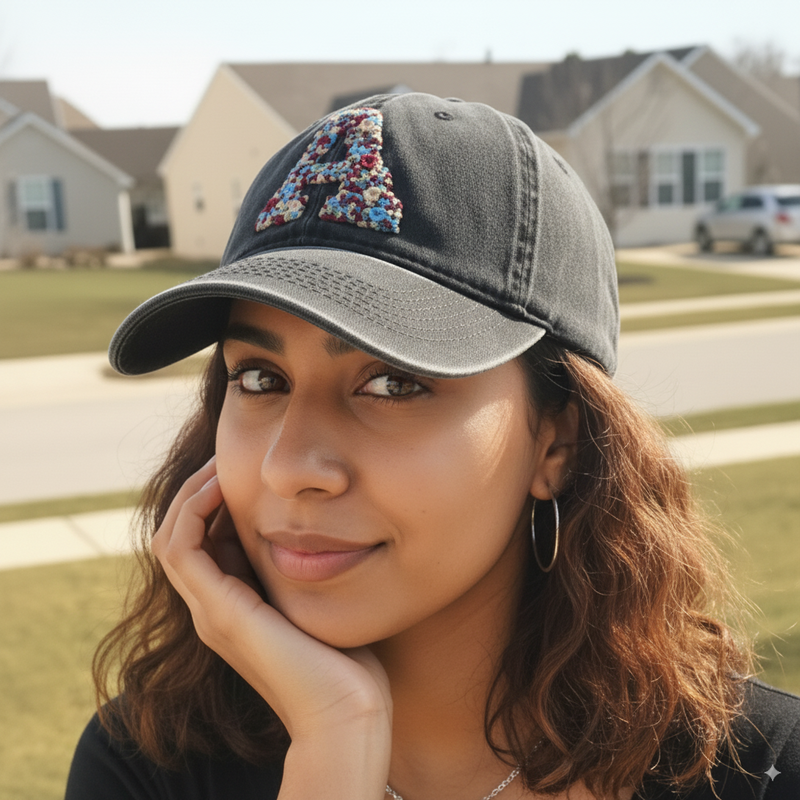
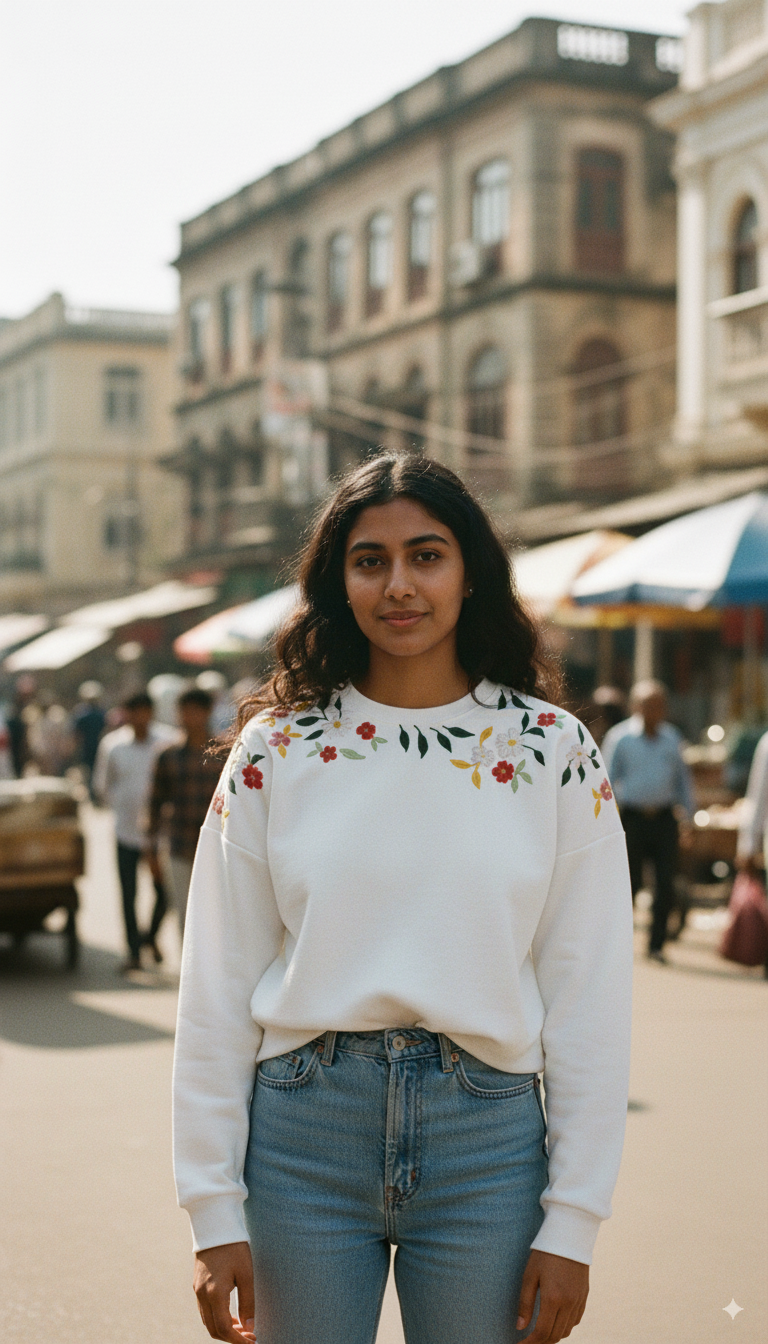
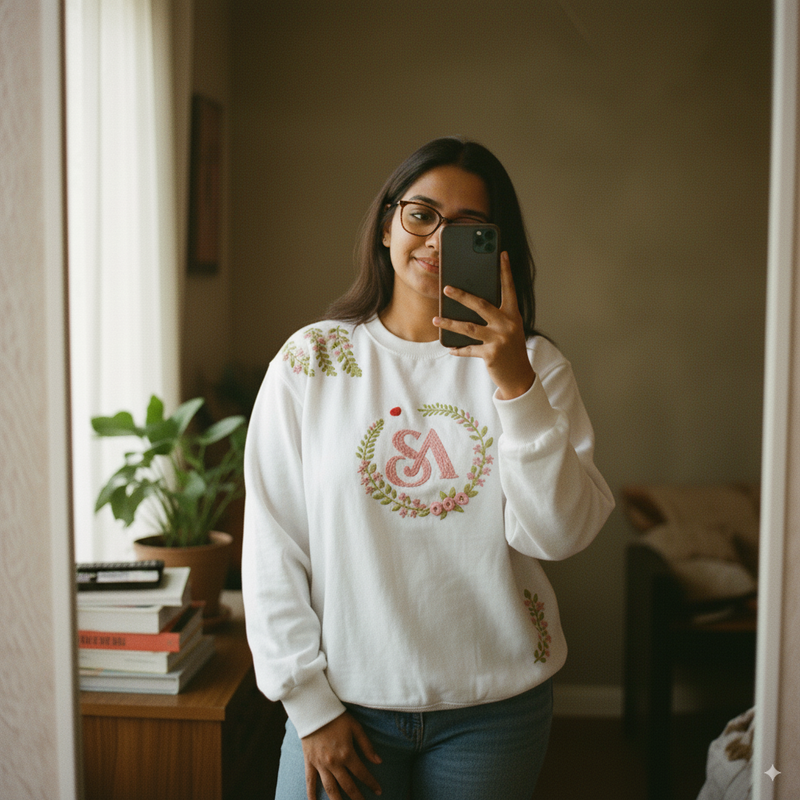
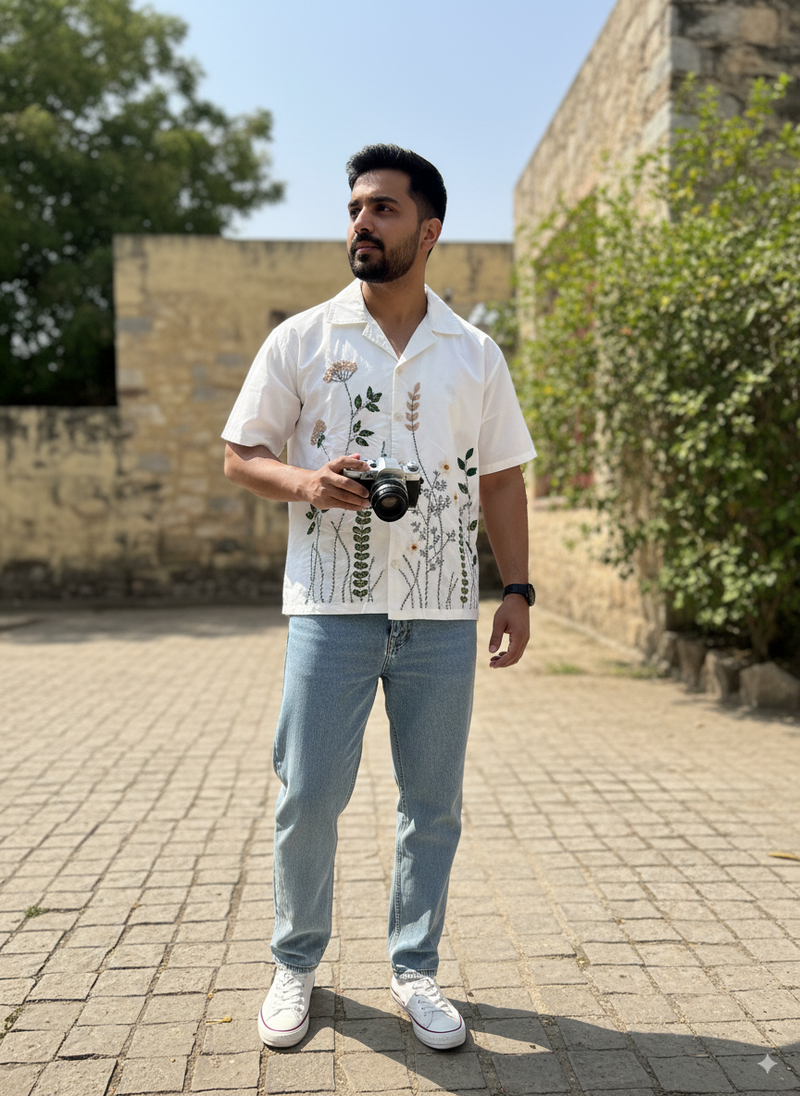
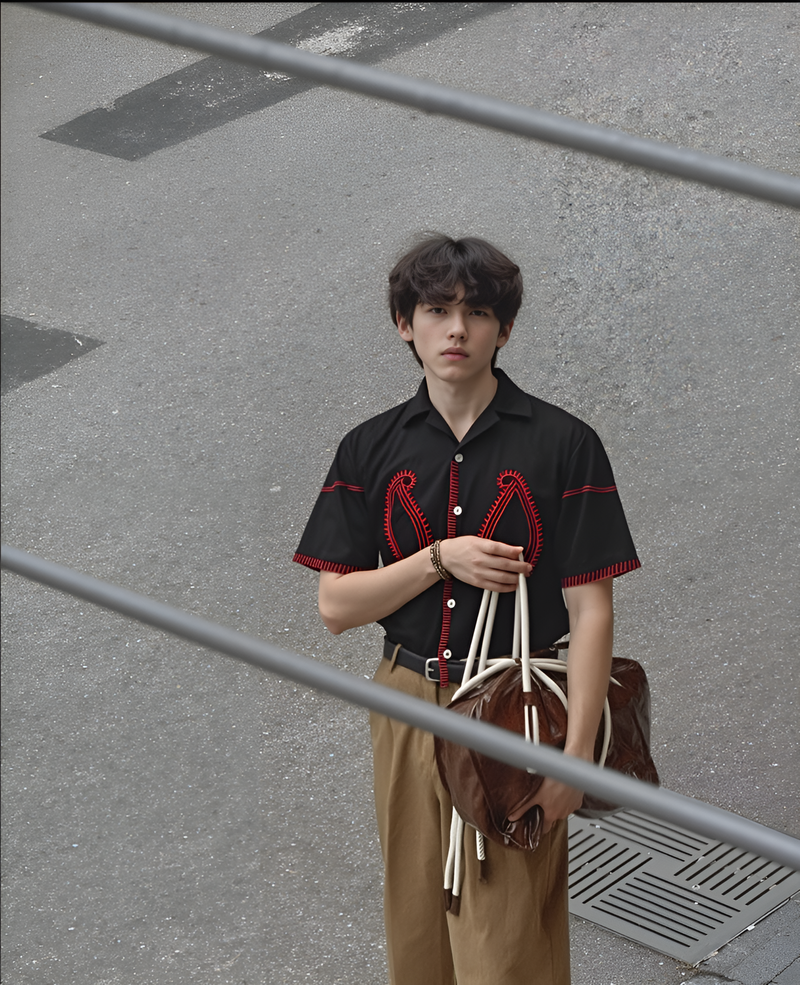
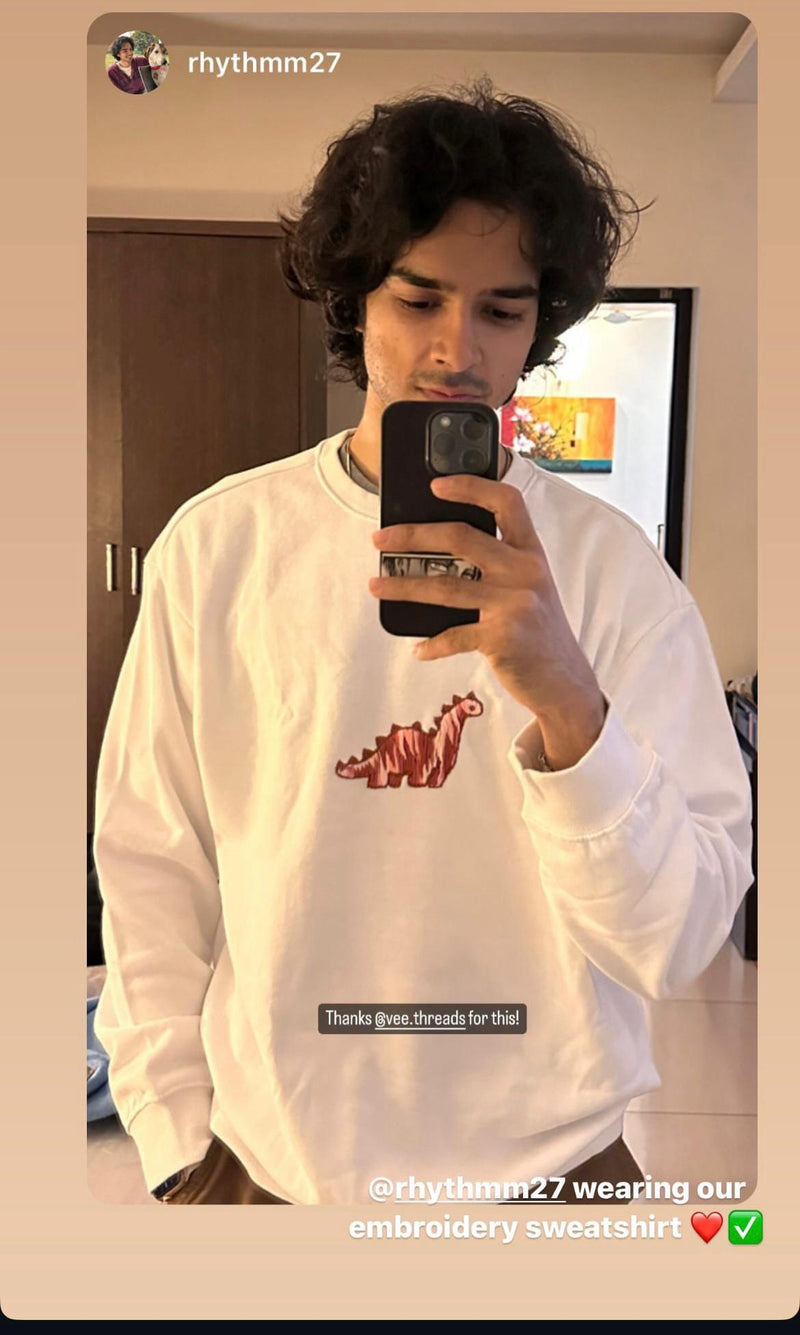
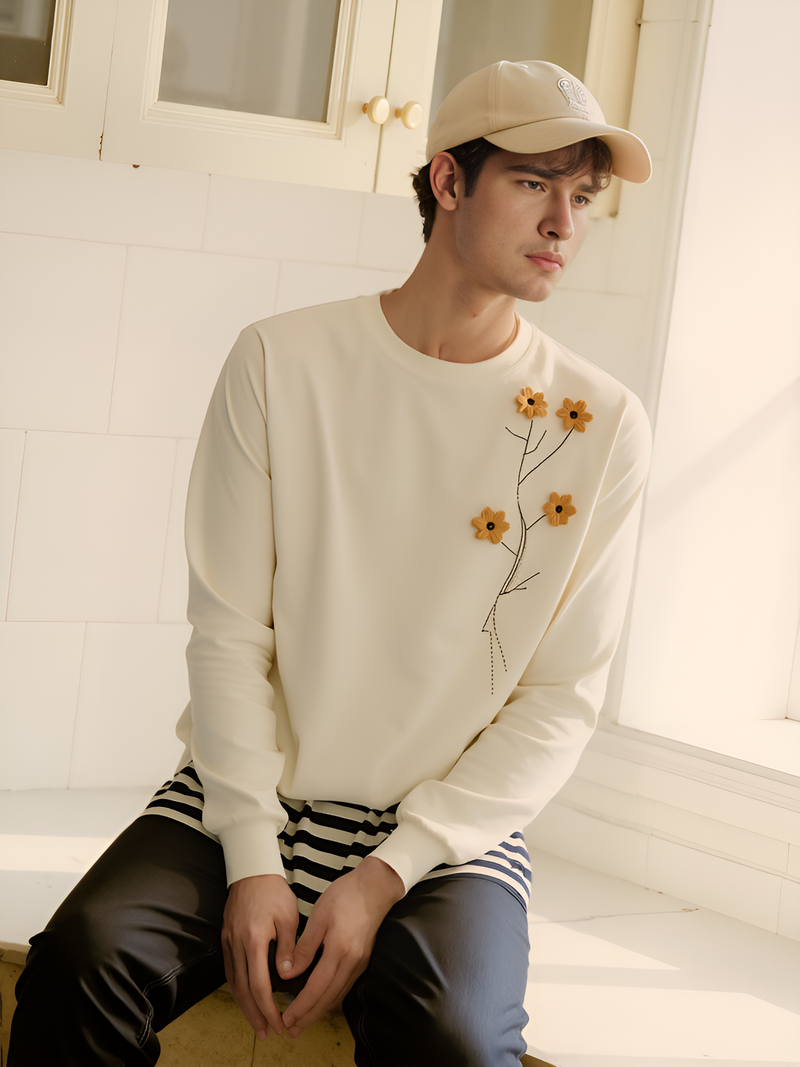
We use cotton thread on cotton garments — 2 to 4 strands depending on the motif. See the work.







Share and get 15% off!
Simply share this product on one of the following social networks and you will unlock 15% off!