



Cotton labels are full of words that sound like grades but are not. Combed, carded, ring spun, organic, bio washed. Some of them change how a shirt feels. Some of them barely matter. Here is which is which.
Start here: cotton is a fibre, not a quality
All cotton starts as short fluffy fibres attached to a seed. What happens next decides everything.
The fibres get cleaned, straightened, spun into yarn, and knitted into fabric. Every term on a label describes one step in that chain. None of them describe the cotton plant itself, with one exception we will get to.
Carded cotton
Carding is the basic cleaning step. The raw fibres are pulled across fine wire teeth to remove dirt and untangle them, then spun.
Carded cotton includes short fibres and long fibres together. Those short fibres are what work their way to the surface over time and form little balls, which is pilling. It is also slightly rougher to the touch.
Carded cotton is not bad. It is standard. Most affordable t-shirts are made from it, and it can be perfectly comfortable.
Combed cotton
Combing is an extra step after carding. Fine combs pull out the short fibres and leave only the longer ones, then those get spun.
This is the single most useful word on a cotton label, because the difference is real and you can feel it.
Combed cotton is smoother, because there are fewer fibre ends sticking out of the surface. It is stronger, because long fibres hold a twist better. And it pills far less, because the short fibres that cause pilling were removed before spinning.
The cost is that combing removes material, so you get less usable fibre from the same cotton. That is why combed cotton costs more.
Put the yarn under a magnifier
Same cotton, three treatments. Watch the short fibre ends: they are what turns into pilling.
Carded. Short and long fibres spun together. The short ends work to the surface and ball up into pills, and it feels slightly rougher. Standard, not bad.
Combed. The short fibres are combed out before spinning, so what is left is long, smooth and strong. It pills far less. It costs more because combing throws material away.
Bio washed. Enzymes eat the tiny fibre ends off the finished fabric. Some of combing's benefit, applied at the end instead of the start.

Ring spun cotton
This describes how the yarn is twisted. Ring spinning twists and thins the fibres continuously, producing a finer, softer yarn than the faster open end method.
You will often see combed and ring spun together, because both are quality steps and brands that pay for one usually pay for the other.
Organic cotton
This is the one term that describes farming rather than processing. Organic cotton is grown without synthetic pesticides or fertilisers, from seed that has not been genetically modified.
Here is the honest part. Organic cotton does not automatically feel better or last longer. Organic describes how it was grown, not how it was processed, so organic carded cotton will still pill more than conventional combed cotton.
If your reason for choosing organic is environmental, it is a real distinction and worth paying for. If your reason is that you expect a softer shirt, combed is the word to look for instead. The two are often confused and they answer different questions.
Also worth knowing: organic claims are certified by bodies like GOTS. A label that says organic with no certification named is a claim, not a fact.
Bio washed cotton
A finishing treatment. Enzymes are used to eat away the tiny fibre ends on the surface of finished fabric, leaving it smoother and reducing pilling.
It works, and it is a genuine improvement rather than marketing. It gives some of the same benefits as combing, applied at the end rather than the start.

What actually matters for an embroidered shirt
This is where the terms stop being general knowledge and start being relevant to what we make.
Embroidery puts tension on fabric. Every stitch pulls slightly, and a filled design puts hundreds of those pulls next to each other. The fabric has to be stable enough to take it without gathering or warping.
Two things decide that. Weight is the main one, which is why we work at 220 GSM rather than the more common 180. Our GSM guide explains that properly. The second is yarn quality, because a fabric spun from long combed fibres holds its structure under tension better than one full of short fibres.
There is also a surface reason. Hand embroidery is meant to be looked at closely. A fabric that pills quickly puts a fuzzy layer over the stitching within a few months, and the detail somebody spent hours on stops reading.

The order that matters
If you are choosing a t-shirt and want a simple ranking, this is roughly it.
Weight first, because it decides drape, opacity and whether an oversized cut works at all. Then combed or bio washed, because that decides softness and pilling. Then organic, if the farming matters to you, which is a values question rather than a comfort one. Ring spun is a nice extra but rarely the deciding factor.
What each word on the label actually decides
Ranked by how much it changes the shirt you get. Tap a step.
Weight first. It decides drape, opacity, and whether an oversized cut works at all. For embroidery it also decides whether the cloth takes the pull of the stitches. Ours are 220 GSM.
Then combed or bio washed. These decide softness and pilling, and whether stitched detail still reads after a season.
Organic, if farming matters to you. It describes how the cotton was grown, not how it feels. Organic carded cotton still pills more than conventional combed. Look for a named certification such as GOTS.
Ring spun last. A finer, softer yarn. A nice extra, but rarely the deciding factor.

Reading a label honestly
Two last things worth knowing.
100 percent cotton tells you nothing about quality. It tells you there is no polyester in it, which affects breathability and how it takes a dye, but a cheap carded 100 percent cotton tee and a combed one are both 100 percent cotton.
And a brand that lists none of these terms has usually not chosen them. Somebody who paid extra for combed cotton mentions it. Silence generally means standard.
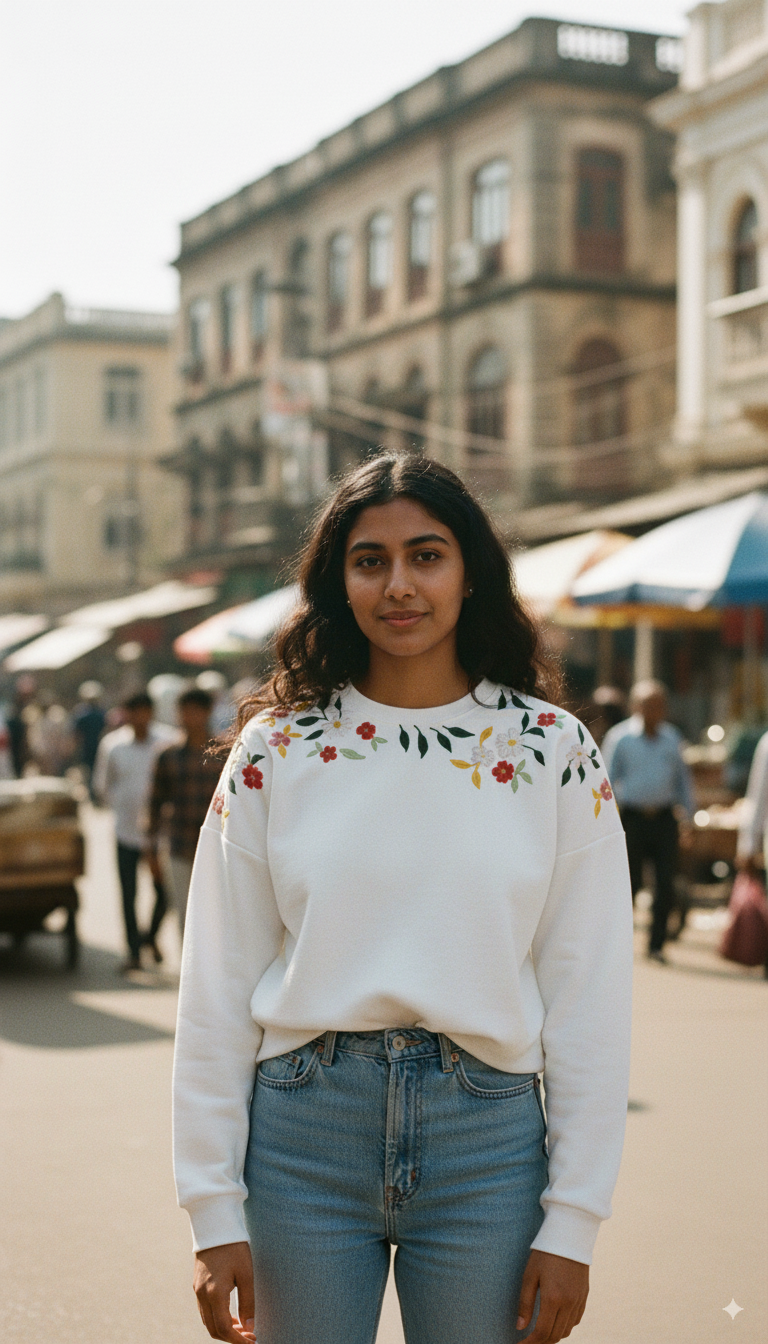
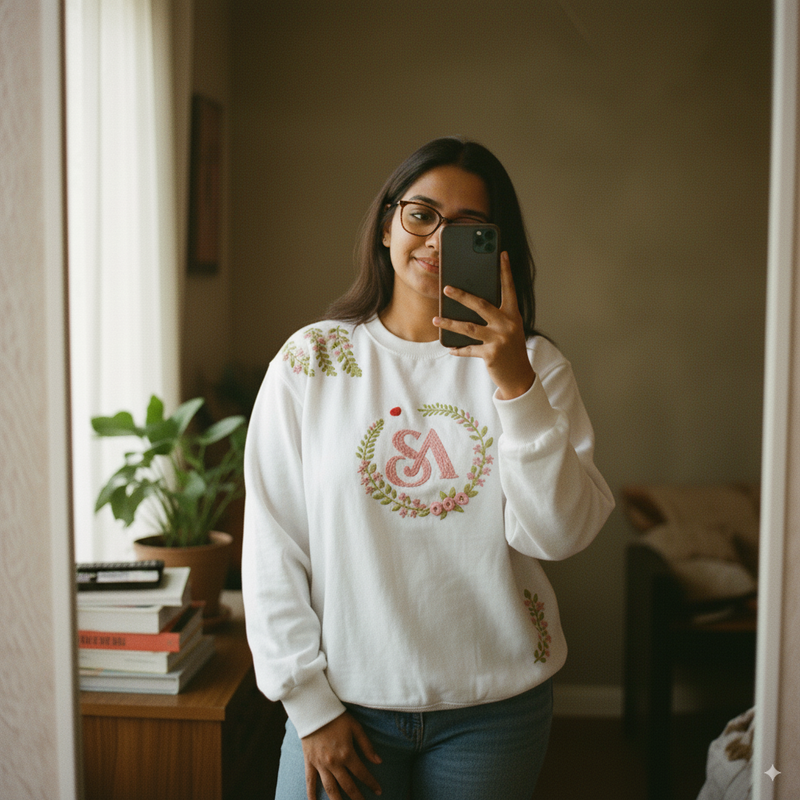
If you want to see the difference in person, our embroidered tee shirts are 220 GSM cotton and our sweatshirts are 400 GSM fleece. Our post on what makes a good embroidered t-shirt covers construction, and the laundry guide covers keeping any of it looking new.









Share and get 15% off!
Simply share this product on one of the following social networks and you will unlock 15% off!