



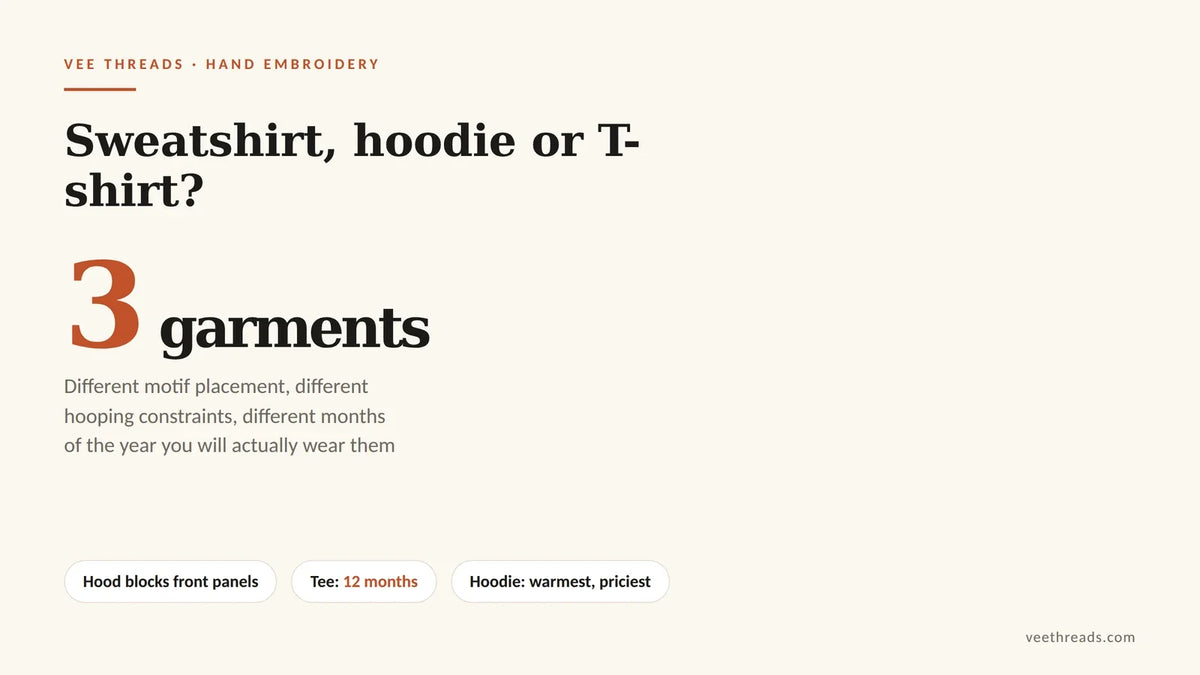
Short answer. Buy the T-shirt if you want the motif on show twelve months a year. Buy the sweatshirt if you want it to read from across a room and accept a four-month season. Buy the hoodie only if you actually wear hoods, because the hood seam and kangaroo pocket rule out most of the chest, which pushes designs larger and prices higher.

People usually pick between these on price or on warmth. The more useful axis is where the embroidery can physically sit, because that decides what design you can have at all.
Straight comparison

| Sweatshirt | Hoodie | T-shirt | |
|---|---|---|---|
| Fabric | 350 GSM cotton fleece | 400 GSM fleece plus hood | 220 GSM combed cotton |
| Price range | ₹1,785 to ₹4,463 | ₹2,678 to ₹3,800 | ₹1,199 to ₹4,464 |
| Stitch hours, same motif | +30% over a tee | +35% over a tee | Baseline |
| Where a motif can go | Chest, upper back, sleeve | Upper chest blocked by hood seam | Almost anywhere |
| Hooping constraints | Shoulder and side seams | Hood seam and kangaroo pocket | Very few |
| Months worn per year | About 4 | About 4 | All 12 |
| Best for | Motifs with presence, gifting | People who genuinely wear hoods | Everyday, custom names |

The hood problem nobody mentions
A hood adds a heavy seam across the upper chest and shoulders. You cannot hoop across it, which means the top third of a hoodie front is unavailable for embroidery.
Add a kangaroo pocket and the bottom third goes too. What is left is a band across the middle chest, and on most hoodies that band is narrower than people expect.
So hoodie designs go one of two ways: small and placed left-chest above the pocket, or large and placed on the back where nothing is in the way. There is no comfortable middle, and this is the single most common reason we tell a customer their chosen design will not work on a hoodie.
Where the embroidery can physically sit
Tap a garment. Green can be stitched, red is ruled out, amber is a seam to hoop around.
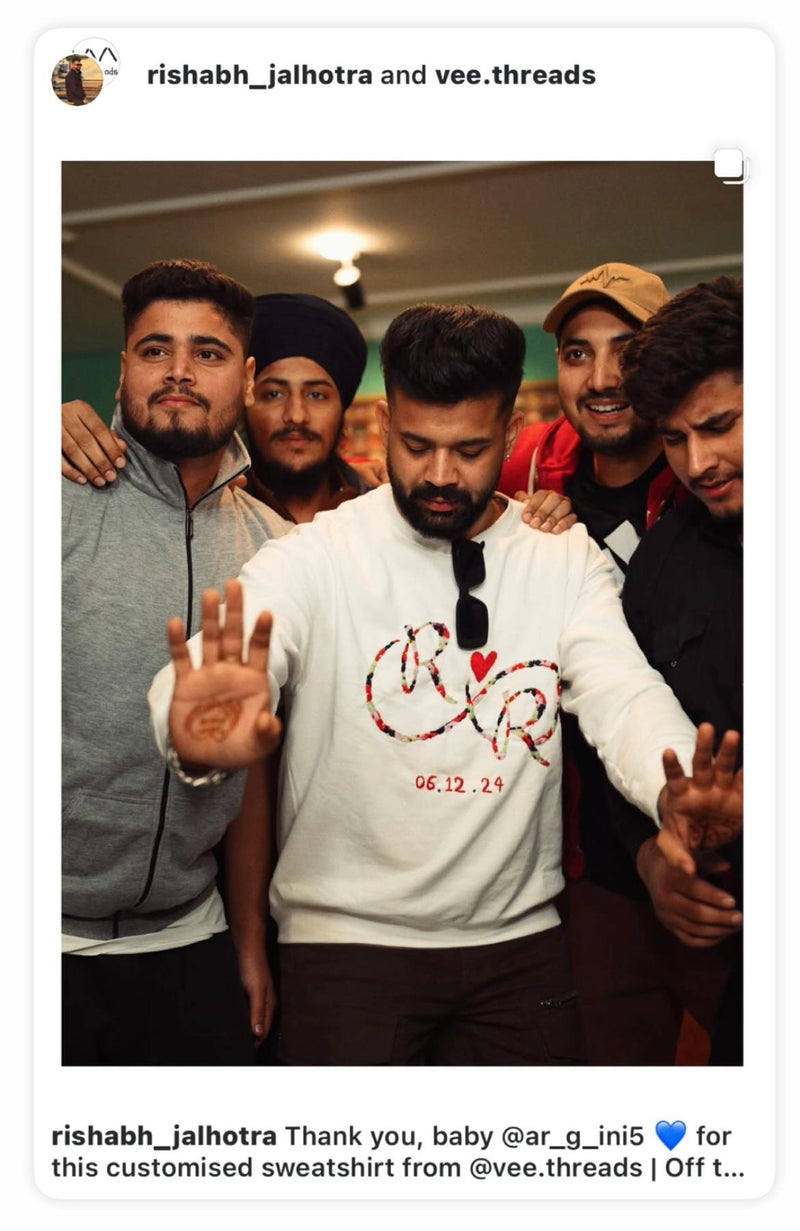
Sweatshirt: chest, upper back or sleeve. Only the shoulder and side seams need hooping around, which leaves the widest open chest of the three.
Hoodie front: a band, not a chest. The hood seam rules out the top third and the kangaroo pocket the bottom third. The band left in the middle is narrower than people expect.
Hoodie option one: small, on the left chest. Above the pocket and clear of the hood seam, which is where a custom name goes.
Hoodie option two: large, on the back. Nothing is in the way there. There is no comfortable middle, so most hoodie designs end up either here or small on the chest.
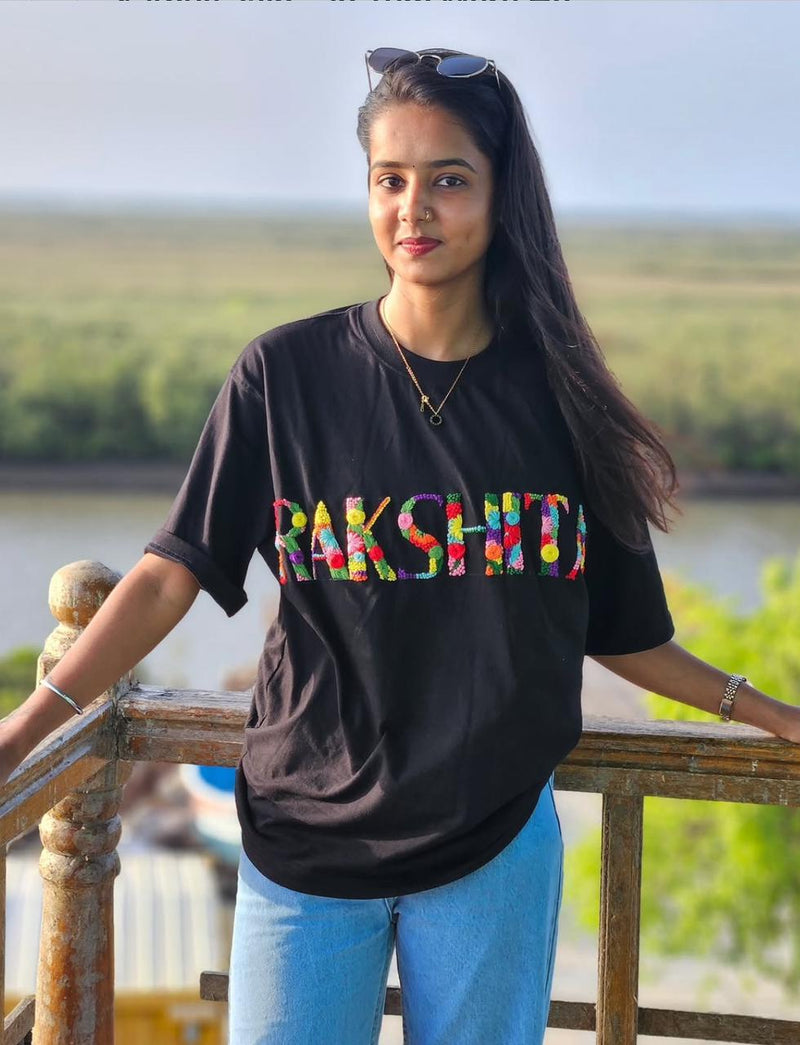
T-shirt: almost anywhere. 220 GSM combed cotton has very few hooping constraints, which suits everyday pieces and custom names.


Why the sweatshirt is the better canvas
Pile does something jersey cannot. Raised stitching on fleece casts a small shadow and catches light along the thread direction, so a motif reads with depth from several metres away. The same design on a tee sits flatter and reads mostly up close.
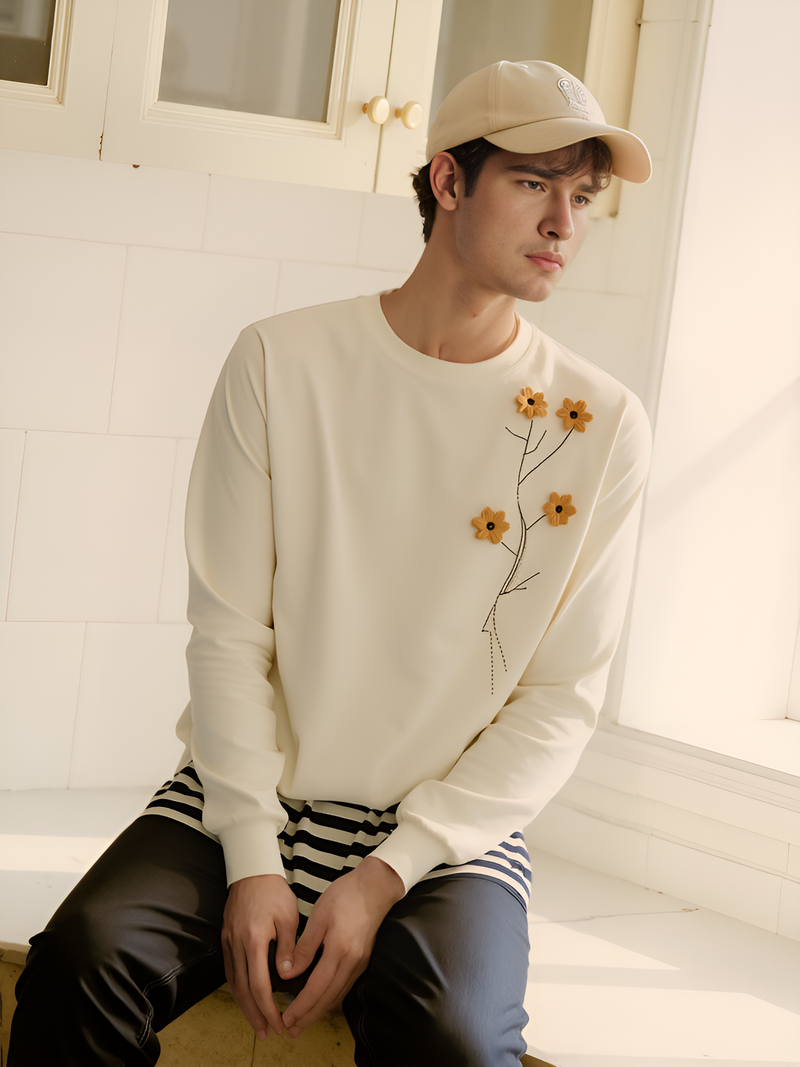
If the point of the piece is the embroidery, fleece shows it better. Look at the Botanical or Wild Flowers and the layering is visible in a way it would not be on 220 GSM.
Why the same motif looks deeper on fleece
Tap through: the stitch from the side, then the garment from two distances.
On 220 GSM jersey the stitch sits flat. There is no pile under it, so the thread lies close to the surface and throws very little shadow.
On 350 GSM fleece it stands proud of the pile. Raised stitching on fleece casts a small shadow and catches light along the thread direction.
Up close, both read. The same design on a tee reads well at this distance. This is where jersey does its best work.
From several metres away, fleece wins. The motif on fleece still reads with depth; on the tee it sits flatter and fades into the fabric. If the point of the piece is the embroidery, fleece shows it better.
The trade-off: about four months of wear a year for the sweatshirt, against all twelve for the tee.

Why the T-shirt is still the better buy for most people
Twelve months against four. That is a three-to-one difference in wear, and it beats every other consideration on this page if you are buying one thing for yourself rather than as a gift.
The cost-per-wear maths says the same, and I would rather say it plainly than sell you the more expensive garment.
Twelve months against four
Tap a garment to see how long you will wear it, what it costs and how long it takes to stitch.
Worn all twelve months. The lowest cost per wear, and the baseline for stitch time: the same motif is quickest on a tee.
Worn about four months. 350 GSM fleece adds about 30 per cent to the stitch time, but pile gives a motif depth you can see from across a room.
Worn about four months, with the highest starting price. 400 GSM fleece plus a hood, about 35 per cent more stitch time, and placement limits that push designs larger.
Three to one. If you are buying one thing for yourself rather than as a gift, that difference in wear beats every other consideration.

How to choose
| If you... | Buy | Why |
|---|---|---|
| Want it worn constantly | a T-shirt | Twelve-month season, lowest cost per wear |
| Want the motif to have presence | a sweatshirt | Pile gives raised stitching depth and shadow |
| Are buying a winter gift | a sweatshirt | Reads as more considered, and December is fleece season |
| Genuinely live in hoods | a hoodie | Accept the placement limits and go left-chest or back |
| Want a large detailed design | a sweatshirt | Most surface area with fewest seam obstructions |
Whichever way you go, run the fabric checks first.
Frequently asked questions
Should I buy an embroidered sweatshirt or hoodie?
A sweatshirt, unless you genuinely wear hoods. The hood seam blocks the upper chest and the kangaroo pocket blocks the lower, leaving a narrow band for a motif, which pushes hoodie designs larger and prices higher.
Can you embroider the front of a hoodie?
Only in a band across the middle chest, between the hood seam and the kangaroo pocket. Neither seam can be hooped flat. Most hoodie designs go small on the left chest or large on the back.
Is embroidery better on a sweatshirt or a T-shirt?
Fleece is the better canvas. Raised stitching on pile casts a shadow and catches light, so it reads from several metres away. On jersey the same design sits flatter and reads mostly up close.
Which is cheapest to embroider?
The T-shirt, by a clear margin. A 220 GSM blank costs about half a 350 GSM fleece one, and the same motif takes roughly 30 per cent less time to stitch.
How many months a year will I wear an embroidered sweatshirt?
About four in most of India, against twelve for a T-shirt. That three-to-one difference is the strongest argument for buying the tee if you are buying for yourself.
See the stitching up close. New designs and studio detail shots go up on our Pinterest first. Shipping outside India is easiest through our Etsy shop, which handles the customs paperwork.
Who wrote this
Vee Threads is a hand-embroidery label run by Vikash Tomar and Mansi from a studio in Bulandshahr, Uttar Pradesh. Every piece is stitched by hand by women artisans on the studio floor, on 350 GSM cotton fleece for sweatshirts, 400 GSM for hoodies, and 220 GSM combed cotton for tees. We have shipped more than 5,000 orders. Mansi runs the studio and quality control, Vikash handles the digital side. Prices, timings and hours quoted here come from our own production records, not industry averages.
Browse hand embroidered sweatshirts and embroidered hoodies, start a custom order, or find us on Etsy and Pinterest.







Share and get 15% off!
Simply share this product on one of the following social networks and you will unlock 15% off!