



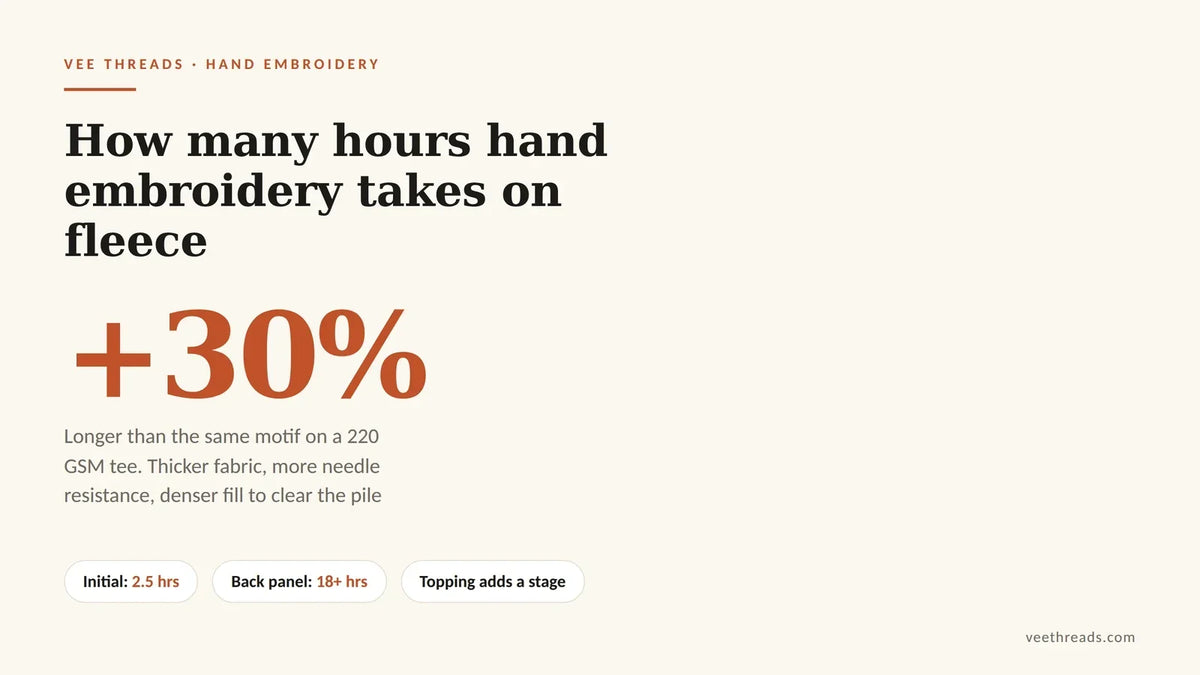
Short answer. Hand embroidery on a sweatshirt takes between 2.5 and 18 hours at the frame, roughly 30 per cent longer than the same motif on a 220 GSM tee. A single initial takes about 2.5 hours, a chest name 4, a monogram wreath 8, and a full back panel 18 or more. Those hours are about 42 per cent of what you pay.

“How long does it take” is really a question about price, so here are the hours and then what each one costs.
Hours by design, on 350 GSM fleece

| Design | Hours on fleece | Hours on a tee | Live sweatshirt price |
|---|---|---|---|
| Single initial | About 2.5 | About 2 | ₹1,785 |
| Custom name, chest | About 4 | About 3 | ₹1,785 |
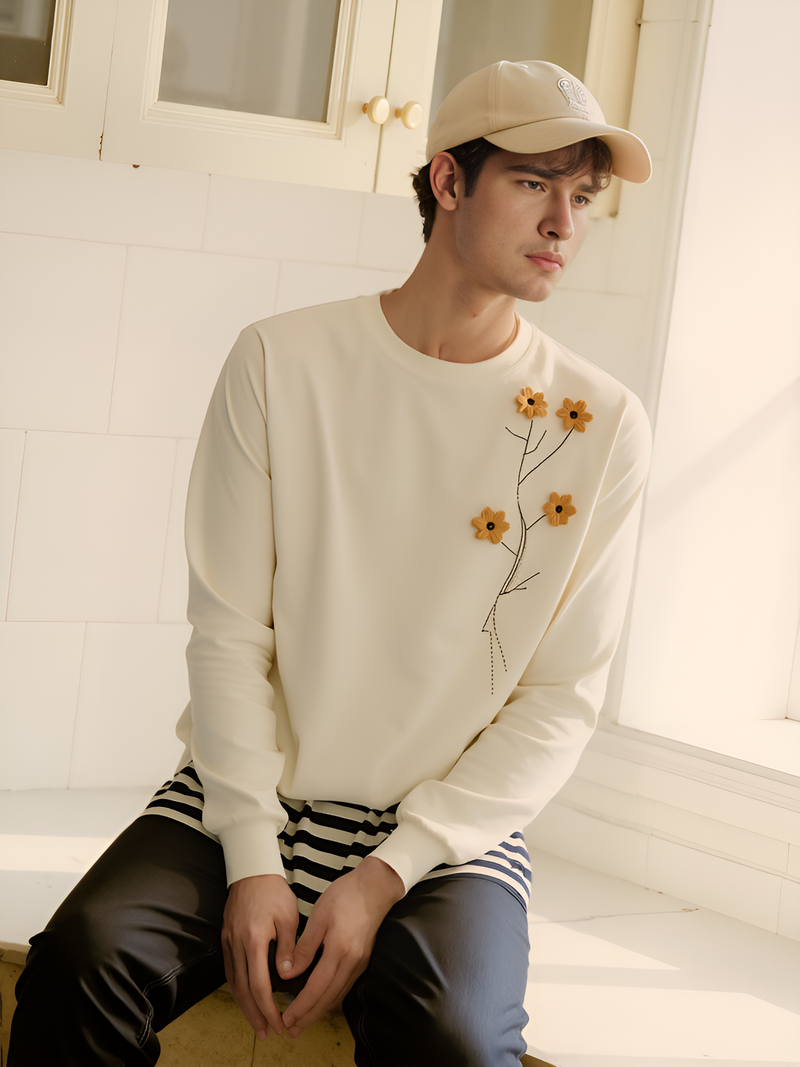
| Small floral motif | About 5 | About 4 | ₹2,232 |
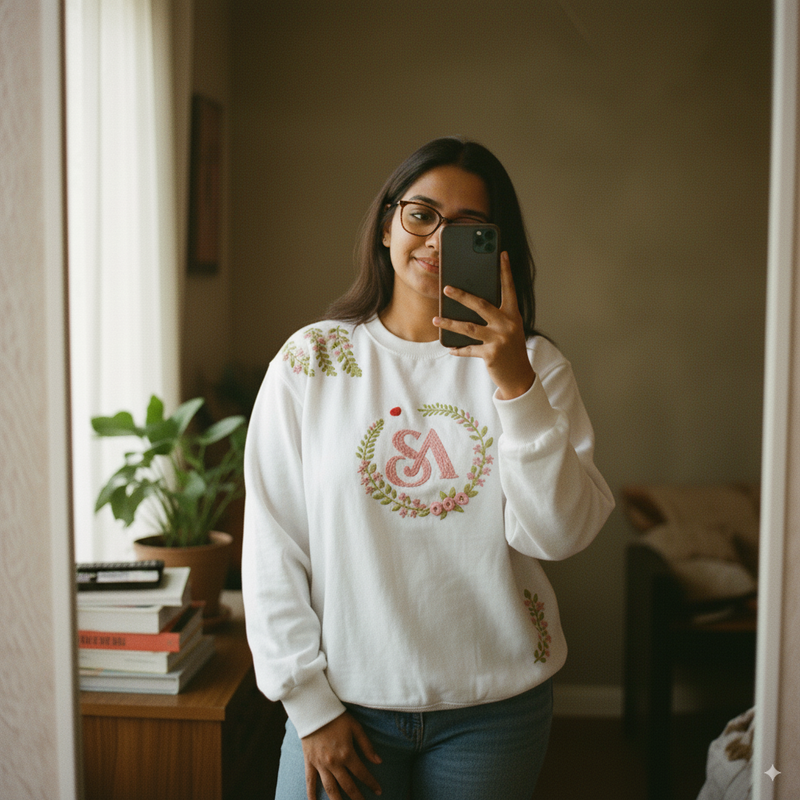
| Monogram wreath | About 8 | About 6 | ₹2,310 |
| Animal or figure, front | About 10 | About 8 | ₹2,499 |
| Oversized front panel | About 14 | About 11 | ₹3,500 |
| Full back panel | 18 and up | 14 and up | ₹4,463 |
Hour by hour, fleece against tee
Each block is one hour at the frame. Terracotta blocks are the extra time fleece adds to the same motif.
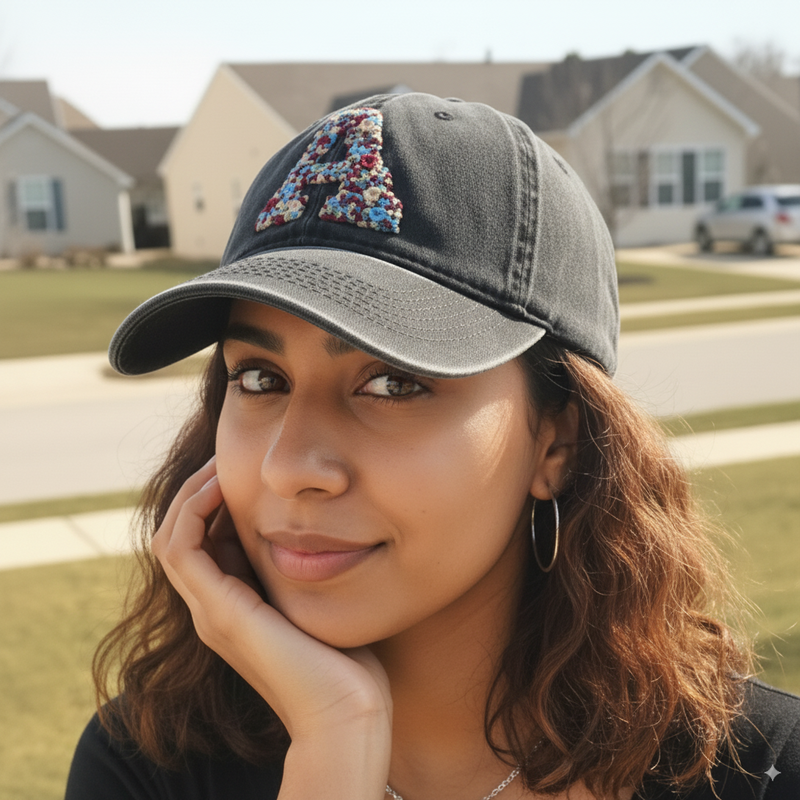
Single initial: about 2.5 hours on fleece. About 2 on a tee. It sells at ₹1,785 as a sweatshirt.
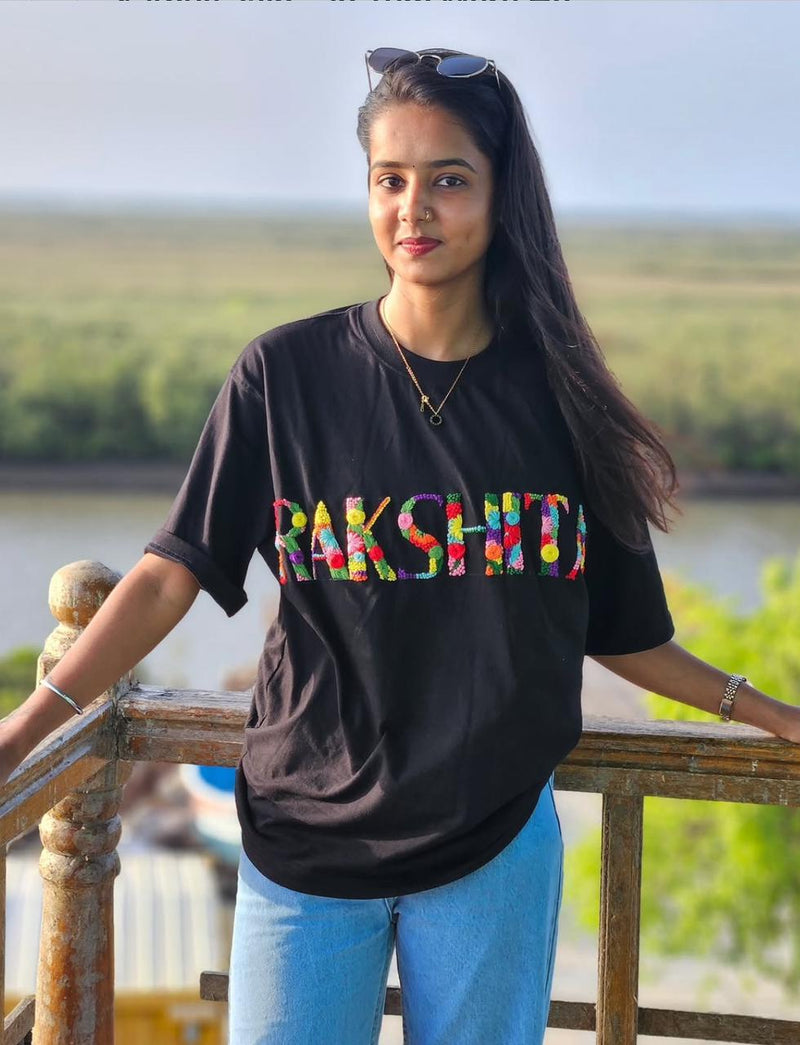
Custom name on the chest: about 4 hours. About 3 on a tee, and the same ₹1,785 as the initial. The name uses only two thread shades.
Small floral motif: about 5 hours. One hour more than the name, yet ₹2,232 against ₹1,785. It uses six shades, and every shade change is a stop, a tie-off and a re-thread.
Monogram wreath: about 8 hours. About 6 on a tee. ₹2,310 as a sweatshirt.
Animal or figure on the front: about 10 hours. About 8 on a tee. ₹2,499 as a sweatshirt.
Panels: 14 to 18 hours and up. An oversized front takes about 14 hours (11 on a tee) at ₹3,500. A full back panel takes 18 and up (14 and up on a tee) at ₹4,463.
Why the needle slows down
Not effort. Physics, mostly.
- Resistance. 350 GSM fleece is about 60 per cent heavier than jersey. Every stitch takes more force to push and pull, so the sustainable pace over an eight-hour day drops noticeably.
- Density. Pile scatters light and swallows thin lines, so a motif needs more stitches per square centimetre to read at all. More stitches, more time, and it compounds with size.
- The topping stage. Laying the water-soluble film, stitching through it, rinsing it out and re-lifting the nap adds close to an hour on a mid-size design.
- Re-hooping. Fleece relaxes in the frame, so tension gets re-checked hourly. On jersey you hoop once and go.
Four reasons the needle slows down on fleece
Tap a reason to see what happens at the frame.
Resistance. 350 GSM fleece is about 60 per cent heavier than jersey. Every stitch takes more force, so the pace an artisan can keep up over an eight-hour day drops.
Density. Pile scatters light and swallows thin lines, so a motif needs more stitches per square centimetre to read at all, and that compounds with size.
The topping stage. Lay water-soluble film, stitch through it, rinse it out, re-lift the nap. Close to an hour on a mid-size design.
Re-hooping. Fleece relaxes in the frame, so tension gets re-checked hourly. On jersey you hoop once and go.

Why hours do not divide evenly into price
Look at the 4-hour custom name and the 5-hour floral. ₹1,785 against ₹2,232, a bigger gap than one hour explains.
Thread shades are the reason. The name uses two; the floral uses six, and every extra shade is a stop, a tie-off, a re-thread and a colour match against the fleece. Time and material trade against each other and the price lands where it lands.

The working figure is ₹120 to ₹150 of skilled artisan time per hour on fleece, slightly above our tee rate because the work is more physically demanding. The full rupee breakdown is here.
What makes a fleece design slow
- Long and short shading. Gradient fills for petals and fur. Hardest to keep even on pile, and the slowest stitch there is.
- Small dense areas. A 1cm solid shape on fleece takes disproportionately long because there is no room to build rhythm and the pile keeps interfering.
- Dark fleece. Charcoal and black hide the transfer lines, so marking takes longer and errors cost more. Our black hoodie runs about an hour over the cream version of the same design.
- Many shade changes. Each one is a full stop and restart.

What makes one fast
- Chain and satin over shading. Both suit fleece and move quickly. The Branch Motif comes off the frame in six or seven hours.
- Two or three shades. Fewer stops.
- Repeat designs. An artisan on her fiftieth version of a motif is meaningfully faster, which is why stock designs cost less than the same thing ordered custom.

Hours are not the delivery date
An eight-hour design does not ship tomorrow. Orders sit in a 4 to 5 day queue first, then finishing, then courier. Door to door is 7 to 11 days.
Frequently asked questions
How long does it take to hand embroider a sweatshirt?
2.5 to 18 hours at the frame. A single initial takes about 2.5 hours, a chest name 4, a monogram wreath 8, and a full back panel 18 or more.
Why does fleece take longer to embroider than jersey?
Four reasons: the fabric is about 60 per cent heavier so each stitch needs more force, pile needs denser fill to read, the water-soluble topping adds about an hour, and fleece relaxes in the hoop so tension is re-checked hourly.
How much is an hour of hand embroidery on fleece worth?
₹120 to ₹150 of skilled artisan time in our studio, slightly above the tee rate because the work is more physically demanding. That is about 42 per cent of a mid-range sweatshirt's price.
Does embroidering on black fleece take longer?
Yes, about an hour more on a large design. Dark fleece hides transfer lines, so marking takes more care and mistakes are more expensive to correct.
Why do two designs with similar hours cost different amounts?
Thread shade count. A two-shade name and a six-shade floral can be an hour apart in stitching but ₹447 apart in price, because every extra shade means stopping, tying off, re-threading and colour matching.
See the stitching up close. New designs and studio detail shots go up on our Pinterest first. Shipping outside India is easiest through our Etsy shop, which handles the customs paperwork.
Who wrote this
Vee Threads is a hand-embroidery label run by Vikash Tomar and Mansi from a studio in Bulandshahr, Uttar Pradesh. Every piece is stitched by hand by women artisans on the studio floor, on 350 GSM cotton fleece for sweatshirts, 400 GSM for hoodies, and 220 GSM combed cotton for tees. We have shipped more than 5,000 orders. Mansi runs the studio and quality control, Vikash handles the digital side. Prices, timings and hours quoted here come from our own production records, not industry averages.
Browse hand embroidered sweatshirts and embroidered hoodies, start a custom order, or find us on Etsy and Pinterest.







Share and get 15% off!
Simply share this product on one of the following social networks and you will unlock 15% off!