



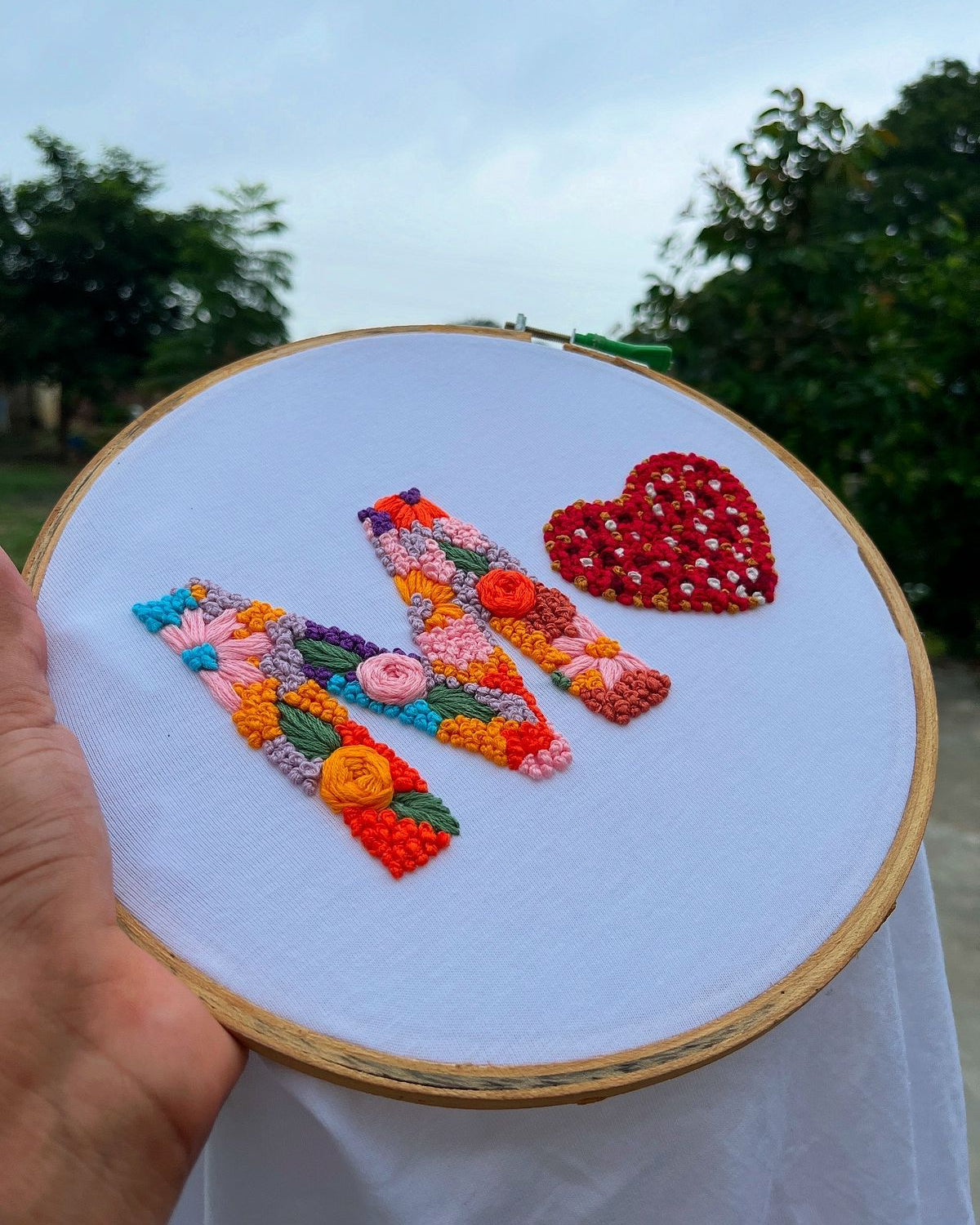
Nobody checks the word handmade. There is no certification behind it, no legal definition that applies to clothing sold online in India, and no penalty for using it loosely. A brand can put it on a machine embroidered shirt and nothing happens.
That is not a reason to avoid buying handmade. It is a reason to know what to look at. This takes two minutes per listing once you know the signs.
What sellers actually mean by handmade
The word gets stretched across at least four different situations.
Genuinely hand stitched. A person embroidered the design with a needle. This is what most buyers assume they are getting.
Machine embroidered, hand finished. A machine did the design, a person trimmed the threads or attached a button. Technically hands were involved. Practically you are buying machine work.
Hand assembled. The garment was sewn by a person, which is true of almost all clothing everywhere, including fast fashion. It says nothing about the decoration.
Handmade design. Somebody drew it by hand, then it was digitised and printed or machine stitched. This one is the most misleading, because it is not false.
None of the last three are frauds exactly. They are just not what you thought you were paying for.
Four things "handmade" can mean
Tap each one and look at the middle circle. That is the part you are paying for.
Genuinely hand stitched. A person embroidered the design with a needle. This is what most buyers assume they are getting.
Machine embroidered, hand finished. A machine did the design and a person trimmed the threads. Technically hands were involved. Practically, it is machine work.
Hand assembled. A person sewed the garment together, which is true of almost all clothing, fast fashion included. It says nothing about the decoration.
Handmade design. Someone drew it by hand, then it was digitised and printed or machine stitched. The most misleading of the four, because it is not false.

What the photographs tell you
Most of the evidence is in the images, if you know where to look.
Look for a close up. A seller with genuine hand work will show it magnified, because the texture is the selling point. A listing with only mid distance shots of a model is hiding the detail or does not have detail worth showing.
Check repeated elements. If a design has six identical flowers, and all six are identical down to the individual stitch, a machine made it. Hand stitched repeats always vary slightly.
Look for a photo of the reverse. Very few sellers show this. The ones who do are usually telling the truth, because the back of hand work is messy in a specific, recognisable way, with visible thread paths and knots and no stiff backing sheet.
Watch for the same photo everywhere. If the exact image appears across several unrelated stores, it came from a supplier catalogue and the seller has never held the item.

What the listing text tells you
Vagueness is the signal. Specific claims are checkable, so people who cannot back them up stay general.
A seller doing real hand work can usually tell you the fabric weight, roughly how long a piece takes, and where it was made. If a listing talks about artisans and heritage for four paragraphs without naming a place, a technique or a number, that is decorative language covering an absence.
The price is evidence too. Hand embroidery is labour, and labour has a floor. A single embroidered initial takes roughly 6 hours of stitching. If a fully hand embroidered tee is priced near a printed one at Rs 250 to Rs 400, the arithmetic does not work. Somebody is either mislabelling machine work or not paying the person who stitched it.
Three questions that get honest answers
Message the seller before you buy. How they respond is usually more informative than what they say.
Where is this made, specifically? Not the country. A town, a workshop, a studio. Real makers answer this immediately because they are proud of it.
Is the embroidery done by hand or by machine? Ask it plainly. An honest seller says hand, or says machine without embarrassment. A seller who answers a different question is answering the question.
Roughly how long does one piece take? Anyone who has watched the work happen knows this. Anyone reselling from a catalogue does not.
Slow replies are fine. Evasive replies are the tell.
Checking after it arrives
Once you are holding it, this takes ten seconds.
Turn it inside out. Machine embroidery leaves a dense, even reverse sitting on a stiff backing sheet that feels like thin paper or plastic, and that sheet stays in the garment permanently. Hand embroidery leaves visible thread paths and knots and no backing at all.
Then feel the front. Machine work leaves the fabric slightly stiff around the design. Hand work leaves it soft, because there is nothing in it but thread.
Look for French knots, the small raised dots used for flower centres. They are slow and awkward, so machine designs usually avoid them or fake them with a flat filled circle. Our guide to embroidery stitches explains what to look for, and hand versus machine embroidery covers the differences in full.
The ten-second test when it arrives
Compare the repeats on the front, then turn it inside out.
Hand, front. Three flowers from one design, and no two are identical. The centres are French knots: small raised dots that are slow to make, which is why machines avoid them.
Hand, back. Visible thread paths running between motifs, knots where threads end, and no backing at all. The cloth stays soft.
Machine, front. Every repeat identical down to the stitch, and the flower centres are flat filled circles instead of knots.
Machine, back. A dense, even reverse sitting on a stiff backing sheet that feels like thin paper. It stays in the garment for good.

If you got machine work sold as handmade
You have more standing than you think.
A product described as hand embroidered that turns out to be machine made is a misdescription, not a change of mind, so a return request should not depend on the usual conditions. Photograph the reverse of the garment, because that is your evidence, and raise it with the seller before the platform window closes.
It is also worth saying in a review, factually and without heat. Other buyers cannot see the reverse of the fabric in a listing photo. You can tell them.
Where this leaves us
We should be held to the same test, so here are our answers to the three questions.
Everything is stitched in Kutubpur, a village in Bulandshahr, Uttar Pradesh, by women who live near the studio. It is hand embroidery, and there is no embroidery machine on the premises. A custom initial takes about 6 hours. The studio is run by Mansi and Vikash, and we have shipped over 5,000 orders across India.

If we had been vague about any of that, you should have moved on. More detail is on our about page, and the questions people ask most are answered on our FAQ page.









Share and get 15% off!
Simply share this product on one of the following social networks and you will unlock 15% off!