



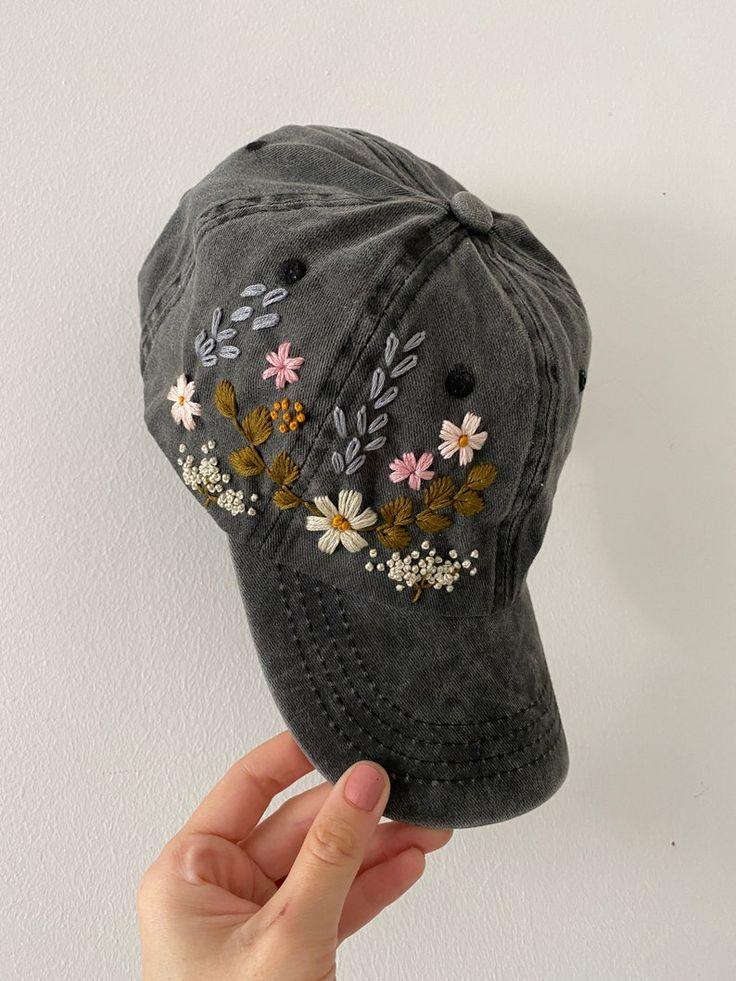
Short answer. To start hand embroidery you need five things: embroidery needles in sizes 5 to 9, six-strand cotton floss, a wooden hoop, small sharp scissors and a piece of plain woven cotton. Use two strands and a size 9 needle for most work. Six stitches cover nearly every beginner design.
Most beginner guides start with stitches. Start with the needle and the thread, because the wrong pairing makes every stitch harder than it needs to be. This is the kit, and the reasoning behind each piece of it, from a studio where the stitching is done by hand all day.
Which needle for how many strands?
Tap the number of strands you're stitching with.
One strand. The finest line you can stitch. It's used for shading and tiny lettering, and it's slow, because every stitch covers so little.
Two strands. The default. If a pattern doesn't say how many strands to use, use two. Most of the work on a cotton tee is done this way.
Three strands. A heavier line and faster coverage. Good for filling medium shapes in satin stitch, and for lettering you want to read from across a room.
Four to six strands. Thick, raised, textured. It needs a bigger needle to open the cloth, so keep it for sturdy fabric. On thin jersey it leaves holes.
The needle
Buy embroidery needles, which are also sold as crewel needles. They have a sharp point and a long eye that takes more than one strand.
They come in sizes 1 to 10, and the numbering runs backwards: the bigger the number, the finer the needle. A mixed pack of sizes 5 to 9 covers almost everything you'll do in your first year.
The rule is simple. The needle should be just thick enough to open a hole the thread can follow without dragging. Too fine, and the thread frays at the eye. Too thick, and it leaves holes in the cloth.
| Strands | Needle size | Use it for |
|---|---|---|
| 1 | 10 | Shading and very fine outlines |
| 2 | 9 | Most stitching on cotton |
| 3 | 7 | Bolder outlines, satin fill on medium shapes |
| 4 to 6 | 3 to 5 | French knots, heavy texture, fleece and denim |
The thread
Buy six-strand cotton floss. It's the skein that pulls apart into six fine strands, and it's what nearly every pattern assumes you have.
- Use two strands unless you have a reason not to. We stitch cotton garments with 2 to 4 strands, depending on the motif.
- Cut a length about as long as your forearm. Longer thread tangles, and it frays from being pulled through the cloth too many times.
- Separate the strands one at a time, then lay them back together. They sit flatter and cover better, even when you want all six.
- Test dark colours before stitching on white. Cut 10 cm, soak it in warm water for ten minutes, and press it between white paper. If colour comes off, don't use it.
Which thread is used for embroidery covers perle cotton, silk and metallic thread as well.

The hoop, the scissors and the cloth
A wooden hoop holds the cloth flat so your stitches keep an even tension. Tighten it until the fabric is smooth and stop there. On T-shirt jersey, an over-tightened hoop stretches the knit for good, and the finished motif sits in a dip.
Small scissors with sharp points let you cut close to the cloth. Kitchen scissors chew the thread.
Plain woven cotton is the fabric to learn on. It doesn't stretch, and the weave shows you where the needle went. Once your stitches are even, move to a T-shirt. Thin synthetics and loose knits are the hardest place to begin, because the needle holes widen.
A washable fabric marker is the only thing to draw the design with. Pencil and ballpoint don't come out.
Starting and ending a thread
Anything that will be washed needs every thread end secured. One loose tail, and a wash can unravel a whole filled shape.
- To start, leave a short tail on the back and catch it under your first few stitches, or tie a small knot on the reverse.
- To finish, run the needle under three or four stitches on the back, then knot off and trim.
The six stitches to learn first
- Running stitch. A dashed line. The first stitch anyone learns.
- Back stitch. A solid line, and the one to use for lettering.
- Stem stitch. A rope-like line that bends well, for stalks and curves.
- Satin stitch. Straight stitches laid side by side to fill a shape.
- Lazy daisy. A single looped petal. Five of them make a flower.
- French knot. A raised dot, for flower centres and eyes.
Hand embroidery stitch names shows what each one looks like and what it's for.

Five mistakes nearly everyone makes
- Cutting the thread too long. It tangles and goes fuzzy.
- Using all six strands for everything. The result looks heavy, and fine shapes are lost.
- Over-tightening the hoop on a knit.
- Pulling each stitch tight. The cloth puckers around the motif, and no amount of ironing fixes it.
- Drawing the design in pencil or ballpoint.
Unpicking is part of the craft. If a line looks wrong, take it out and stitch it again.
Or have it stitched for you
A small floral motif takes one of our artisans about 4 hours. Give yourself a weekend for your first one.
If you'd like to try it on a garment, how to embroider a T-shirt at home is the next step. If you'd rather wear someone else's hours, that's what we make.
Frequently asked questions
What needle do I need for hand embroidery?
An embroidery needle, also called a crewel needle, with a sharp point and a long eye. A mixed pack of sizes 5 to 9 covers most work. Use size 9 with two strands of floss.
How many strands of embroidery thread should I use?
Two strands for most stitching. Use one for fine detail and shading, three for bolder lines and fills, and four to six for French knots and heavy texture.
Can I use ordinary sewing thread for embroidery?
You can, but it's thin and tightly twisted, so it covers poorly. Six-strand cotton floss is made for embroidery and fills a shape much faster.
What fabric is best for a beginner?
Plain woven cotton. It doesn't stretch and it shows clearly where the needle has gone. Move on to T-shirt jersey once your stitches are even.
Do I need a hoop for hand embroidery?
For most work, yes. A hoop keeps the cloth flat so the stitches stay even and the fabric doesn't pucker.
Who wrote this
Vee Threads is a hand-embroidery studio in Kutubpur, Bulandshahr, Uttar Pradesh, run by Mansi and Vikash. Every piece is stitched by hand by women artisans who live within walking distance of the studio. There is no embroidery machine on the premises, and we have shipped more than 5,000 orders. Mansi runs the studio and quality control. Vikash handles the digital side.
The methods on this page are the ones used on our studio floor, on 220 GSM cotton tees, 350 GSM fleece sweatshirts, 400 GSM fleece hoodies and acid-wash denim caps. If you would rather have it stitched for you, start a custom hand embroidery order or browse the hand embroidered t-shirts.







Share and get 15% off!
Simply share this product on one of the following social networks and you will unlock 15% off!