



Short answer. Compare hand embroidered sweatshirt brands in India on six checkable things: whether the GSM is stated as a number, whether the fleece type is named as loopback or brushed, whether they will send a photo of the fabric reverse, how deep customisation goes, whether a repair policy exists, and whether the delivery window is itemised rather than promised.

We are one of these brands, so a ranked list from us would be worthless to you. What is useful is the framework, plus how we score against it including where we come off badly.
The six criteria

| Criterion | What good looks like | What to walk away from |
|---|---|---|
| GSM disclosure | 350 GSM stated on the product page | “Premium winter fabric”, no number anywhere |
| Fleece type | Loopback or brushed, named explicitly | No mention of the inside face at all |
| Stitch evidence | Reverse-side photo supplied on request | Front-facing studio shots only, ever |
| Customisation depth | Name, script, thread shade, placement, all adjustable | Fixed designs with a name slot |
| Repair policy | Restitching offered, with a stated turnaround | No mention anywhere on the site |
| Delivery honesty | Queue plus stitching plus courier, itemised | “Ships today” on hand work in December |
Six checks for any sweatshirt brand
Tap a criterion to see what good looks like and what should end the conversation.
How to check. Look for the GSM as a number on the product page.
How to check. Search the page for loopback or brushed. A brand that names it is specifying its blanks, so what arrives in February matches what was reviewed in November.
How to check. Ask for a photo of the reverse of the fabric.
How to check. Ask whether the script, thread shade and placement can all change, not just the name.
How to check. Look for a written restitching policy with a turnaround.
How to check. Look for the window broken into queue, stitching and courier.

Why fleece type belongs on this list
It is the criterion most buyers have never heard of and it predicts more than the others.
A brand that names loopback or brushed is specifying its blanks. A brand that does not is buying whatever was cheapest that month, which means the sweatshirt you get in February may not be the one reviewed in November. That inconsistency is invisible until you own two from the same seller and they feel different.
The full eight fabric checks are here.
How we score, honestly
GSM disclosure: strong. 350 GSM on every sweatshirt page.
Fleece type: strong. Brushed, and we will say why when asked.
Stitch evidence: strong. Ask and you get the reverse photo the same day.
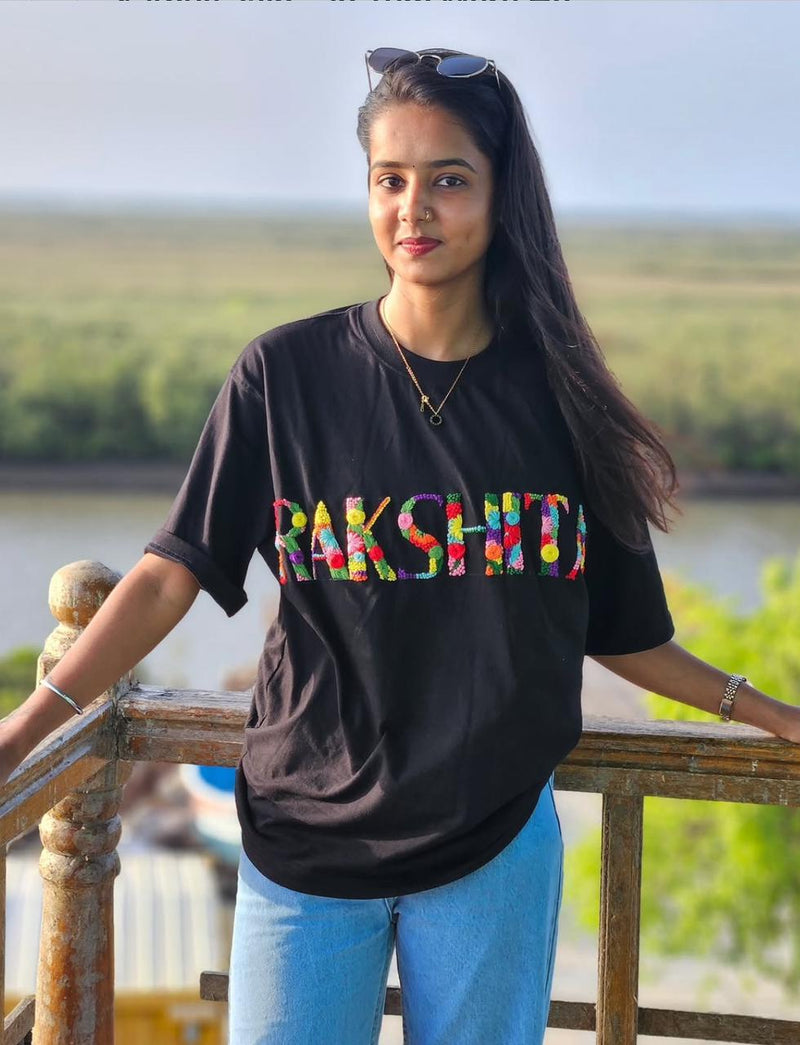
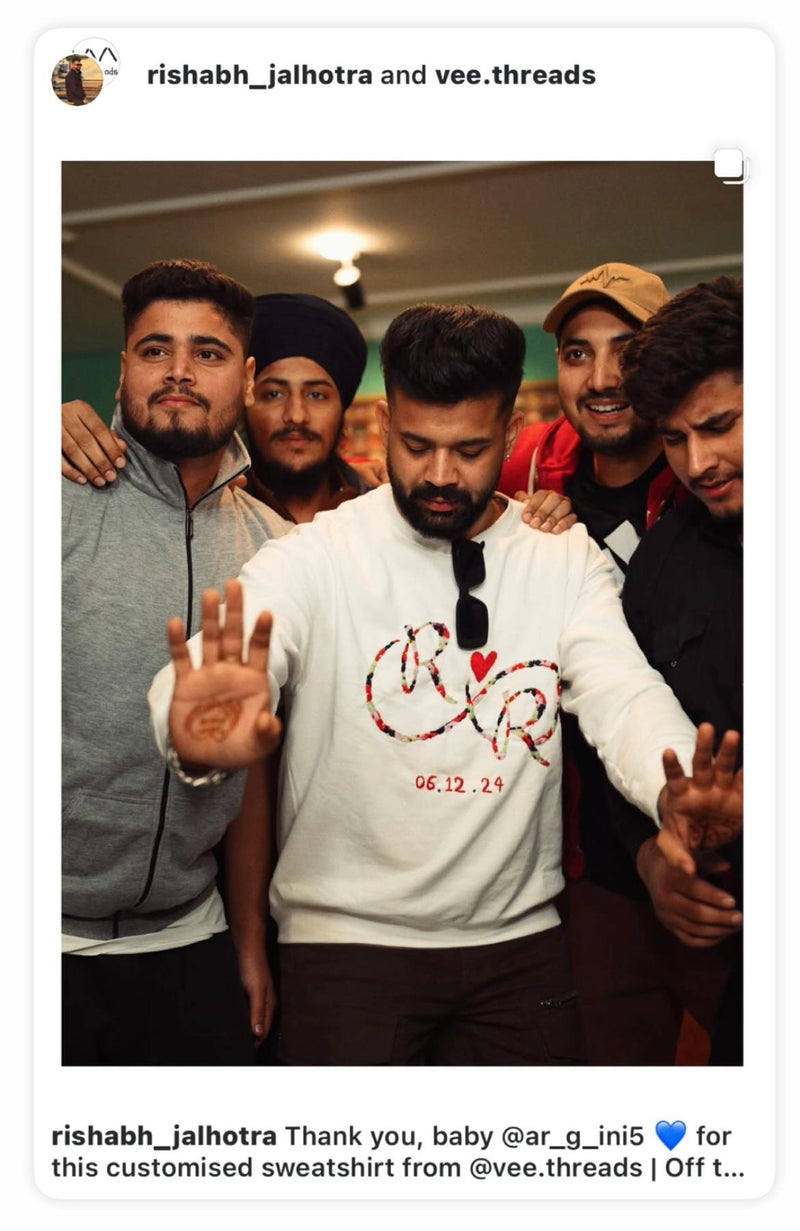
Customisation: strong. Name, script including Devanagari, thread shade, placement within the seam constraints. See custom hand embroidery.
Repair: weak. We restitch pulls, but it is not written up as a policy with a stated turnaround, and it should be. This is the criterion we most obviously fail.
Delivery: slow but honest. Seven to eleven days, longer in December, and we say so before you order rather than after.
How we score against the six
Our own scorecard, including where we come off badly. Tap a row.
Strong. 350 GSM on every sweatshirt page.
Strong. Brushed, and we will say why when asked.
Strong. Ask and you get the reverse photo the same day.
Strong. Name, script including Devanagari, thread shade, and placement within the seam constraints.
Weak. We restitch pulls, but it is not written up as a policy with a stated turnaround, and it should be.
Slow but honest. Seven to eleven days, longer in December, and we say so before you order.

Two things that look like criteria and are not
- Follower count. Measures marketing spend. Never predicted stitch quality.
- Order count. We say 5,000-plus and you cannot verify it, which is the point. Treat any such number as context, never evidence.
How the Indian market splits
Three groups, and they answer different needs.
Heritage ateliers do zardozi, chikankari and aari work, mostly on occasion wear rather than fleece, priced accordingly. Contemporary studios like ours do everyday cotton pieces with modern motifs. And resellers buy machine-embroidered stock, often on thin fleece, and photograph it very well.
The first two are both legitimate. The six criteria exist to catch the third.
Deciding between a studio and the shop down the road is a different question, and we compared those two directly here.

Shortlist, then test with one order
Run the criteria, shortlist two or three, buy one entry-level piece from each and wear it through a season. Around ₹5,000 total and it settles the question permanently, which is cheaper than being wrong twice.

The nine common buying mistakes are here. Our range: sweatshirts, hoodies, Etsy for international orders.
Frequently asked questions
How do I compare hand embroidered sweatshirt brands?
On six checkable criteria: GSM stated as a number, fleece type named as loopback or brushed, a reverse-side stitch photo on request, customisation depth, a written repair policy, and an itemised delivery window.
Why does it matter whether fleece is loopback or brushed?
A brand that names it is specifying its blanks. A brand that does not is buying whatever was cheapest that month, so the garment you get may differ from the one reviewed a few months earlier.
Are follower counts a good signal of sweatshirt quality?
No. Follower count measures marketing spend. Stitch quality shows on the reverse of the fabric and fabric quality shows in the GSM, and neither correlates with an Instagram number.
What is the difference between heritage ateliers and contemporary studios?
Heritage ateliers do zardozi, chikankari and aari work, mostly on occasion wear at occasion prices. Contemporary studios stitch everyday cotton garments with modern motifs. Both are legitimate; they answer different needs.
How do I test a brand before committing?
Buy one entry-level piece and wear it through a season. Across two or three shortlisted brands that is roughly ₹5,000 and tells you more than any review set.
See the stitching up close. New designs and studio detail shots go up on our Pinterest first. Shipping outside India is easiest through our Etsy shop, which handles the customs paperwork.
Who wrote this
Vee Threads is a hand-embroidery label run by Vikash Tomar and Mansi from a studio in Bulandshahr, Uttar Pradesh. Every piece is stitched by hand by women artisans on the studio floor, on 350 GSM cotton fleece for sweatshirts and hoodies and 220 GSM combed cotton for tees. We have shipped more than 5,000 orders. Mansi runs the studio and quality control, Vikash handles the digital side. Prices, timings and hours quoted here come from our own production records, not industry averages.
Browse hand embroidered sweatshirts and embroidered hoodies, start a custom order, or find us on Etsy and Pinterest.







Share and get 15% off!
Simply share this product on one of the following social networks and you will unlock 15% off!